

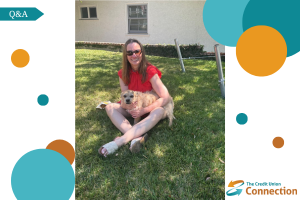
For nearly 30 years, Jennifer Audette has been sharing her passion for the people-helping-people philosophy of credit unions. Her credit union journey began when she was in college, working part-time at Burbank City Employees Credit Union, and from there, she was all in on the credit union mission!
Now, as the CEO of POLAM Federal Credit Union, she continues to advocate for credit unions and has no plans to stop anytime soon.
In this Q&A, Jennifer discusses how strategic partnerships play a role in growth strategies, what credit unions need to do to remain relevant in their communities and how she’s rethinking member engagement in an increasingly digital world.
She also shares her love for her absolute favorite TV show that she hasn’t stopped watching (despite it being off the air several years now), plus what superhero she would want defending her credit union if it ever got attacked by robot overlords.
Jennifer’s funny anecdotes and thoughtful insights are must-read material!
Q: What’s a recent decision you’ve made that went against industry norms, and why did you choose that path?
I don’t always intend to go against the norm, but as an example, I was invited to an ’80s party at the GAC, and while I later learned it’s not the typical industry norm, apparently, to actually dress up for themed events. I went all in. I embraced my neon and Swatch watch look-alike and Reeboks for the moment, had fun with it, and ended up making meaningful connections because of it.
That experience reminded me that sometimes breaking the mold — even unintentionally — can open the door to stronger relationships and a more human approach to leadership. It’s a small example, but it reflects a larger truth: culture doesn’t shift by staying within expected lines. Who hasn’t tripped while walking on stage or shown a video of yourself breakdancing to a room of hundreds? That’s not just me, right?
Q: What role do strategic partnerships play in your growth strategy—and how do you decide who to work with?
To successfully scale and serve our members with excellence, we rely on strong alignment across every level of our organization — from the boardroom to our vendor relationships. A board that shares and supports the vision is essential for momentum, while a motivated, mission-driven team brings that vision to life each day.
Equally important are our vendor partnerships. We seek out partners who not only meet our service standards but also reflect our core values. The right vendor elevates our brand and enhances member trust. Because every partner we choose ultimately impacts the member experience, we hold these relationships to the highest standard. I take that responsibility seriously, knowing that thoughtful alignment leads to long-term success for the credit union and the community we serve.
Q: What’s something you believe credit unions need to stop doing to remain relevant over the next 5 years?
So many people today are passionate about supporting local — whether it’s buying from a farmers’ market, dining at neighborhood restaurants, or sourcing sustainably. But those same values should extend to where we bank.
We should be asking:
Does my banking align with my values?
Is the institution I trust with my money rooted in people helping people?
Just as we’re willing to pay a little more for fresh, organic apples to support a local farmer, perhaps accepting a few less pennies in interest are worth it if it means supporting a cooperative, not-for-profit credit union that reinvests in your community.
This is more than a financial decision — it’s a social one. Choosing a credit union is choosing to build a more equitable, local, and values-aligned economy.
Q: What’s a risk you’ve taken that didn’t pan out as expected, and what did you learn from it?
As a proud leader of an ethnic-based credit union, I’m used to navigating complexity when it comes to growth. Our field of membership is unique—and expanding within it isn’t always straightforward. A few years ago, a national organization—whose mission and membership aligned perfectly with ours—approached us about becoming their credit union. It was a rare and meaningful opportunity.
I took the risk and led our application effort. The first round had a steep learning curve. By the second round, I brought in Rick Mumm Consulting to guide us. Together, we did everything possible to address every policy, anticipate every nuance, and present a bulletproof case. I learned more than I ever expected—about the process, about this organization, and about my own leadership approach, about NCUA.
We were denied.
I didn’t stop there. I asked for an appeal before the NCUA board. We showed up with facts, clarity and conviction. The appeal wasn’t unanimously in our favor, but something important happened: the board acknowledged a contradiction in their manual and committed to changing it. That shift wouldn’t have happened without our persistence.
Still, the outcome stung. I’m someone who fights hard for what’s right, and it was tough to admit it didn’t go our way. But with Rick’s encouragement, I took a step back and asked a better question: What did we accomplish, and how do we grow from this?
The answer: we expanded our knowledge, deepened our credibility, built a trusted partnership and gained clarity for the next time. That experience became a mental win—and a turning point in how I define success in leadership. Sometimes, you don’t get the outcome you hoped for, but you walk away with something more powerful: resilience, insight, and the clarity to try again.
Q: How are you rethinking member engagement as digital expectations evolve?
In a world where tech often replaces human interaction, we’ve leaned into what makes us different. As an ethnic-based credit union, one of our greatest assets is language and culture. When members call us and can speak in their native language, Polish in our case, it creates an instant sense of belonging. That personal connection becomes a competitive advantage. It actually encourages engagement, rather than steering members toward automation.
We’ve found that technology doesn’t have to mean less humanity; it just means we must be more intentional. We use digital tools for efficiency, but we lead with relationships. Our members know they can reach a real person who understands their context, their values, and often, their humor.
Beyond that, we show up. We attend Polish community events—not just to be seen, but to participate, contribute, and support. Whether it’s cultural festivals, church gatherings, or community forums, we’re there. That kind of engagement builds loyalty that no app can replicate.
We’re not rejecting technology—we’re redefining what “member engagement” looks like in a high-tech world. For us, it’s high-tech and high-touch. And our field of membership responds to that in a powerful way.
Q: How do you approach leadership differently today than you did five years ago?
I’ve learned that great leadership isn’t just about giving direction — it’s about asking the right questions.
One of the most important things I now ask my team is: “What skill do you have that I don’t know about yet?” and “How might I be underutilizing your talents?” These questions have opened the door to deeper conversations, hidden strengths, and new ways to empower individuals to contribute more meaningfully.
Q: What’s your favorite home office feature?
I’m still confused that people get to leave the office….
Q: Best apps to help you get the job done?
Canva and Get Response
Q: What’s the most important thing to you about your legacy?
You may not know my name. You may have just been standing behind me in an elevator or sitting near me at a concert. But if you’ve ever mentioned needing a car loan, struggling with credit, or looking for a way to support your small business — chances are, I have overheard and stepped in.
Not to sell anything, but to help.
I talk about credit unions not just as financial institutions, but as life-changing tools. I don’t see it as a job — I see it as a calling.
I’ve had friends joke that they refuse to walk next to me because I’ll talk to anyone about credit unions, but if I can change even one person’s financial path just by opening a door or starting a conversation, it’s worth it. I have spent my career proving that banking can, and should, align with your values. It DOES matter where your money is spent, and helping people isn’t just a motto, it’s a movement.
My legacy? I hope people remember me as someone who cared enough to speak up, someone who made a difference — and a mom who taught her girls that credit unions always have the answers. I think that I have proven that a conversation — even a brief one — can change everything.
Q: Have you intentionally built a personal brand? If so, how? If not, why not?
I would love my brand to be the Michael Scott (from The Office) of credit unions — wildly enthusiastic, occasionally off-script, but undeniably unforgettable. Somehow you turn a hallway conversation into a new member and a GAC party into a teachable moment about cooperative finance even if some of the regulars groan as I approach or think they should have attended the Alloya party instead when they see me wanting to join in the inside joke. Restroom line? They’re getting a brochure….one sometimes awkward moment at a time.
People may call me “that person who won’t shut up about credit unions,” but one day — when they get their first car loan approved or refinance their mortgage at a better rate — they’ll say, “Wow… that weirdly passionate lady was right.”
Q: What was something you did in school that you enjoyed?
I wish we had hall monitors in high school so I could say I was like Peter Brady in the Brady Bunch. I have always liked rules (compliance), I think they are in place for a reason, and my license plate, coincidentally, had the letters GD2S in it, and I would mentally laugh that it was someone calling me goody-two-shoes. I did not enjoy choir and went to a small high school, and I can honestly say it was an ideal time in life growing up with people who are still friends and family today.
Q: What do you do outside of work?
People get to leave work????
Q: Favorite movie or TV drama and why?
I think anyone who even kind of knows me knows that I watch the Office—not used to watch the Office, I WATCH the Office and make as many appropriate references as possible when having a conversation, even if it’s in my head or under my breath.
“Sometimes I’ll start a sentence, and I don’t even know where it’s going. I just hope I find it along the way.”-Michael Scott
“Sometimes I’ll start a sentence, and I don’t even know where it’s going, I just know it will end up about Credit Unions or the Office.”-Jennifer Audette
Q: What hobbies do you have, and what do you like about them?


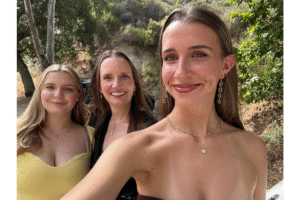
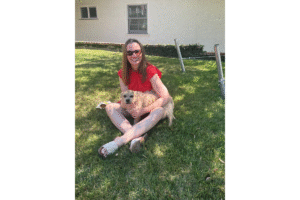
My two daughters and spending as much time with them as they can/will, my adorable buddy Ted and any activity near or in the water!
Q: If you were stranded on a desert island, what 1 person and 3 things would you have with you?
Dwight Schrute:
Dwight would absolutely:
• Create a tree-based currency (probably called Schrutebucks) and insist on a strict exchange rate.
• Set up a not-for-profit financial co-op for any stranded souls, complete with savings accounts (stored in hollow logs) and emergency goat-loan programs.
• Offer seminars under a palm tree on “Financial Preparedness and Beet-Farming Synergies.”
• Implement a vigorous membership vetting process involving bear knowledge and trivia from Battlestar Galactica.
And as people caught wind of the Desert Island Credit Union, boats would start showing up—not to rescue, but to refinance.
Honestly, it writes itself:
“Stranded? Safe. Because here at DICU (Dwight Island Credit Union), you’re not just a member—you’re a survivor.”
Q: Robot overlords are attacking your credit union. What one superhero would you want to help defend it and why?
“Captain Co-Op”
Real Name: Cassandra “Cass” Union
Tagline: “Banking with a heart. Fighting for financial justice.”
Mission: To protect the financially underserved, defend the credit union movement, and put predatory lenders out of business—one street corner at a time.
Q: If your life were a music album, what would it be called? Why?
I’d have to steal this from Credit Union icons and maybe be a solo band called the DisclosurE instead of the Disclosures, since that’s taken by two of the best already. I was told to “mouth the words” in choir by Sister Patricia, so my solo would probably be something like “Full Disclosure: Cover your ears”.
Q: If you were a drink, what would you be?
I am known in my friend group as being the only person on the planet who hates coffee, so it would be something completely unrelated to caffeine. Who needs that when you can have a “Cooperative Spritz”—a fizzy, feel good and all inclusive (like a credit union), open to all ages, with a little bit of sweetness, a little dash of spice, a spritz of fizz for that pop of member engagement and a garnish of Rosemary just because I love the smell and can’t think of anything creative to tie it to the Office or credit unions but I started the sentence and I need to run with it.