

One in eight dollars that leaves a credit union for a Square or PayPal account does not come back. That is not a rounding error. That is a slow leak that compounds.
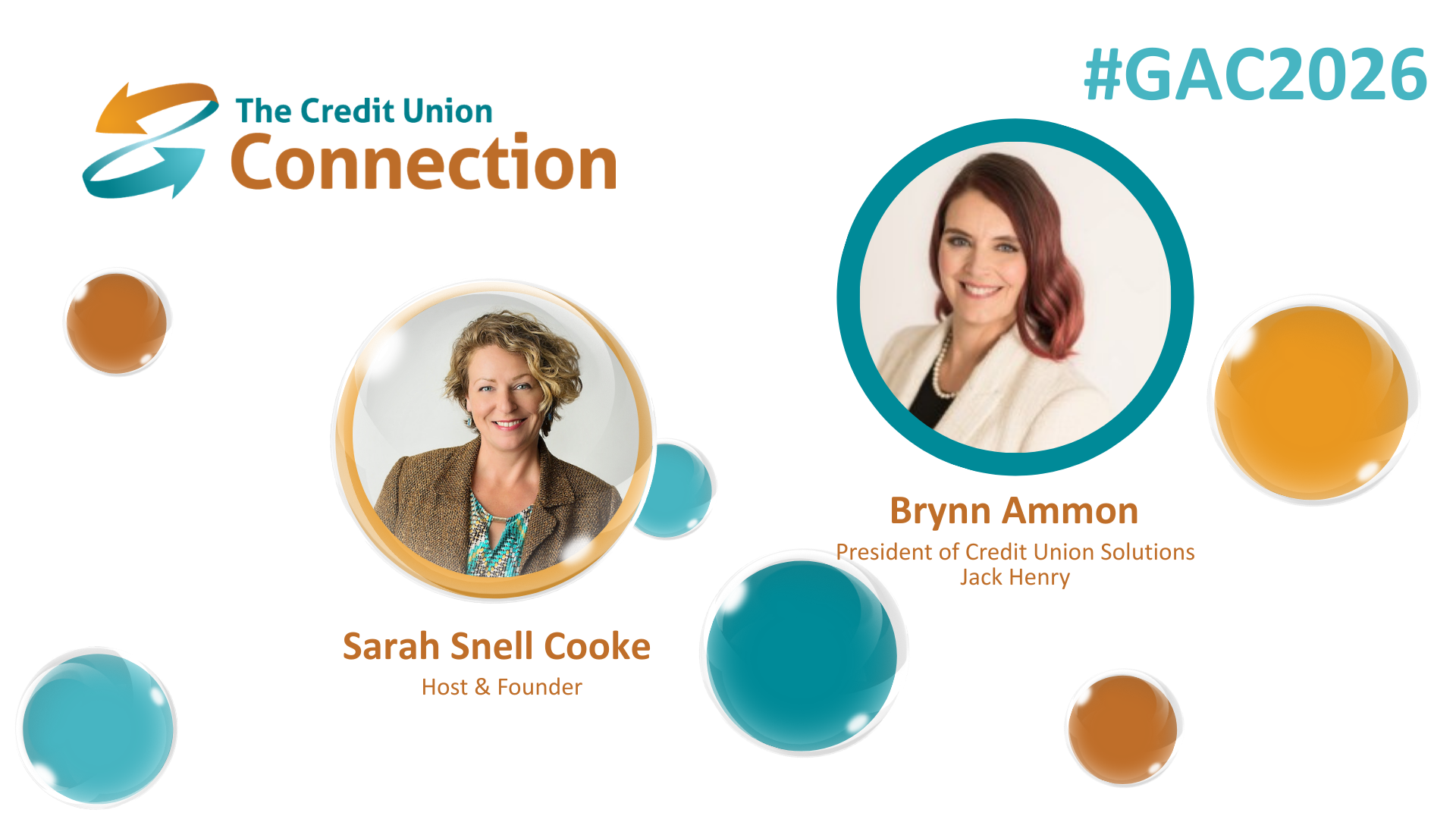
Brynn Ammon, head of credit union solutions at Jack Henry, joined Sarah Snell Cooke of The Credit Union Connection live at GAC 2026 for a conversation about what the company has been building, what is already live, and why the real competition for credit unions are fintechs that do not have to follow the same rules.
Tap to Local was built on a simple premise: A lot of credit union members are solopreneurs, gig workers, farmers market vendors and side hustlers who need to be able accept payment anywhere. What if your credit union could compete with their Square or PayPal account? Tap to Local can live inside a credit union’s existing mobile app. No secondary app and no clunky hardware. The member enrolls in a few taps, their phone becomes the payment device, and the money flows back into their credit union account. It is live in more than 50 Jack Henry customers and is rolling it out to all the company’s digital banking users now.
Related, Jack Henry is also rolling out Rapid Transfers, built on Visa rails so a small business owner who keeps an accounting account at one institution and a daily transaction account at their credit union and needs to move money between them quickly without the friction of withdrawal and redeposit. Debit to debit, real time. It is already moving real money.
Brynn also explained that Jack Henry is moving from two core releases per year to three, and has restructured its engineering and product teams to accelerate innovation on the foundational Symitar core. She said the goals is to ensure the core is never the reason a credit union cannot move fast enough. If credit unions do not win, the communities they serve do not win either.
NOTE: If transcription were this AI’s superpower, it would be a very disappointing superhero origin story.
Sarah Snell Cooke
Hello and welcome everyone. We are here live at GAC 2026. I am joined by Brynn Ammon. Welcome.
Brynn Ammon
Thank you. Pleasure to be here.
Sarah Snell Cooke
Brenn is the head of credit union solutions at Jack Henry. Why don’t you give the audience a little bit more of an introduction of yourself and the company?
Brynn Ammon
I am the head of credit union solutions at Jack Henry. I have been with Jack Henry for 13 years and just celebrated my 13th anniversary two weeks ago. I have been running the credit union team for about a year and a half now. We are into year two and finally feel like we are getting things done and moving forward.
Sarah Snell Cooke
In that first year, what surprised you?
Brynn Ammon
I do not know that anything really surprised me about the role since I had already been with the company. It was more of a learning experience for me as a leader growing into the role. A lot of self-reflection around just being myself, leaning into who I am and what I am good at, and not trying to be anybody else. That was really good in the first year. I had great experiences becoming part of our corporate leadership team, digging into our strategy, and helping to set strategy for the company. I have now been through two strategy setting sessions, which has been my favorite part.
Sarah Snell Cooke
So now you can tell us what you are going to do next.
Brynn Ammon
What we have been focused on this last year, and continuing into this year, is a really heavy focus on the digital front door experience for our customers. Last year, for the very first time in Jack Henry’s history, we set a formal strategy statement as a company. We settled on the simplicity of: we are here to help banks and credit unions win. Very specifically banks and credit unions, because we recognize that our community and regional financial institutions are our lifeblood. Everything we are building and innovating on is about making sure they will be successful and that we are providing them with technology to deliver to their members and customers. For us this last year it has been a heavy focus on small and medium-sized businesses and the digital front door experience. All things digital and cloud-native, setting up for the future of technology.
Sarah Snell Cooke
It is interesting you bring up small business lending. I have watched credit unions blossom in that space, even buying banks just to acquire that expertise. How is that affecting how you serve credit unions?
Brynn Ammon
There is a lot to be said for the SMB market, which is different from the traditional commercial market. A lot of what we are building is around small and medium-sized businesses, and a lot of those members are solopreneurs. These are people with a side gig, gig workers who just need a way to get paid, or someone who sets up a booth at the farmers market on the weekend. They grow to the point where they need to accept payment, and that means they have to go get a Square account or a PayPal account and figure out the dongle and all of that. That is a hassle. So we said, we need to solve this for our credit unions. First, it keeps money on deposit at the credit union, because if members are getting accounts at Square or PayPal, one in eight of those dollars stays over there and does not come back. Second, you are letting your members become even more financially distributed. Those were the two biggest pain points we were trying to solve.
We did that through a product we call Tap to Local. It allows the ability for a member, that person who sets up shop on a weekend, to reach the point where they need to take payment and just do it through their credit union’s mobile app. It is not a secondary app. They onboard directly inside the app they already use. Their credit union already knows everything about them, so there is no lengthy onboarding process. They click enroll and they are enrolled. Already authenticated, they can take payment right now. Someone can tap their phone. The phone becomes both the authentication device and the payment device. We are accepting both iPhone and Android. The member turns their phone into the payment method without having to get a merchant services license or buy clunky hardware. We also have integrated continuous accounting built in, keeping track of all those transactions back into the credit union account, with direct integration into accounting software including Quicken. The business owner does not have to spend their weekend reconciling everything manually.
Sarah Snell Cooke
And keeping them at the credit union for both their personal and business needs. Have you tested it yet?
Brynn Ammon
We have it live. This was an idea two years ago, we did innovation rollout and pilot, and now we have it live in production with over 50 customers. We are rolling it out to all of our Banno digital users over the next period of time.
Sarah Snell Cooke
Any results yet? Better member retention?
Brynn Ammon
Still early to get those kinds of results, but there are actually two projects we rolled out this year using Move’s technology and payment rails. Tap to Local is one. The other is Rapid Transfers, which is the ability to move debit to debit in real time. A small business owner might have an accounting account at Bank of America but keep their daily transaction account at their credit union. They need to move money quickly between the two. Instead of the friction of withdrawal and redeposit, they can move from their debit card over there to their account here through Visa rails or both rails through Move, in real time. That is already live in production and we have thousands of dollars moving in real time right now. Pretty exciting to go from nothing to money actively being moved that fast.
Sarah Snell Cooke What else is in store for 2026 for credit unions?
Brynn Ammon We had some leadership changes on my team this year. Elizabeth Osborne from Great Lakes Credit Union just joined a couple weeks ago and we are excited to get her onboarded and working through some transformation initiatives we have in store. We also restructured our engineering and product teams in early December. Through that restructure, we have started announcing a number of changes that our clients are going to see. Faster innovation on the foundational Symitar core than they have seen in probably a number of years. We are moving from two releases per year to three releases per year and will continue to iterate on that. The whole point is to move faster and deliver more each year at a faster cadence. We do not want the core to ever be the reason someone cannot innovate fast enough. As we continue to layer platform components on top of our foundational core, the foundational core needs to keep up and scale at the same rate.
Sarah Snell Cooke I always allow my guests a final thought. What would you like to leave our credit union audience with today?
Brynn Ammon Really just excited about the rate of change happening at Jack Henry right now. The pace of everything is rapidly evolving as an ecosystem and we feel that too. What I get most excited about is looking ahead and driving innovation that will help keep credit unions relevant now and into the future. Helping them compete with Chime and SoFi and those institutions, because it is not each other that credit unions are competing against. It is not the bank down the street. There are all of these unregulated fintechs taking their members and we need to find a way to help them there. Credit union survival is good for all of us as partners and for the communities they serve. Bank of America is not going to roll up its sleeves in those communities. If credit unions win, we win. If they do not win, we do not win. That is a model we are 100% committed to.
Sarah Snell Cooke
Awesome. Well, thank you so much for your time. Appreciate it.
Brynn Ammon
Absolutely. Thank you.