

Between 15 and 30% of US adults have already used cryptocurrency. Gen Z adoption is at 42%. Millennials are right behind them at 34%. And with the introduction of the NCUA’s proposed stablecoin rule, it feels more real now than ever.
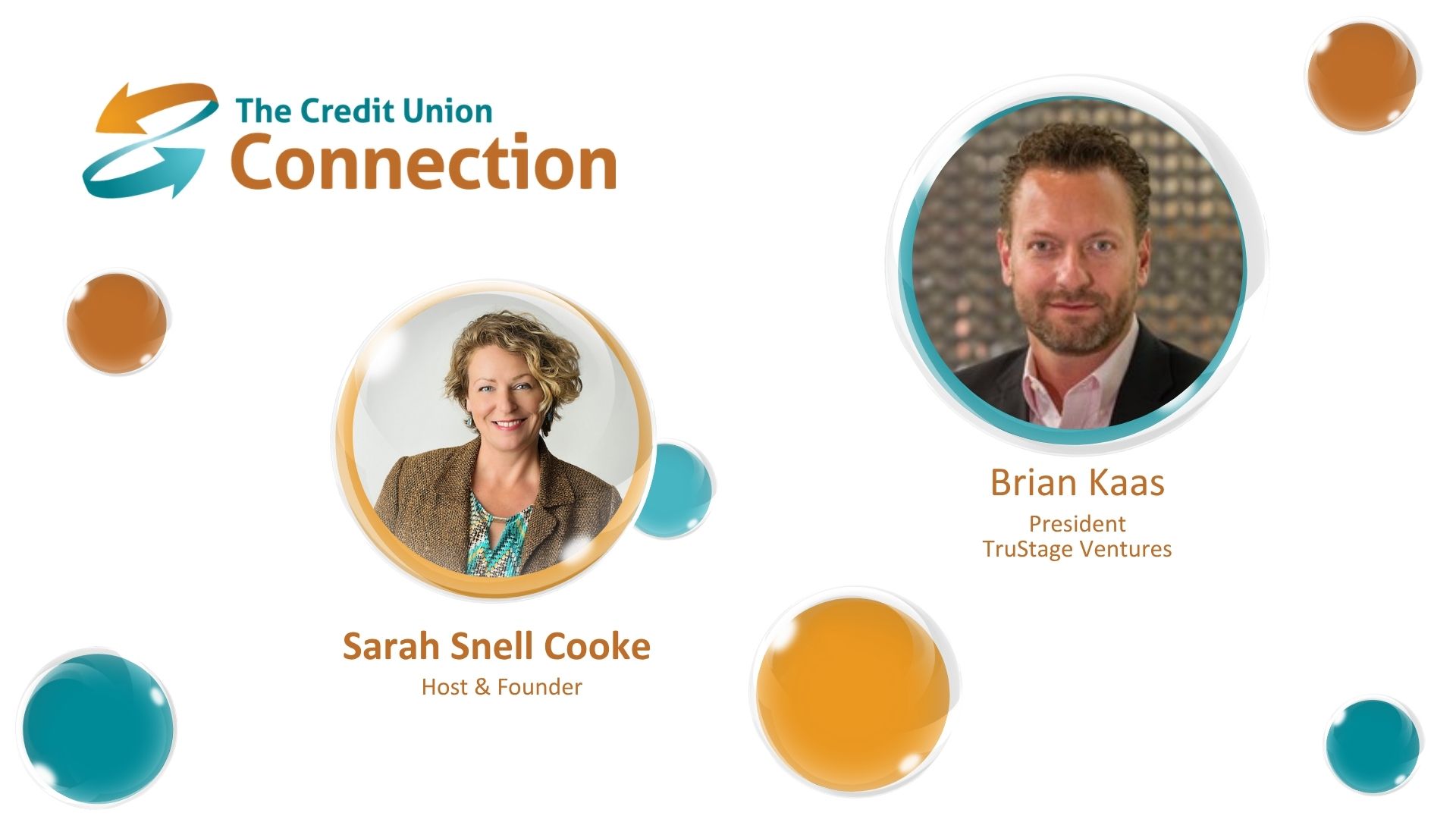
Brian Kaas, president of TruStage Ventures, joined Sarah Snell Cooke of The Credit Union Connection to talk about the launch of the TruStage stablecoin, what it means for the credit union system and why the window to get ahead of this is more than most credit union leaders think. This is a battle for deposits.
The first thing Brian does is explain the distinction between stablecoins and cryptocurrency. Crypto is an investment vehicle, volatile by design and backed by nothing but market sentiment. A stablecoin is backed one-for-one by a real asset, in this case, US dollars held in reserve. Every TruStage stablecoin issued will have a dollar sitting behind it. It’s more a payment utility – a faster, cheaper, programmable way to move money.
So why does the credit union system need its own? Because if it does not have one, members will buy stablecoins from someone else, and that money leaves the credit union balance sheet and will not be easy to get back. It’s deposit flight, and it is already happening. Walmart, Amazon, Meta and JP Morgan are all building stablecoin infrastructure right now. When a major retailer embeds a stablecoin into checkout, consumer behavior will shift fast. The credit unions that are positioned for that shift will benefit, while others will be playing an expensive game of catch-up.
TruStage is uniquely positioned to solve this for the credit union system, according to Brian. The company already works with about 93% of all US credit unions and already offers the treasury management, ALM, governance and compliance infrastructure that a viable stablecoin requires. They partnered with Blacktime Financial for the blockchain infrastructure. The goal is not just to give credit unions a stablecoin to offer members; it is to ensure the reserves remain with the credit union to protect interchange economics as adoption grows.
The NCUA’s proposed stablecoin regulation gets a measured read from Brian. His take is that it is reasonable and the devil will be in the details, but NCUA Chairman Kyle Hauptman has generally been supportive of ensuring credit unions have a level playing field in digital currency. The GENIUS Act goes into full effect early next year, which means the window for learning is now.
For credit unions that have not yet had this conversation is simple, Brian suggested. Bring it to your executive team and then your board. There will be between two and six trillion dollars of stablecoins in circulation within the next four years. Credit unions can’t afford to miss the boat, particularly as it pertains to serving their members. Learn more and register your interest at trustage.com/stablecoin.
NOTE: If transcription were this AI’s superpower, it would be a very disappointing superhero origin story.
Sarah Snell Cooke
Hello and welcome everybody. I am Sarah Snell Cooke, your host here at The Credit Union Connection. I have to say it: credit unions are on the cutting edge. Credit unions now have their own stablecoin. Today I am talking with Brian Kaas, president of TruStage Ventures, about the launch of the TruStage stablecoin. Before you roll your eyes and think, great, another crypto thing, here is why it matters. Because 15 to 30% of US adults are already using cryptocurrency. Gen Z and millennials in particular are leading that charge, which means your future members are moving their money to digital wallets and credit unions were not invited to the party. Brian is going to explain why TruStage built this, how stablecoins are completely different from Bitcoin, and why credit unions need their own version before Chase and Walmart get there first. We are also diving into the NCUA’s new proposed stablecoin regulation and what credit unions should be sharing with their boards right now.
Hello and welcome everyone. I am Sarah Snell Cooke, your host here at The Credit Union Connection. Fresh off GAC and wearing my green for St. Patrick’s Day. I am joined today by Brian Kaas. Welcome.
Brian Kaas
Hey Sarah, good to see you.
Sarah Snell Cooke
Good to see you as well. Brian is a regular here as you all know. He is the president of TruStage Ventures, which covers all the digital innovation work that TruStage is doing. Brian, do you want to give a little more introduction to yourself and the company?
Brian Kaas
Happy to. Within TruStage I run our venture capital fund. For the last decade we have been investing in fintech companies that can address the technology needs of credit unions and their members. More recently over the last 12 months we have been closely monitoring the emergence of stablecoins and the impact on the industry. I have been leading the effort within TruStage around the launch of the TruStage stablecoin, which is a stablecoin we have built and designed specifically for credit unions. That has been a fun project to get underway and share with the credit union community.
Sarah Snell Cooke
First things first. Some people still need a little educating. Can you describe the critical difference between a stablecoin and the cryptocurrency everyone has heard of?
Brian Kaas
Great question, and it is where I always like to start. The big difference with stablecoins is that they are backed one for one by an actual asset. In our case it will be backed by US dollars. For every stablecoin we issue, there will be a dollar held in reserve, plus some cushion once the regulations are finalized, so there is no fluctuation in the valuation of that stablecoin. Compare that to cryptocurrencies like Bitcoin, where there are no hard assets or US dollars backing them. That is where you get very significant fluctuations in value. I like to say stablecoins are really more of a payment utility, whereas Bitcoin and other cryptocurrencies are more of an investment vehicle where the value hopefully goes up over time if you are holding it.
Sarah Snell Cooke
Why did TruStage decide to enter the stablecoin space?
Brian Kaas
Throughout the history of TruStage we have looked at what solutions the credit union system needs to thrive and stay relevant. When we took a deep dive into the implications of stablecoins for credit unions, we saw some real challenges emerging, particularly around deposit flight as money moves off credit union balance sheets into stablecoins. We also asked ourselves why TruStage versus others. We work with about 93% of all credit unions in the US market. We have built trust over 90 years of existence with credit unions. And we already have a lot of the infrastructure that is going to be critical for a stablecoin to be viable: treasury management, ALM management, governance, compliance. We partnered with Blacktime Financial to provide the key blockchain infrastructure needed to power the stablecoin and other use cases that will be enabled through it.
Sarah Snell Cooke
Why does the credit union system need its own stablecoin?
Brian Kaas
The credit union system needs its own stablecoin, though I do not necessarily advocate for individual credit unions building their own. For a stablecoin to be viable long term it really needs to be interoperable with the other large stablecoins that emerge. We need to ensure there is a recognized stablecoin for the credit union system that both credit unions and their members can use, whether interacting with a JP Morgan stablecoin, a Tether stablecoin, or eventually an Amazon or Walmart stablecoin, so they are interoperable and interchangeable. If the credit union system does not have that, my concern is that we will be beholden to relying on solutions offered by big crypto or the big banks, and that creates a lot of squeeze on the industry.
Sarah Snell Cooke
I did some research ahead of time. Approximately 15 to 30% of US adults have owned or used crypto between 2024 and 2026, and approximately 27% of US consumers have used stablecoins for purchasing or investing. Adoption is being driven primarily by Gen Z at 42% and millennials at 34%. What does the credit union community look like if they do not get on board now?
Brian Kaas
That is a real concern. When we look at the relevancy of credit unions with younger consumers, it really comes down to having the technology to meet the member where they are. It is becoming increasingly easy to move your checking and savings account to a fintech or bank that does offer digital asset wallets and other capabilities. We are really encouraging credit unions to get smart about where the industry and consumers are headed, and to appreciate how quickly this could happen. I get the question a lot: our members are not asking us for stablecoins, so why would we spend time on this? A couple of responses to that. They might not be asking because you do not have any capabilities to ask about. And when very large retailers like Walmart, Amazon, and Meta are building infrastructure to enable stablecoins, that is going to drive consumer behavior much faster than a lot of people may recognize. The window between now and the end of the year is when the industry really needs to learn about this big shift that is occurring.
Sarah Snell Cooke
Beyond member attraction and retention, what are the benefits for credit unions themselves in terms of things like processing speed?
Brian Kaas
The big benefit of the underlying blockchain technology is that it enables transactions to occur almost instantaneously at a fraction of the cost. You can move money from here to Australia in five seconds at less than a penny of cost. When you have that kind of efficiency and speed, it will change the way money moves even over existing payment rails. For credit unions, adoption of stablecoins is really a mixed bag if there is no credit union solution in place. With other stablecoin providers, that is money pulling out of the credit union system. If members are buying stablecoins from other providers, that money leaves the credit union system and will be very hard to claw back. With TruStage stablecoin, we are going to reinvest the reserves we hold back into the credit unions whose members have purchased those stablecoins. That directly addresses deposit flight. We are also looking at the impact on interchange fees as adoption becomes more widespread, and finding ways to spread some of those economics back into the system. Credit unions that are proactive and on the wave that is coming will be able to leverage this change to their advantage. I am equally concerned for credit unions that are slow to engage, because it is going to be hard to play catch-up given how quickly things are moving.
Sarah Snell Cooke
Are you seeing any differentiation among the credit unions that are interested? Is this a large credit union thing or across the board?
Brian Kaas
We are seeing interest from credit unions of all sizes. With the solution we are bringing to market, there is not a heavy integration burden, at least not for the use cases rolling out in the early phases of the program. Even smaller credit unions are thinking about how they might save some back office costs. This is something that can impact credit unions of every size.
Sarah Snell Cooke
If a credit union wants to get started, where should they begin?
Brian Kaas
If you have done nothing at this point, the key starting point is to have a discussion with your executive team and then bring it to your board. The mainstream predictions are calling for anywhere from two to six trillion dollars of stablecoins in circulation within the next four years. We need to be prepared for that as an industry. Now is the time to understand what stablecoin is, what it could mean, what the impacts are, and what solutions are in market to address it. The GENIUS Act will go into full effect early next year so we have a window of time to get educated, but we cannot wait a year or two to act. The large banks are moving very quickly. The big retailers are moving very quickly. We need to move at that same speed. Credit unions can register with TruStage to get information on our stablecoin at trustage.com/stablecoin.
Sarah Snell Cooke
What are your thoughts on the NCUA’s proposed stablecoin regulation?
Brian Kaas
Overall the rule that has been released for comment is reasonable in my view. There is a lot more detail that will come, and another set of rules is forthcoming. In our conversations with the NCUA, Chairman Harper’s involvement in this has been encouraging. They have been very supportive of ensuring credit unions have a level playing field when it comes to digital currency. They have been great to work with early on and I hope that continues.
Sarah Snell Cooke
Final thoughts. What would you like to leave our credit union audience with?
Brian Kaas
Get out there and learn what you can about stablecoin. It was really eye-opening for me, and I have been following blockchain technology for seven or eight years. The GENIUS Act is what really created the catalyst for significant changes in the payment infrastructure. Talk to your credit union colleagues, get their thoughts, see what they are thinking about. And hopefully we will see you at upcoming conferences to hear more about the topic.
Sarah Snell Cooke
Awesome. Well, thank you so much for your time today. Appreciate it.
Brian Kaas
Thanks a lot, Sarah.