

The FIFA World Cup is coming to 11 US cities. For small businesses in host communities, that sounds great until reality hits: sustained customer surges, international payment complications, fraud risks and cash flow strain.
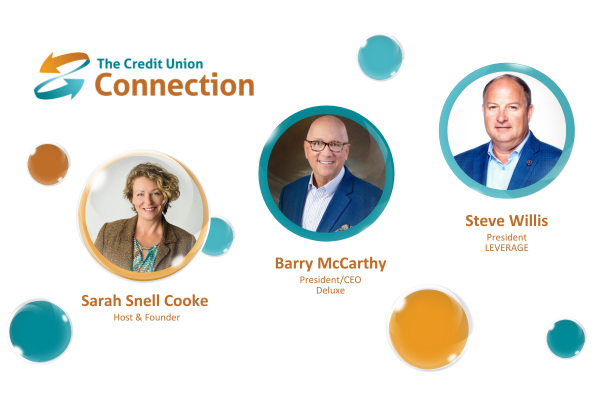
Barry McCarthy, CEO of Deluxe, and Steve Willis, president of LEVERAGE, joined Sarah Snell Cooke to discuss why this moment is both the biggest threat and biggest opportunity credit unions will see all year.
We’re gonna talk about checklists to help credit unions and small businesses cope with the FIFA World Cup and other major events, so we put that information into documents: One for credit unions to check off and another for you to brand as your own and share with your small business members and soon-to-be members!
Unlike a Super Bowl’s one-weekend spike, the World Cup creates sustained, repeated surges over weeks, with tourism traffic flowing consistently. That means small businesses aren’t handling one spike. They’re managing multiple events that require different planning than anything they’ve experienced before.
“The financial partners, particularly credit unions, have an opportunity to help these customers understand there’s a short-term need probably for additional capital,” Barry explained. The capital isn’t for permanent expansion. It’s for supplies and inventory that will be resold during weeks of elevated traffic.
That’s where cash flow emerges as the first challenge: a restaurant might handle one BIG weekend, but multiple weeks of increased demand while maintaining inventory and processing higher transaction volumes is entirely different. Small business owners need working capital fast and help preparing payment systems for international customers.
The Payment & Fraud Complexity
Steve emphasized that credit unions can become actual business partners, not just financial providers. “Stop being just a place where money lives,” he said.
That means helping members upgrade payment terminals to accept international cards, enabling contactless and mobile wallet options and reducing false fraud declines that kill sales. Most international visitors expect chip-and-PIN transactions—not all US terminals support this. It’s a simple gap that destroys customer experience.
Fraud is the other challenge. International payments mean different card types, currencies and higher risk. But the answer isn’t blocking transactions. Credit unions can adjust fraud detection models to account for event-related behavior patterns using network tokenization and real-time verification, rather than rigid blocking that turns away legitimate transactions.
In the bigger picture, credit unions serving small businesses during this event aren’t just processing transactions. They’re building trust during chaos. The businesses that remember which financial institution showed up and actually helped when things got complicated will become lifetime members.
Watch the full conversation for preparation strategies, payment readiness checklists you can white-label for business members and how to turn a one-time event into the beginning of something deeper.
This was transcribed by an algorithm that has never stolen anyone’s lunch from the office fridge, never missed a deadline and definitely won’t inherit the earth. Probably.
Sarah Snell Cooke: Hey, everyone. Welcome to The Credit Union Connection. I am Sarah Snell Cooke. The FIFA World Cup is coming to 11 US cities, and that means small businesses in those host cities have some serious opportunity as well as potential for chaos. Massive opportunity and massive chaos. Today I’m talking with Barry McCarthy, CEO of Deluxe, and Steve Willis, President of Leverage, about how small businesses can prepare for a sustained surge in customers, and more importantly, how credit unions can position themselves as the partners those businesses desperately need.
We’re covering payments, fraud, cash flow, and how credit unions can turn a one-time event into lifetime relationships. So let’s connect with Barry and Steve
Sarah Snell Cooke: Hello, and welcome, everyone. I am Sarah Snell Cooke, your host here at The Credit Union Connection. I am joined today by Barry McCarthy. Welcome.
Barry McCarthy: Great to be here. Thank you.
Sarah Snell Cooke: Great to have you. He’s the CEO of Deluxe. And then we also have Steve Willis. Welcome.
Steve Willis: great to be here. Nice to meet you. Hi, Barry. How are you doing?
Barry McCarthy: Great to see you, Steve.
Sarah Snell Cooke: And Steve is the CEO at Leverage. So why don’t you guys do a little more introduction of yourselves and the company. Barry, why don’t we start with you?
Barry McCarthy: Sure. I’m CEO of Deluxe, and most people know the company.
It’s 112 years old, started as a check printer, and while we still print checks, it’s no longer our largest business. Our biggest businesses today are payment processing businesses and data businesses, a significant merchant processing business, digitizing AR and AP, and a large-scale data and analytics business, and together process, in the neighborhood of $3 trillion a year in volume.
Most people are surprised to hear that because they think about us still just being the check printer, and- … while we love that check business, we know our future is in, digital payments, and we’re using that legacy of strength in paper-based payments checks to become a leader in digital payments today.
Sarah Snell Cooke: Yeah. No, I feel you. I left straight journalism for this, so yeah, totally understand where you’re coming from. and Steve, go for it.
Steve Willis: Yeah, so Leverage is a service corp for the League of Credit Unions and Affiliates. our trade association is Florida, Alabama, Georgia, and Virginia. So Leverage brings products and services to the credit unions, to help them prosper and, help their members.
So we own companies like, Growth By Design, Leverage Payment Solutions, Credit Union Audit Group, the companies that really can help make a difference in the credit unions’ lives. we focus on small to medium and also large credit unions. For our large credit unions, we have an ownership stake in True Treasury- and Credit Union Loan Source, which, True Treasury helps with treasury management, cash management services, and Credit Union Loan Source is an indirect lending that they help credit unions do. So we hit a bunch of different spectrums. We own… We have investments in 12 companies. We own nine outright, so we’re always looking to try to find products and services to help our credit unions.
And we just recently, in the last 90 days, acquired a company called Aux that does accounting, compliance, and shared branching. we’re really, trying to help our credit unions in any way we can to make them, help their members.
Sarah Snell Cooke: Yeah. I love that you guys are doing the investments as well because it always used to be just a group of vendors in the service corps, so that’s great, great to hear, Steve. and so- We’re here to talk about FIFA. We’re talking soccer today. so we have, several US cities that are gonna be hosting the FIFA World Cup Tournament, and, anything like this, the Olympics- … whatever, you have a huge surge of people heading to those cities.
And so what does that economic opportunity look like for small businesses in those host cities? Barry?
Barry McCarthy: Sure. I’m fairly involved here in the Atlanta market, which is gonna be one of the host cities, and what I can tell you is that- for each one of the matches, you should think about each one of the matches being like a Super Bowl event, and there are multiple matches.
So it’s unlike really any other experience that most of these communities have had where they may have had a Super Bowl or something similar to that where there’s a giant spike, but it’s once and done. What’s really different about this opportunity is that it’s multiple times, and it’s sustaining between those times because there are so many people that are gonna be traveling from outside of the country, so they’re gonna be using the opportunity to travel and be a tourist in these communities.
So from a small business perspective, they get an extraordinary opportunity to have a large surge in their business over an extended period of time. And so it’s a great opportunity for them to, to capitalize on their footprint, the foot traffic that’s gonna be coming as a result of the event, international visitors, plus even domestic visitors that are coming for the games.
And I think the big challenge is gonna be how do you manage a sustained level of spike, not just one time giant up and then down. So it’s a great opportunity, I think, for businesses of all kinds, but particularly small businesses, particularly in proximity to the stadiums or in areas where tourists are likely to travel. Great opportunity to make a great profit and improve their business.
Sarah Snell Cooke: Yeah, I think I saw we’re hosting 11 of them. Exactly. Yeah. Yes. just following up on that, Barry, cash flow obviously can be a strain for small businesses, I know well. Walk us through what that looks like on the ground with these small businesses when the owner suddenly sees this burst of transaction volume.
Barry McCarthy: Yeah. it’s gonna be a real challenge. So just let’s think about a restaurant as an example. Any particular restaurant could probably handle a one-time spike. So you think about a Super Bowl, so you’ve got a one weekend that you’ve got to, you’re gonna spike up, and you’re gonna have to buy extra supplies and ingredients to support that one-time surge.
Again, what’s different this time is not only do you have to do that, you have to do it repeatedly, and you have to do it on a sustaining basis over a large number of weeks. So I think that’s gonna be the key challenge, and I think you’re right on the hotspot here for a small business, which is how do they do that on a sustaining basis?
And I think that the financial partners, particularly credit unions, have an opportunity to help these customers, these businesses, understanding that there’s a short-term need probably for additional capital to not, not CapEx to build a new building. That’s, that time has passed. To buy supplies, inventory, the costs of, the cost of goods, the items that are gonna be resold.
And I think a number, and I would expect that a number of these businesses have been to the credit union or their other financial partners looking for, a short-term expansion of credit to allow them to surge to meet the demand.
Sarah Snell Cooke: Yeah. No, that makes perfect sense. So Steve, how can credit unions leverage this opportunity for themselves and the small businesses and really demonstrate that pillar of the community kind of brand that credit unions often have, and, how do they help them maximize the opportunity of something like this, the World Cup, that’s not only this one event, as Barry was saying, but a sustaining event?
Steve Willis: Yeah. So credit unions have a chance to position themselves not just as financial providers during the World Cup, but as economic coordinators for their local business communities, small businesses are about to see bigger crowds, bigger transaction volume, and probably bigger headaches too.
Credit unions can help them get ready. Payments, fraud protection, liquidity, all of it. many small merchants are not prepared, so this is a great chance for credit unions to stop being just a place where money lives and become an actual business partner, right? so here’s some of the things they can do.
Help businesses prepare before the visitors arrive. Most small businesses don’t realize where problems show up until it’s already costing them sales. credit unions can proactively help merchants upgrade terminals for contactless and international card acceptance, enable mobile wallet compatibility, reduce false claims on foreign-issued cards, prepare for higher transaction volumes and network spikes.
We were, when I was talking to my team about this, creating a simple World Cup readiness checklist for business members so they have a checklist knowing what they’re gonna have to do. and this is also a strategic opportunity for credit unions and businesses. The World Cup is not just a payments challenge, it’s a visibility opportunity, right?
Everyone’s gonna be watching. So credit unions that perform can well differentiate themselves by being easier to transact with, faster at resolving the problems that they, the small merchants are gonna experience, more welcoming to international customers. the more they feel comfortable as they’re coming over, the more they’re gonna wanna come back and spend more money in those cities, right?
Hopefully it’s just not a one and you’re done just ’cause the World Cup’s here. Hopefully they’re gonna come back and wanna visit again. Yeah. And then the institutions that succeed will likely focus less on adding flashy payment features and more on removing friction. So fewer declines, faster support, and stronger merchant readiness.
So that’s what the visitors will remember. Yeah, absolutely. And, you’ve alluded to it a bit, there’s obviously a greater chance of fraud. So how do credit unions prepare for that without creating too much of that friction you were talking about?
Yeah, so we all know international payments can get messy fast, so different- differentiate different cards, different currencies, fraud flags, declined transaction, and suddenly everyone’s frustrated.
The small businesses, the consumer. we want to make this a smooth transaction. So credit unions can help by making sure business are set up ahead of time with the right payment capabilities and fraud settings. The goal is simple: let the good transactions through and stop the bad ones, right?
We want, the bad people not to be able to have these transactions go through, and that’s easier said than done, right? So what credit unions can do, adjust fraud models for World Cup hosts’, behavior patterns. Use network tokenization and behavior analytics instead of rigid geo rules.
Enable real-time cardholder verifications through mobile push notifications. That’s happening more and more, where you get the text to your phone saying, “Did you make this transaction?” To try to stop those frauds, faster, So the goal is set up authentication, not transaction denials. We want the transactions to go through, the money to flow, but the legit transactions.
Yes. when these things happen, fraud comes in there. another frustration that’s gonna come up, not just fraud, is ATM frustrations. We gotta make sure the cash is available, so visitors commonly run into, debit cards rejected by ATM networks, machines running out of cash near venues.
So what credit unions can do is increase ATM cash forecasting near stadiums and transit hubs and keep the ATMs working, so make the cash available for the consumers. If the payment experience is smooth, people spend more money, and everybody’s happier, so that’s what we wanna do. That’s a pretty good business model, right?
Sarah Snell Cooke: Yeah, sounds like it. Barry, I’m gonna continue on this fraud thread here. Major events obviously can easily hide fraud better, so they get attacked. what fraud pattern should small businesses as well as credit unions be looking for, and how can they protect themselves, and again, not slowing down their service?
Barry McCarthy: So I, I think Steve did a great job of talking about how to be prepared, structurally prepared, making sure that you can accept the different payment types, that you have the appropriate payment terminal. And it’s important to note most, most, US businesses and wouldn’t be aware that outside the US most card transactions are now done with a chip and a PIN to provide additional level of authentication.
And so their customers coming in will want to use chip and PIN, which means you have to have a PIN pad available. Now, that’s probably present, broadly, but may not be available everywhere, so it’s just a simple example of a merchant having PIN pad and the appropriate, appropriate hardware there to provide some additional fraud protection, ’cause obviously using a chip and a PIN is a pretty safe transaction.
But I think it goes beyond that. It’s also, if someone puts on the back of their card, “Check ID,” ask for check, check the ID. I think it is using, which is not, which is certainly far from foolproof, but it is about using all of your senses to understand and, and, interact with the customer at the point of sale in a way to, to, try to produce a better understanding if there’s risk in that transaction.
Now, to be clear, the fraudsters are very sophisticated. But the benefits are that the credit union systems and the card association systems, and the bank that underwrite those merchants are all very sophisticated also. So I think it’s important, for these businesses to lean into all of those tools that are available to them to make sure that they are, the most prepared to protect themselves.
Sarah Snell Cooke: Yeah, don’t wanna be at the game and not be able to grab a soda or anything. Yeah. Exactly. Absolutely. we kinda touched on this again a little bit, but Steve and Barry, you’re welcome to answer as well, why are credit unions particularly well-positioned, to help their small business partners?
Steve Willis: I would say because credit unions actually know their communities, they’re part of the communities, they’re involved in the communities, so they know those communities, the credit unions that are based in those communities. So this isn’t just about processing transactions, it’s about helping local business handle the growth, manage the risk, and hopefully make a lot of money during this once- in a generation event. credit unions are relationship-driven by nature, and small businesses remember who showed up before things got chaotic. And I agree with Barry, small businesses have to be prepared for this. They need to be reaching out to the credit unions to make sure they know of all the tools that are available to them.
Sarah Snell Cooke: So the more they’re prepared, the more, they’re not gonna have run-in of issues that could, they could have, right? Yeah. I think we have, what, a week and a half out. Is that enough time to prep?
Yeah. There’s still time. There’s still time. Yeah. Okay. There’s still time. so Barry, if a small, restaurant owner, retailer, came to the credit union tomorrow asking for help to prep, what would that ideal support package look like?
Barry McCarthy: I think it’s a great question, and what I would tell you is I think there’s sort of three bundles of things that I think together can really, a credit union could really provide support for a small business. First one is around education, the second is around managing payments, and the third is around liquidity.
So on number one, on education, Steve did a great job, and we’ve been talking here about getting educated about what’s happening from fraud perspective, how to prepare, et cetera. that’s education. I think that there’s going to be a large number of these small businesses that are gonna be exposed to things they just haven’t seen before.
And so to the degree that a credit union can provide education insight, to these small businesses, it can be an extraordinary opportunity for that credit union to, to deepen their trust relationship with the customer by delivering true value to that customer or that small business, and helping them understand the dynamic of what they’re gonna be facing.
So education would be number one. Number two, is around payments, and we’ve been talking about that, but just making sure that the business is ready to accept the payment types that are gonna be coming their way. Because at the end of the day, if that business can’t accept a payment, they can’t be in business.
And the very worst thing that would happen, and Steve alluded to it a second ago, is that, or maybe you said it, Sarah, is that if you don’t, if you can’t accept a payment, there’s just no commerce. So there has to be confidence that business can accept however that customer wants to pay and be able to do it quickly so that they can clear the line that’s standing, hopefully, outside their door, to buy their merchandise.
And the third thing, we talked about a bit earlier, about cash flow, and it’s about liquidity. And so I suspect that there’s a number of these businesses that are going to need a short-term boost to liquidity. Not permanent increases. We’re not talking about long-term CapEx. It is short-term, increase in line of credit so that there is a short-term increase in line of credit so that they have the availability to buy, the merchandise that they’re going to in turn resell.
I think those three things together, education very broadly, second, making sure they’re able to take payments so they stay in business, and then the third, around the help with liquidity, I think that would be a one, two, three combo that would be really helpful for a small business, and a great opportunity in a surge time for a credit union to deepen the relationship they have with that small business.
Sarah Snell Cooke: Sure. Sure. And I just think this is such an, we’ve alluded to this, also, the PR opportunity, marketing opportunity that, that comes with this as well. plenty of testimonials, I’m sure, to be having out of credit un- out of the small businesses for the credit unions. Yes. And Steve, obviously, this is, a short-term event, even if it’s more than one day, it is a short-term event.
Steve Willis: How do you turn these, potentially new relationships, or even existing ones that have been transactional, into a deeper, longer term-type membership? First you help them survive the chaos, right? this is gonna be a crazy event. They’re gonna- there’s gonna be so many things being thrown at them.
And then you help them grow after it. if a credit helps a business successfully navigate a huge moment like this, that relationship’s gonna get a lot stickier. They just built the trust, right? you just went through a major event, you survived, hopefully you made a lot of money from it, and the credit union was there to help you.
So that opens the door to everything else, lending, treasury services, payments, long-term growth conversations. So basically, don’t show up like a vendor trying to sell them something, show up like a partner who actually helped when it mattered, and keep being that partner. Don’t stop now that the event is over.
Make this a lifelong relationship, and I think that’s the important piece is, once it’s over, don’t go away. Continue to build off what you helped them build. so I think that’s the best way to do it.
Sarah Snell Cooke: Yeah, for sure. I always allow my guests to have the final thoughts. Barry, I’m gonna start with you.
Barry McCarthy: What do you have to leave our credit union audience with today? if you happen to be in a community that’s gonna have a FIFA event, embrace it, run towards it, and maximize it, and, partner with your credit union to help you get those three things we’ve already talked about, education, make sure you’re ready for payments, and, work with your credit union if you need help on liquidity, and you’re gonna have a great event, and you’ll have a great experience, and improve your business along the way.
Steve Willis: Absolutely. And wrap us up, Steve. So first off, thanks for having me. Barry, Sarah, I really appreciate being here and I think Barry touched on a lot of it. be prepared. don’t wait for the last minute. Use the resources available to you to help prevent the bad things that could happen.
Sarah Snell Cooke: Work with your local credit unions. That’s the best advice I could give someone, is reach out, be prepared.
Absolutely. Work with your credit unions. Thank you so much, guys. Yeah. Appreciate it.
Barry McCarthy: Thanks for the opportunity, Sarah. Yeah. Great to be with you.
Steve Willis: Thank you.
Podcast: Play in new window | Download