
the credit union connection logo white

Credit Union Advocacy Group Thanks Nebraska Senator for Standing Against Credit Card Price Controls

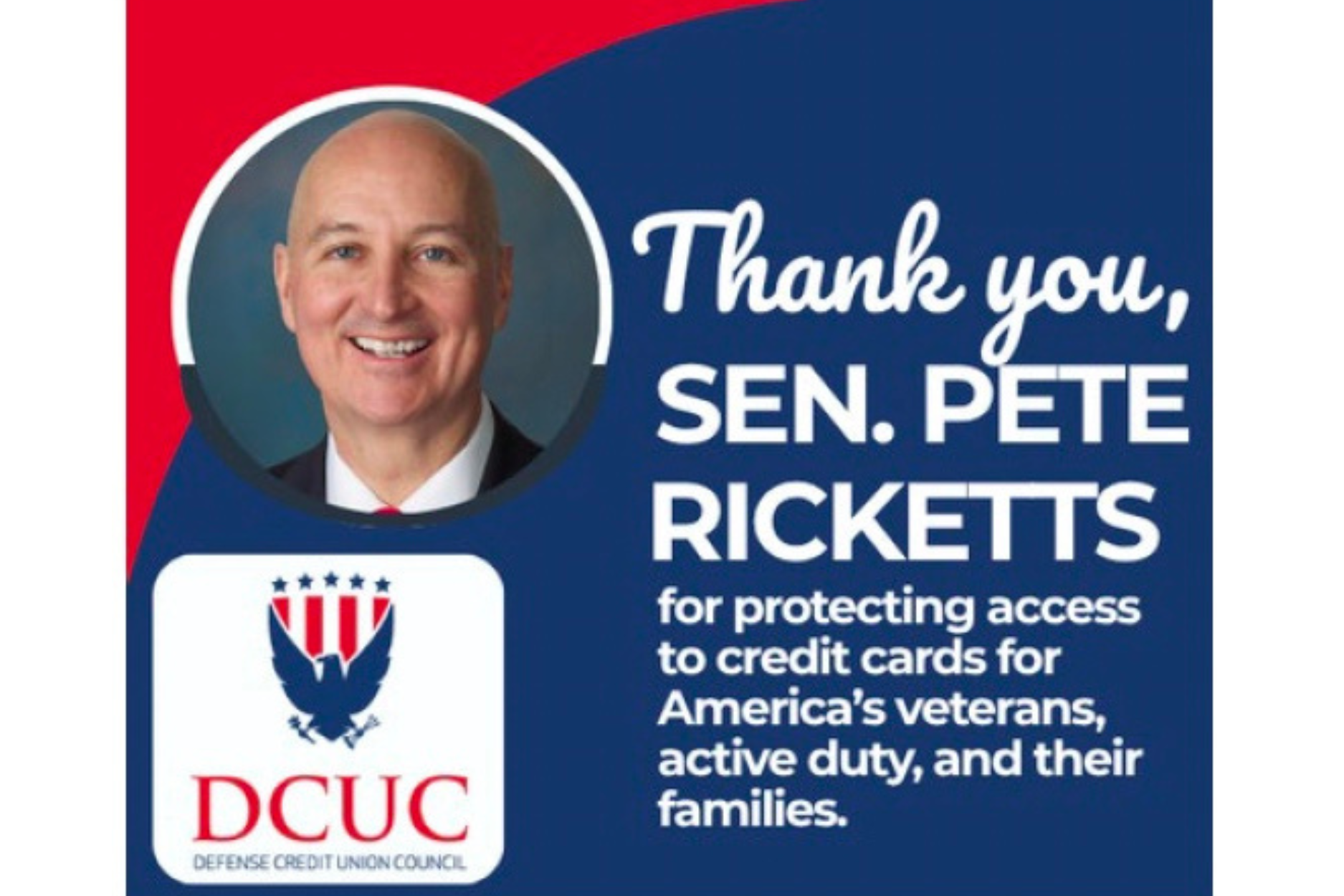
Through its Defending Credit Unions National Advocacy Fund, DCUC kicked off a targeted digital ad campaign on June 26, 2026, giving a public shout-out to Senator Pete Ricketts (R-Neb.) for backing policies that keep affordable credit accessible to everyday consumers. The campaign runs through July 12 and will pop up across digital platforms and websites throughout the Cornhusker State. The ads aren't just feel-good fluff, though. They're directing people to GuardYourCard.com, where folks can get the real story about legislative proposals that could mess with credit card access and why keeping the payments marketplace competitive actually matters to your wallet. Why the Campaign Matters So what's this all about? Senator Ricketts has been pushing back against government-imposed price controls on credit cards—the kind of intervention that sounds good on paper but could create a domino effect of unintended consequences. We're talking reduced credit access, weaker fraud protections, disappearing rewards programs, and extra financial pressure on working families. Military households would feel the pinch especially hard. "If access to traditional credit products is reduced, many consumers, including the men and women in uniform, could be forced to rely on higher-cost alternatives, such as payday and predatory lenders," explains Anthony Hernandez, DCUC President and CEO (and retired U.S. Air Force Colonel). "We appreciate Senator Ricketts' recognition that drastic price controls on the payments system would have real consequences for consumers, especially military families." Translation: take away reasonable credit options, and people end up in the arms of payday lenders and other financial predators charging rates that would make a loan shark blush. The Bigger Picture Jason Stverak, DCUC's Chief Advocacy Officer, added his own praise: "We thank Senator Ricketts for his continued leadership in supporting policies that protect consumers and preserve a strong, reliable financial system." As Congress continues wrestling with interchange legislation (that's the fees paid between banks when you swipe your card), DCUC is staying on the front lines. Their mission? Making sure lawmakers and regular Americans understand why maintaining a secure, competitive payments system isn't just financial industry jargon—it's about protecting safety, encouraging innovation, and keeping financial services affordable for the millions of people who depend on credit unions. It's a reminder that sometimes the wonky stuff happening in Washington has very real implications for your everyday financial life. And occasionally, it's worth saying thanks to the people trying to get it right.Below the headline, smaller white text reads: "for protecting access to credit cards for America's veterans, active duty, and their families." The message emphasizes support for military personnel and their families by recognizing efforts to preserve access to credit card services. In the lower-left corner is the Defense Credit Union Council (DCUC) logo, featuring a stylized eagle with red, white, and blue patriotic elements above the organization's name. Overall, the graphic has the appearance of a public advocacy or appreciation campaign, using clean typography, patriotic colors, and a simple layout to highlight DCUC's gratitude for Sen. Ricketts' support of issues affecting military-affiliated credit union members.

Through its Defending Credit Unions National Advocacy Fund, DCUC kicked off a targeted digital ad campaign on June 26, 2026, giving a public shout-out to Senator Pete Ricketts (R-Neb.) for backing policies that keep affordable credit accessible to everyday consumers. The campaign runs through July 12 and will pop up across digital platforms and websites throughout the Cornhusker State.

The ads aren’t just feel-good fluff, though. They’re directing people to GuardYourCard.com, where folks can get the real story about legislative proposals that could mess with credit card access and why keeping the payments marketplace competitive actually matters to your wallet.

Why the Campaign Matters

So what’s this all about? Senator Ricketts has been pushing back against government-imposed price controls on credit cards—the kind of intervention that sounds good on paper but could create a domino effect of unintended consequences. We’re talking reduced credit access, weaker fraud protections, disappearing rewards programs, and extra financial pressure on working families. Military households would feel the pinch especially hard.

“If access to traditional credit products is reduced, many consumers, including the men and women in uniform, could be forced to rely on higher-cost alternatives, such as payday and predatory lenders,” explains Anthony Hernandez, DCUC President and CEO (and retired U.S. Air Force Colonel). “We appreciate Senator Ricketts’ recognition that drastic price controls on the payments system would have real consequences for consumers, especially military families.”

Translation: take away reasonable credit options, and people end up in the arms of payday lenders and other financial predators charging rates that would make a loan shark blush.

The Bigger Picture

Jason Stverak, DCUC’s Chief Advocacy Officer, added his own praise: “We thank Senator Ricketts for his continued leadership in supporting policies that protect consumers and preserve a strong, reliable financial system.”

As Congress continues wrestling with interchange legislation (that’s the fees paid between banks when you swipe your card), DCUC is staying on the front lines. Their mission? Making sure lawmakers and regular Americans understand why maintaining a secure, competitive payments system isn’t just financial industry jargon—it’s about protecting safety, encouraging innovation, and keeping financial services affordable for the millions of people who depend on credit unions.

It’s a reminder that sometimes the wonky stuff happening in Washington has very real implications for your everyday financial life. And occasionally, it’s worth saying thanks to the people trying to get it right.

Leave a Comment

Your email address will not be published. Required fields are marked *

Scroll to Top