

Today’s credit unions face an intense battle for deposits against traditional banks and fintechs.
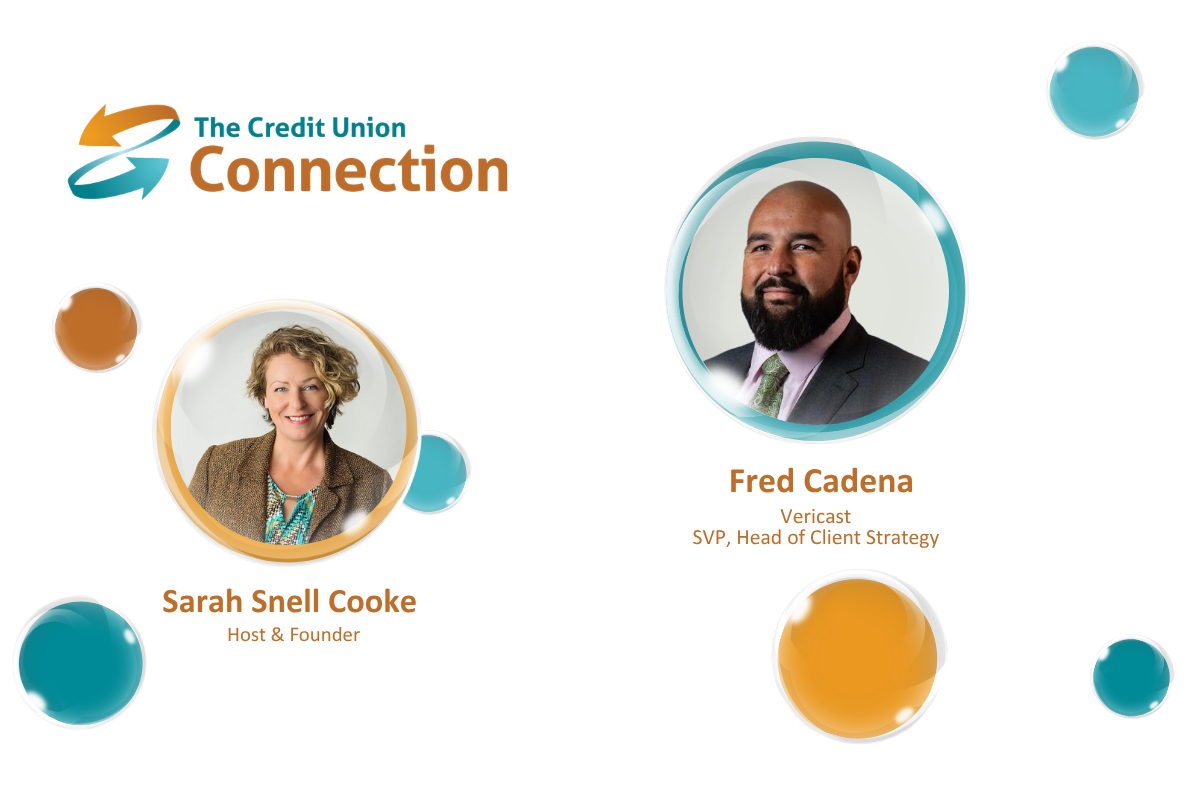
In this episode of The Credit Union Connection podcast, host Sarah Snell Cooke and Vericast’s Fred Cadena discuss new research showing that 74% of U.S. adults are tempted to switch financial institutions for the right incentive.
While cash bonuses or waived fees “grease the skids” to open the door, only 1 in 10 consumers believes cash alone buys loyalty. Convenience, seamless onboarding, and digital experiences matter far more; a $300 bonus cannot salvage a clunky app.
To convert rate-chasers into lifelong members during the critical 90-day window, credit unions must prioritize instant physical and digital card issuance, offer holistic relationship value rather than single products, and master the initial onboarding experience. Structurally wired with deep community roots, credit unions remain uniquely positioned to win this game.
Watch or listen to the full episode for a complete breakdown on product lines, fee income shifts and member journeys.
NOTE: This transcript may contain minor imperfections courtesy of our AI overlords-in-training. We’re not complaining. We’re definitely not complaining.
Sarah Snell Cooke: Hello, and welcome everyone. I am Sarah Snell Cooke, your host at The Credit Union Connection. I’m joined by Fred Cadena today. Welcome.
Fred Cadena: Thank you. Excited to be here.
Sarah Snell Cooke: Yeah, I’m excited to have you. You guys have done some great research. Fred happens to be the senior vice president and head of client strategy at Vericast. Why don’t you do a little introduction of yourself and the company?
Fred Cadena: Yeah, absolutely, happy to do so. So like you mentioned, I lead client strategy here at Vericast. My own path to Vericast is a little sideways. Early in my career I came out of retail brokerage at a company called OptionsExpress. And in my role I got to help lead a lot of the disruption of that industry right up until we got disrupted. And so I have a healthy respect for how fast a category can reprice, and I think that there’s a lot of similarities that are happening in the credit union industry as well at the moment. As far as Vericast is concerned, we have been in the industry for over 150 years, helping credit unions and banks in a number of different ways. We are probably best known across the industry as a check printer, and that is a big part of our business. We also have a contact center business. We have a payments business and marketing solutions, which is the part of the business that I am entirely involved in. So I love talking about growth strategies, both acquisition and retention and deepening relationships, and excited to be chatting with you about it today.
Sarah Snell Cooke: Yeah, yeah, those are all the things that get me all worked up, too. Awesome. So, Vericast recently did some research. You did a survey. And obviously deposit acquisition, credit unions and then banks and those other guys that do the same or similar things know, deposit acquisition is becoming increasingly competitive, more so, with the fintechs coming in the last 10, 15-plus years, somewhere around there. And you guys did this survey of a thousand US adults and found that 74%, three-quarters, are tempted to switch with the right incentives. So how is this tracking in the past? ‘Cause it does seem tight right now. You hear about it more than I have in the last 27 years or so.
Fred Cadena: Yeah. Absolutely. I mean, I think that the interesting part of that discovery is that I think people often think that those decisions are set in stone, and that once somebody’s kind of settled in, it’s going to be very hard to dislodge them. And we’ve certainly found that in designing audience strategies for our clients, it is helpful to have some type of event that leads into the switch, that an institution can definitely entice people to move with the right messaging and the right offer. I think one thing that people need to keep in mind, and I’m sure you’ve seen the cash incentives continue to move up, I don’t believe that a cash incentive is required to win, but think about it yourself and how difficult it would be if you’re changing your primary transaction account. You’ve gotta update your debit card in everywhere that it is, and you’ve gotta update your direct deposit, you’ve gotta update all your bill pays. And there’s some ways that institutions can make that a better experience and an easier experience, but a person doesn’t necessarily know that going in. And so the incentive sometimes helps to grease the skids. But more important than that, that’s gonna open the door. That’s gonna maybe get them interested. But what’s gonna keep them there? And that’s the bigger part of the equation. And it’s, you know, aligning your product, what you’ve designed your account to contain, whether it’s a rewards account, whether it’s something that’s geared at people that need access to things like early access to pay, or whether it’s, maybe interest. Whatever those, those are, you wanna make sure you’re aligning those features to the audience you’re putting it in front of, and making sure it’s a big part of your message. And then critically important, you’ve gotta deliver once they’re through the door. That first 90 days is critical. The better a member experience, people can have coming in, the much, much more likely they are to stick around.
Sarah Snell Cooke: Absolutely, ’cause that, by then you may have built some trust up as opposed to, giving them a bad experience and you build something else up.
Fred Cadena: Exactly. That 250 or 350 or 600 plus I’ve seen, is not gonna keep them there if they’re not, if your brand is not living up to the promise it made as they were choosing your institution.
Sarah Snell Cooke: And I think you make a really good point about the payments part of it as well, and everything we have online now. I remember when I was in college before, or back when online was starting to be a mainstream thing, the boyfriend at the time, he went from this institution to that institution and, like, made a few hundred bucks along the way. But that’s probably, you’re right, it’s probably not gonna happen anymore because of all those different things you gotta change. And I guess that probably has a huge impact on loyalty too, right?
Fred Cadena: It definitely does. I mean, I think that is, as a person, either walks out to their mailbox and sees your offer or is looking at an offer in a digital channel, that’s part of what goes into the calculus. It’s, I have, I’ve gotta pick up the kids in an hour, and I’ve gotta do the groceries, and we’ve got this going on on the weekend, and by golly, it’s gonna take me half an hour, an hour, two hours plus to make all these changes. When do I have time to do it? And so the incentive helps get over that friction, but that’s not gonna win the whole battle. Like they need to believe that by making the move, they’re going to have a materially better experience, and that’s a mix of both the customer, the member-facing experience that’s being delivered, as well as the mix of product features. You know, whatever that product’s designed to deliver.
Sarah Snell Cooke: And, you know, credit unions, their history has been strong with member service, knowing their members, that kind of background. But of those members, like we said, three quarters, willing to jump for new product offers. And they’re looking for, the things that they ranked highest would be, like, a cash bonus, lower or no fees, better rewards, and other perks, which, I mean, some of it, credit union’s kind of been slow off the credit cards, for example, or what have you. But those are some of the most common drivers. And so where do you see credit unions in this area? How are they fairing?
Fred Cadena: You know, I think they’re fairing pretty well. You know, a lot of the credit unions that we work with have spent a lot of time intentionally looking at their field of membership, looking at their market, both their current market and potentially markets that they’re seeking to serve in the near future, and understanding what makes that population unique, and then adjusting their products to be responsive to that. And again, every credit union’s different. Every credit union serves a different field of membership. For some, it could be like features that favor people that are earlier in their life and they’re just getting things together. It could be more financial education. It could be more early access to pay. For others, they may have a field of membership that’s more mature, a little bit further down the line financially. They’re looking for things like maximizing the return on their money, or they might be looking at things like rewards. And so it’s really important that every institution gets a handle on who their membership is, who they want their membership to be, and then creates that whole promise, that brand promise around how they’re gonna deliver that. It starts with product, having the right design of the products. And then it goes into messaging, and then where the rubber meets the road is what is your digital experience and what is your in-branch experience, ’cause it all has to tie out. If any of that is off-kilter, if any of that is not aligned, the member’s gonna realize it and that’s what opens up people really to wanting to consider something else.
Sarah Snell Cooke: Absolutely. Had that discussion the other day about how, if you’re consistent across all your channels, you build trust, and if you don’t, then that gives them a reason to leave, especially if one is really not good. One or the other is really not good.
Fred Cadena: Exactly. Yeah. And, and nowadays, you know, institutions, and I think I’ve heard you say this on some of your podcasts before, you’re not just competing with other credit unions and banks and fintechs. You’re being measured against every experience that your members are having in any channel. So you’re competing with Amazon, not because Amazon’s a bank, but because they can press two buttons on their phone and have a box of laundry detergent at their front door in 25 minutes. And just because you’re a credit union doesn’t mean that you get exempted from that customer expectation.
Sarah Snell Cooke: Yeah, I, this has been a little while now, maybe 10 years, but a CEO told me, “We don’t compete with Discover. We’re not gonna worry about them.” And I’m like, “Yeah, you do.” But anyway, you know, and some of these incentives, as we talked about earlier, are more important to people than others, and people love cash back especially right now.
Fred Cadena: Absolutely.
Sarah Snell Cooke: And overdraft fees. Just kill the overdraft fees, which I would love. But anyway, the, how do credit unions go about starting that strategy? How do they go about changing what they’re doing currently to backfill the income that would’ve come from overdraft fees and things like that? How do you make up the cash rewards that you’re paying out, hopefully with lifetime of service. But those are some of the top priorities in the current economy and so how can credit unions get started in that area?
Fred Cadena: It’s a great question and definitely a huge challenge. I think that you’re absolutely right, consumers are looking ever more critically at what they’re paying, at the fees and what they’re getting out of the account. I think the best way for institutions to try to respond to that, if you’re going to cut some of the fee income by reducing or eliminating overdraft fees or reducing or eliminating account fees, to make the books balance, you’re gonna have to find that income elsewhere. I think an obvious place to do it, if you’re a smaller institution especially, is through transaction income, giving people incentives. I will say this, and I’m a poor example. I pay for everything with plastic, or actually I’ve got a metal card, but I don’t use cash or checks for anything. I probably shouldn’t say that being at Vericast, but it’s just so easy. Tap to pay and everything’s easy. Now, where do I make that move? I mean, most of the time I’m using my credit card because my credit card has really good rewards. But if an institution can find ways to incent people to make those swipes happen in their debit account, or if they have a credit card product that is also competitive, that can help supplement a lot of that income that might be lost from overdraft fees. But again, it comes down to understanding your field of membership and what they’re gonna be responsive to. I’m a big fan and a big advocate for years before I’ve even been at Vericast in valuing member relationships holistically. Not thinking about it as a single product, but thinking about the total value of the relationship. And so maybe what some people get if they do 10 swipes, 20 swipes, 25 swipes a month, maybe they get 50 bips off their HELOC. Maybe you have to look and see where the levers make sense for your institution. Every institution’s balance sheet’s a little different. But what it does is it creates incentives for them to keep doing more business with you and not shop every product around to somebody else.
Sarah Snell Cooke: And I feel like credit unions also may have an bit of an advantage on this, being not-for-profit. You know, they can experiment a little more, and some of them have extreme amounts of capital to experiment with. But I love everything you’re saying, especially like, the whole value of the member, not just that one product or even transaction for that matter. And, you know, one of the things that came out of your survey that I think was interesting is debit card personalization. Now, I think of that, and it was almost half of Gen Zs were saying that, which of course credit unions really wanna recruit to their side. But having it personalized, I’m thinking that means like a change of the image or something like that. What does personalization mean today?
Fred Cadena: Yeah, absolutely. And it’s a broad category. It encompasses a lot of different things. It certainly encompasses like the ability to pick your own image, which is definitely something that’s out there, both at central issue and instant issue solutions. It’s also affinity personalization, and a lot of credit unions have invested in sponsorships, college, professional sports, et cetera. It’s aligning something that is important to that member in a way that they can display it publicly. I think this ties back even with the personalization of checks. You know, back when you used to walk into a branch and see a giant fold-out brochure with 30 different types of checks, and you could pick Disney checks or Looney Tunes checks or sports checks or what have you. The desire for people to express things that are important to them, hobbies, affinities, and in some cases even their own personal image, it never really stops. And I think that again, when a person is looking at two institutions that have very similar offerings, that can absolutely be a reason why somebody moves and continues to be there.
Sarah Snell Cooke: Especially if, you know, a percentage or whatever goes to a cause that they’re supportive of as well, that the credit union supports. That’s further affinity right there.
Fred Cadena: Absolutely.
Sarah Snell Cooke: Yeah. And we also know that Gen Z and as well as the millennials, and even my old self wants convenience. And your research found that 60% of the millennials and 61% of Gen Z, they want instant issuance of those cards. Now, I just recently applied for a card from a large bank, but I had to wait two weeks to receive the card, which I thought was crazy. But not only instant issuance, but also the Apple Wallet, like digital representation of the card, can be immediately useful right away. Not only to the member, but also to the institution already getting more of the interchange and the percentage that they get out of the purchases themselves. So everybody wants instant issuance. And how are credit unions doing on the convenience scale, if you will?
Fred Cadena: Yeah, I’m with you. I’m a big advocate of instant issue, both physical and digital, and institutions that decide if they wanna concentrate on one, or I think the ultimate is to make both available. I’m always a big advocate of meeting members in the channel where they want to be. I think it’s one of those things that institutions both tend to think is more expensive than they really think it is. And there’s also, especially if you’re doing physical instant issue, there’s a lot of controls that need to be put in place at the branch level in order to meet regulatory requirements. So there can be some challenges, but I look at it from an experience perspective. You just climbed the mountain of getting somebody to consider your institution, put everything else you’re doing on the back burner, go through the process of opening, whether it’s online or in person, and now they’re getting ready to say, “Okay, I’m gonna move my money over. I’m gonna set up my direct deposit, and I’m gonna start moving my transactions to this account.” But, but wait, now I’ve gotta wait for the card to come before I repoint all my debit card transactions. Again, it’s just adding more friction. And so again, I think the easier that you can make it to give new members a reason to start transacting as quickly as possible, the more success you’re gonna have. You only have 30 to 90 days from when they first come over to really lock them in. And the stronger you can make that experience in that period, I’m not saying after 90 days do not continue to give them a good experience. Yes. But the stronger you can make it up front, the more they’re likely to stick around. And so instant issue can be a huge part of that.
Sarah Snell Cooke: Yeah, for sure. And, you know, it is not just millennials and Gen Zs really want it, but I’m a Gen X-er. I want it, you know? I think we’re kind of that trust era, as far as digital transformation and whatnot. I think most of the Gen X-ers are pretty savvy. So if a credit union is behind, I mean, obviously people want the cash back, but if a credit union’s behind, where, what’s the smartest place to start? Is it that cash back, or is it one of these other things that we’ve talked about?
Fred Cadena: It’s a wonderful question, and this will probably come across. I didn’t mention in my intro, I spent 16 years in consulting, and so I’m gonna give the beautiful consulting answer of it depends. And it comes back to looking at that field of membership and looking at where your strengths are. I believe that it is better for an institution to have fairly consistent experience across the entire journey than have some areas that are excellent and some areas that are really poor. So while I’m not usually a fan of peanut butter, if you’ve got a limited budget, limited other resources, which every institution does, rather than making one area amazing at the cost of others, I would look to try to, as much as possible, keep that experience bumped up across the entire experience. That being said, there’s some things that are relatively low cost. It doesn’t cost a lot of green dollars outside the organization to evaluate your product offerings and maybe do some consolidation, add some product features. Depending on what the product feature is, may cost you from a balance sheet perspective, may cost you to go out and get an affinity program, whatever that decision is. But the analysis and deciding what direction you wanna go can be fairly low cost. Depending on who your core is, adding things like instant issue, making it seamless as part of the account opening process can be very easy. I mentioned earlier, it’s something that we do here at Vericast. We’re always happy to talk to people about how to add instant issue. What I would say, though, is take the time. It is a cross-functional exercise across a lot of stakeholders at the credit union, and just look at what that end-to-end experience is. Imagine yourself a new member coming in, and how am I doing discovery of the institution? How am I researching? What does that landing page experience look like? Is it easy for me to find account features? Is it easy for me to join? What is that joining experience like, both online and in the branch? You know, is the branch welcoming? Are people at the branch really informed about our products and can talk to members and prospective members easily? How long is that account opening process taking? And just score yourself as if you were an outsider across that whole journey, and it usually becomes very clear where the first dollars of investment should go.
Sarah Snell Cooke: Absolutely. Sounds great. Now, I always allow my guests to have the final thoughts. What would you like to leave our credit union audience with today?
Fred Cadena: Oh gosh, I feel like I’ve had all the thoughts. I’ve been doing all the talking. No, I’ll say this, everybody in the industry has been bracing for deposits to be won exclusively on price, whether that be rate or whether that be incentive, and I don’t think it will be. You referenced the data that we did. Only one in 10 customers thinks that a cash bonus will buy their loyalty. It’s gonna get people to the door. It’s gonna get you in the consideration set. But what’s gonna buy the loyalty over the long term is everything else. So it might seem counterintuitive, but the offer should almost be the last thing an institution looks at. First look at who you want, who you’re serving, who you want to serve. What is it about a prospective member that you can do better than the bank or credit union or fintech down the street can’t do? And how are you gonna prove it to them in their first 90 days with you?
Sarah Snell Cooke:
Fred Cadena: And I believe strongly that credit unions are structurally better than anyone else in the financial services to make those types of decisions and trade-offs. And so if I could encourage everybody that’s listening to do one thing, that would be it.
Sarah Snell Cooke: Awesome. Well, thank you so much for your time and expertise today, Fred. Appreciate it.
Fred Cadena: You bet. It’s a pleasure chatting. Hope we get to chat again soon.