

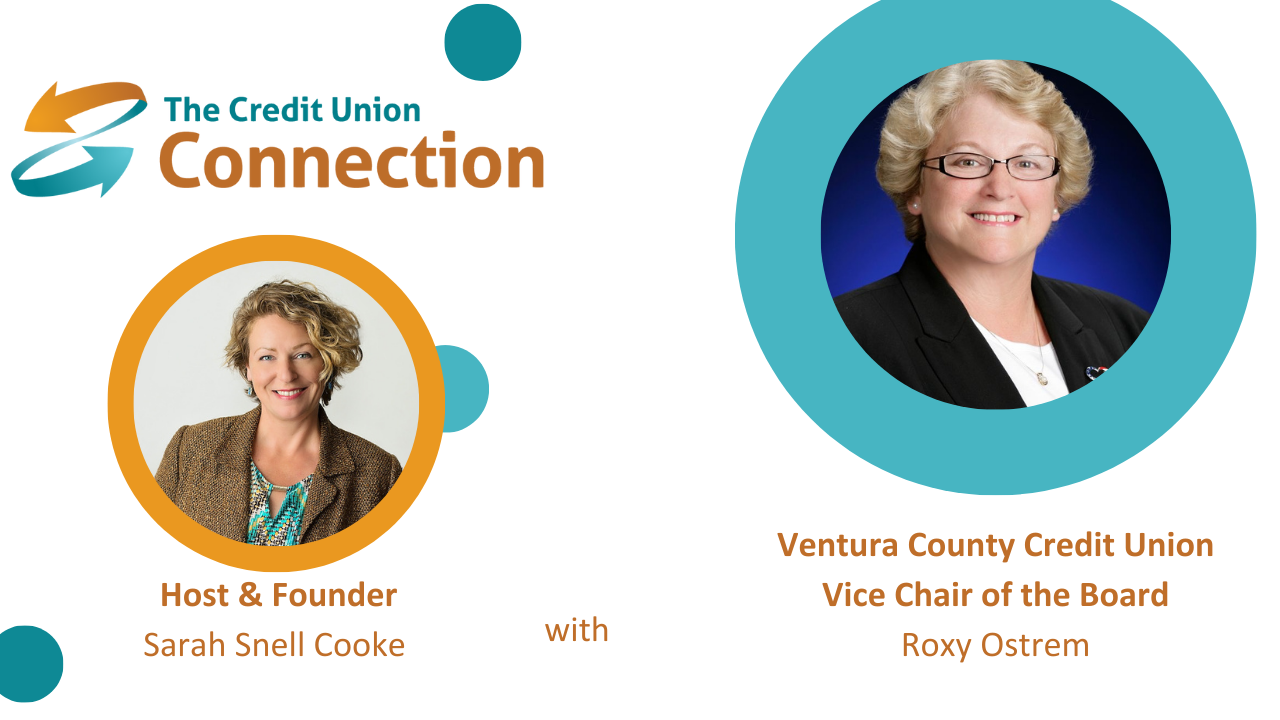
“I was like, ‘Oh my gosh. What did I just do?’”
That is how Roxy Ostrem, vice chair at Ventura County Credit Union, remembers her first days on the board in 1997. As the first board member from the agricultural community, she joined an institution primarily focused on county employees, bringing a perspective that was a world away. More than two decades later, that initial feeling of trepidation has been replaced by a deep sense of pride, particularly in how her credit union has championed a community often overlooked by traditional financial institutions, the very people who once kept their life savings hidden in a mattress.
In a fascinating conversation with our founder/CEO, Sarah Snell Cooke, on The Credit Union Connection, Roxy reveals how Ventura County Credit Union, now a billion-dollar credit union, has successfully balanced impressive growth with its foundational, community-first mission. She shares how this commitment led the credit union to partner with the World Council of Credit Unions to create a program that went directly into fields to build trust with the immigrant farm workers. The interview provides a rare glimpse into how a credit union stays true to its roots while navigating a rapidly changing landscape of technology and member expectations.
Your registration to the Underground: Collision of Contrasts is waiting for you. (And don’t forget to head over to Money 2020 when you’re in Vegas, too.) Click to learn more: https://mitchellstankovic.com/
The discussion pivots to a crucial topic: the delicate balance between high-tech fintech and the brick-and-mortar trust members expect. It is a challenge many credit unions face, and one that Roxy and her fellow board members address head-on. She shares her insights on the importance of education at the board level, a necessity that has tripled in recent years. This candid conversation, a hallmark of what goes on in the ‘Underground’ of the credit union world, offers a powerful reminder that while technology is vital, the core purpose of a credit union is building and maintaining trust and that remains paramount.
Later in the interview, Roxy reveals the compelling title of a panel she is on at a major financial conference: “FinTech Governance with Old School Flair.” The title itself is a bold statement, embodying the core message she wants to convey: “You can teach old dogs new tricks if they’re open to it.” This conversation, like those found in the Mitchell Stankovic Underground, is a testament to the fact that while the industry is changing at a breakneck pace, the heart of the credit union movement must continue to beat strongly.
NOTE: The following transcript is automated with AI. No, it didn’t replace someone’s job.
Sarah Cooke
Hello and welcome everybody. I am Sarah Snell Cooke your host here at The Credit Union Connection. I am joined today by Roxy Ostrem, welcome.
Roxy Ostrem
Thank you.
Sarah Cooke
Is what she is, one of the most involved board members I’ve ever seen, not just at her credit union, but in the community at large, the credit union community at large, and as well as her community. But yeah, she is the vice chair at Ventura County credit union. Again. Welcome. We want to give a little more background on yourself and your credit union.
Roxy Ostrem
Okay, that sounds awesome. Ventura County credit union was say, based when they started for Ventura County employees, and then we did go to a community charter. And when I came on the board in 97 I was the only non Ventura County credit union or Ventura county employee. I was the first one that came from the agricultural community here in Ventura County, and I was very proud of that. But I was like, Oh my gosh. What did I just do? Lot to learn naturally. But as time has gone on, we have grown to be very, very diverse in what our board looks like today. Culture has always been a key element with us. I’m going to tell you. About two years ago, we went ahead and did a survey on what talents does our board currently have? What do we want to go forward with? What do you think we need? And it was very interesting. And so we started going towards those goals and those ideas in mind, which I’m super glad, because the bottom line is today, I don’t know half of the things technology wise, that are 234, members on our board currently do, and I’m grateful for that, because things are heading that way very fast. Regulations are changing, and you never know from month to month, what’s the next around the corner? So Ventura County credit unions always tried to be maybe not the first, but second or third, to get involved in different community events. And where are we and what do we need? And how do we keep that trust. We went out and got more involved in the agricultural community. I saw it firsthand. I adore the people in our ag area, because they work very, very hard for their money. They come from an area that don’t trust easily. They kept their money all it truthfully in the mattress, and it just was a tough way to live. And so in conjunction with World Council, we went out and got a program together, if you will, that went into the field and said, Hey, this is who we are, and this is what we can help you with. And it took some time. It wasn’t profitable, but that’s not what it’s always about. And so you just need to jump in and do something to help that community. And I’m super proud that VCCU has done that. So I could go on for a long time, but I’ll leave it at that.
Sarah Cooke
Yes, it’s such a credit union to admire, because, again, it’s a larger size credit union. It’s in the billion plus club, yet it still has maintained, excuse me, maintain that credit union spirit, if you will, the original purpose and mission of what we’re all here to do. So yeah, I appreciate all that background. We’re, we’re now. We’re going to be at the underground, the Mitchell Stankovic and Associates underground, October 25 in Las Vegas. Yay. And that’s leading up to money 2020, which is a huge FinTech conference with that credit unions really need to start getting themselves involved with to see the technology that’s here, the technology will be here tomorrow, and try to keep ahead of pace, at least on pace with where their technology needs to be. So we even have a credit union track this year, which, again, is part of the influence that Sue is able to wield, shall we say, Sue Mitchell and yeah, so explain this significance to you of credit unions becoming more involved in the Money 2020, Conference.
Roxy Ostrem
The education that’s needed at a board level has tripled, and it’s done it pretty darn fast, and trying to keep up with it is a job and a half. Fintechs are have their place. There’s no doubt about it. For a board, for at least our board, we’re trying to figure out the balance between having all of the technology and the younger folks that want the technology, but they also want that brick and mortar, and they want to be able, once a year even, to go in and go, hey, something’s wrong. Or can you help me? Or I’m ready to buy a house, or whatever it might be. Yeah, you gotta be educated in this stuff. There’s the trust level that our members expect from us. And when you get into something as complicated as technology. For us farmers, if you will, you’ve got to spend a lot of time understanding and you got to find the right partners to get with and say, Okay, here’s where I am. This is what we need. Tell me about this more, and spend some time in and it’s not always easy, but it’s required. You just can’t to keep the trust of our membership and reputational risk and all of the other things that go along with it. You’ve got the boards have to spend some time and education, and it’s hard, but you got to do it or.
Sarah Cooke
Or, Yes, exactly, some of the credit unions we’re seeing merge away as a lot of it is because they haven’t kept up with the technology, for sure. So yeah, your panel now, your panel at the underground is going to be called FinTech governance with old school flair. Can you tell me a little bit more about the idea of the panel and the message that you want to get across?
Roxy Ostrem
You can teach old dogs new tricks if they’re open to it and receptive to it, and you don’t have to understand everything right away, but be aware of what you want to learn. Know what your members are asking for. Is it possible? Is it not possible? Look at the risk aspect of it. I’m more on the old school, but we’ve got board members that we’re learning from every meeting. We have a governance area in our board meeting. It can go for 10 minutes or it can go for an hour, but it’s concentrated on questions and ideas and thoughts and where we’re learning from our new board members and asking those old flare questions. And I just can’t push the education enough, even if in your budget, you need to add $5,000 to be able to go, sit, learn, communicate with other people. It’s super important, because your members are, you know, I’ve got 80,000 members that are counting on me to understand what’s going to happen and do we want to take the risk now? Are we ready? What’s our IT department look like, do that we need more cyber security. What is it that we need? And board, board members have a real job on their hands anymore. You just don’t go to a meeting for an hour and have dinner and you go home. It’s much more than that.
Sarah Cooke
Yes, and credit unions are much more than they were then, too, being able to reach more people through technology and other the complicated regulatory environment. So what does what your credit union do? How do you feel like what your credit union does ties in with the underground
Roxy Ostrem
We’ve done some real major overhaul in our systems, in our IT department. We probably, I don’t know the exact number off the top my head, but we, that is where we spend the majority of our budget. Time is in that department. You know, whether it’s breaches, whether it’s bigger than that, whether it’s the fraud aspect. Those people out there that are attacking the financial industry are super smart, much more smarter than I am. Yeah, and so we have proactively put together, if you will, a task force, and the majority of it is operational, but we have a board member sit in on all the meetings who has input. Brings it back to us in the board meetings and said, Hey, this is what we’re talking about. This is where we think we need to move. What do you as a board want to know about it? And we take some time. We take, you know, two or three hours if we need to, or call in on a Saturday and talk about it, because it’s, it’s such a risk, but it is required anymore. You risk not to do it, right? So, so much so, so we take it slow its toes, you know, before we get the whole foot in. But eventually we totally understand what we’re talking about, or they’re talking about, and go forward with it.
Sarah Cooke
Yeah, and so you alluded to earlier, and just in this last question, the evolution of the credit union boards. Now, I’ve personally had the opportunity, and it was a wonderful learning experience to serve on the Board of my credit union and literally watch the evolution happen to where from where I was the youngest by decades, in my 30s to now, where we have a much more diverse board in every which way that you can imagine. And what we talk about became completely different, and the way we talked about it became completely different in a more forward looking way really. So when I moved from Maryland to South Carolina last year, I was ready to leave the board. It was ready. It didn’t need me anymore. I was, I was the problem child, Mr. And yeah, I feel like because of understanding either takes background in the industry like mine, or the constant and the constant education of everybody staying on top of things. And it’s so many different things. It’s the regulatory environment, it’s the political environment, it’s the legislative environment. It’s, you know, the hiring environment, you know whether you can find people with the skills that you want. And so there’s a lot of things that that credit unions and their boards are facing it more at a strategic level, as far as like bringing people on for your tech department with the right skills. So what are your thoughts on the evolution of the board?
Roxy Ostrem
It’s amazing, truthfully amazing, and a lot of boards haven’t been able to make that transition yet. We’re much more than just somebody, a group of people getting together and discussing where our credit union would like to go. It’s about where we need to go. And so on your boards, you need to have people volunteers who have the same desires as wanting to help the community, seeing the needs that are out there, being able to react to not a board meeting, but a phone call, Hey, we’ve just had this fire go through this area. CEO wants to do this. How fast can we put this together? Yes, go. What do you need from us? You need to be able to be thinking outward, and not so much about well, what was our deposit rate this month? Yeah, much more complicated, and it is super hard to find those people anymore. People’s lives are busy. You have a list that you go through and you go, Okay, we need this. We need that. We’ve got plenty of this to pinpoint. Is a need is, is always a problem, and then finding that person that wants to dedicate their time. I have several people that I’ve talked to about it, and they go, What do you mean? You don’t get paid. Why would I do that? There’s different thinking today than there was 10 five years ago, maybe even and as people’s lives get busier and their kids and soccer and piano and all the things that go along they think family first, which you can’t blame them for that, but the we gotta find those special people. You have to dig you have to propose it properly. You have to say, you know, why not? And I think you’ll find that board members who sit on the credit union boards may also sit on the fire department boards or another non profit because that’s where their heart is. But you gotta get the right people, and that’s the hard part. Mm, hmm, it’s a same scenario for almost all the credit unions, whether you’re big or whether you’re small. I have a heart for the small ones, because the big ones have already made it up. You know, when I came on the board, we were like, 300,000 and we have made stride. Oh, and assets, 300
Sarah Cooke
million, 300 million,
Roxy Ostrem
too many zeros. So it does take some time, but we learned also that when you hit a\ billion, that all the regulations change again. The boards are more responsible. You need more education. You need more time to really sit down and know what it is, and you’re starting at the bottom again. Mm hmm, and going up. And there’s nothing wrong with that. It’s just that it takes time, and it takes knowledge and education, and it takes the people with the right heart, Mm, hmm, absolutely you. You want to keep what you’ve got going, because that’s what helped make you but you have to look out there. You know, we always talk about, oh, we’re going to go three years out. Sometimes you gotta go five years out, and that crystal ball is just cloudy. It’s like the fog rolling in on the coast, and you just gotta be open minded and keep your heart to the people and to the membership in your community.
Sarah Cooke
Yeah, I hadn’t thought about the whole wildfire thing. I mean, I know it does affect the credit unions out in that area of in California and elsewhere. There’s other natural disasters, but, yeah, that’s one thing where you get a call on a Friday night at 2am or whatever, it’s like, we gotta roll. And that’s exactly what credit union should be doing, being with their members at the time that they need them, and being available and offering the solutions. And that’s a huge impact that credit unions can have on their communities, like you guys are going you mentioned in the ag fields and serving people, and that that’s need financial education and wellness stability, and need to Learn to trust, eventually, the financial institutions as well the and the underground. Sue drives so much impact in the entire credit union space. You know, from launching the Global Women’s Leadership Network and the Underground’s role in launching cu pride, and now we’ve got CUSS the credit union shared services model? And you know, how do you feel this is going to have impact in the community and credit union community, and particularly the small to mid sized credit unions.
Roxy Ostrem
I hope it’s a huge success. I think that the larger credit unions owe it to the what do I want to say to the industry, if you will, to help bring this to fruition, to help bring our smaller credit unions up. Those are tired warriors who continue to push forward no matter what. And why do we sit on our laurels and say, Oh, Gosh, I wonder what I can do. Well, there’s that we can do as the larger credit unions to help these people. They’re reaching people that we can’t, that’s the bottom line, and we need to support them as much as we can. And I’ve heard, oh, we can try this, or we can try that, or we can do this, and but let’s put the action, you know, Sue’s, you know, get shit done well out of frustration, half partly, but it’s true. Let’s do it. Let’s finally do it. I think she’s got the backing up an amazing group of people who have learned who she’s taught, who she she’s shown the industry. Hey, these people are who they are, and they’re willing to help. So come on, get on board with this. Let’s do what we can do and stabilize our credit union industry so takeovers don’t happen, so they can become profitable, so we can give back. Who are members, whether our little farming community out in the middle of nowhere, or whether it’s border towns that have need those kinds of credit unions people need to get behind cus, even if you don’t know every detail, have trust that this is going to go forward. It’s going to help our industry. It’s going to help the members. It’s going to help people in the US and Mexico. Mm, hmm. Can be carried over to other countries do this. Let’s just not sit around anymore and go, Hmm,
Sarah Cooke
yeah, and they the mergers in the first quarter of this year were more than last year. Five of the last six years, I was just looking at that this morning. And so that’s scary, especially considering this, a larger proportion of credit unions, and most of them are those smaller credit unions that are getting worn out by everything. Like you said, they’re warriors and their little their niches, and you know, doing something to support them, not just give even well or give education. One of the things that is huge, and why mergers sometimes happen is because the CEO has no retirement plan, and that’s just, I mean, honestly, it’s not a great thing to for having a large the merger e merger, the surviving credit union. It’s not a good thing for them to be buying out the CEO at the same time that board is responsible. Another area where boards really need to keep up is compensation. That board is responsible to its members to make sure its employees have what they need, first, financial wellness for them first, because they are members. I’m going to get off my soapbox now. So while at the underground, what are you looking forward to hearing from the other credit union people?
Roxy Ostrem
I love the underground. I love it. I love it. I love it. We go to other educational conferences, but to hear people explain the challenges they have in this safe space called the underground, and to learn, gosh, they’re they’ve got the same issues as we do what? Let’s talk to them. Let’s see why they changed their name. Let’s see why they’ve changed their charter. Let’s talk to them a little bit more. Hey, maybe we can offer some ideas for them to go out and help people of modest means. We this. We’re all one. There is no competition in helping our members that should be number one and foremost in every board’s mind. Let’s talk to CEOs. Let’s, let’s just get out there and have this period of time. I remember underground, we used to be two hours. So this is not enough time. And so last year, I believe it was, we had a full 810, hours. And I’m like, Yes, awesome. This is what we now need. Life is complicated. Credit unions have gotten complicated. Let’s not lose anymore. It’s an open forum that you can speak honestly about and hopefully the politics don’t get in the way. And hopefully the regulations, you know, what do we want? How can we make regulations easier? It’s not going to get easier. It’s going to get more complicated, but if we all stick together on some of the issues going forward, we’re tough, we’re good people, people will listen to us, but to get together under one roof, whether it’s VC or Vegas, is just an amazing party, if you will. There’s so much that happens. And a mission party, yes, yeah, yeah. And it, it feeds the soul a little bit, because if you’re being drugged down and day after day, if you’re a CEO, you know, you’re sweeping the parking lot sometimes, or moving the snow, whatever you might do. You just need a little pickup here and there, and underground provides that, in my opinion.
Sarah Cooke
Yeah, it sells you your soul back. Yeah. So I was going to ask. Why you’re a supporter, but I think you already tackled that one. How would you sell it to somebody who was considering attending?
Roxy Ostrem
Number one, it’s not going to break the bank or your budget, if you will. It’s very reasonable a for what you get out of it, openness, honesty, which is a commodity that is rare. Thank you rare these days. Yeah, yeah, but you’re meeting the people, having sympathy for those that need a little help up. I mean, that’s what we’re about this whole credit union movement, and have been and we were responsible for helping each other. It’s no different than your neighborhood. Go, bring your boards. Bring your boards there. It’s going to open their vision, their ideas, their imagination. You’re they’re going to go, Oh, I heard about that. I understand that better now than before. And maybe a regulator has explained something in a different way that you had an issue with, and they’re able to help you talk about it a little bit more, sit around the table. Don’t just go off on your own. Talk to people what’s going on in their area. It’s invaluable for me. I’ve kind of been around since they started. I’m urging sue to she did I get together with just boards during the pandemic, and it was amazing. You know, what keeps you up at night, all the signs went up and you’re like, oh my gosh, this. The majority of us are worried about this or worried about that CEO compensation. Let us talk about that, because it’s kind of all over the board. You know, what? How do you sign the goals? What percentages are you using? Where do you try to keep your CEO’s compensation at? Where do you get your numbers for evaluating the compensation around the world, if you will. It’s just a great place to go to have a good time talking about your impact on the industry.
Sarah Cooke
And explaining those kind of operational complications that you don’t necessarily see at a strategic level when you have a strategic imperative from the board. But this also gives you the opportunity like CUSS, for example, to see the operational side and understand better why they say, Oh, this is taking time or longer than we expected. And so I think that kind of little educational pieces is very influential in how you think about the credit union, because while you’re not in the operations as a board member, it’s how you think about why things may or may not be happening, not because somebody isn’t supporting the idea.
Roxy Ostrem
A better understanding of what’s going on in the background. You don’t have to influence it. You don’t have to talk about it, but you can ask questions and oh, now I get it. Okay, now I understand. Okay, then you vote better.
Sarah Cooke
And again, that is a lot of the technology that is holding people from doing stuff. So go to Money 2020, and the underground, alrighty. So as we wrap up, I always give my guests the final thoughts, what do you want to leave our credit union audience with?
Roxy Ostrem
Oh my gosh. We need to be here to stay, all of us, every single one of us, us being the credit unions, us being the boards. Always have your eyes open about who you might work with, who your neighbor is, who’s on the fire department, of the police department that might want to come in and give a different aspect of it. Bring in speakers if you want to learn more about cannabis. Maybe someday down the road, we’ll be able to help that industry, your farm workers. I mean, we’re being attacked, and let’s get out there and help those people stabilize them. Help them trust the credit union. When they don’t trust others, they’re afraid to go out of their house. They’re afraid to take the kids to school. Let’s see what we can do to help them. We have an organization here in town that they pay for worker. Agriculture workers laundry to be done. The laundry mat has said, Hey, come on in between 8am in the morning on Saturday and 7pm It’s all free. Come in and do your lunch. Gosh, the credit union pays for half of what’s done. Mm, hmm, and part of think basic. We don’t have to be complicated. Our organizations are but we’ve got a good staff under us. Trust them, but go out and continue to do good. Awesome.
Sarah Cooke
Thank you so much. I appreciate your time today. Roxy, thank you. I appreciate it, right?