

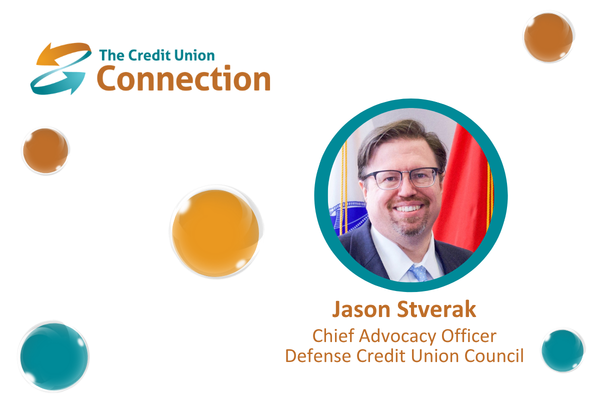
By Jason Stverak, Chief Advocacy Officer, DCUC
Credit unions were built on purpose, not profit. That simple distinction still matters, and it should shape how we think about advocacy across the movement.
Too often, industry debates get framed as if large and small credit unions have competing interests. They do not. A stronger legislative and regulatory environment helps every credit union serve more members, invest more confidently, and plan more effectively for the future. The smallest institutions need room to remain viable and independent. Larger institutions need room to innovate, grow, and expand access. Those are not opposing goals. They are part of the same mission.
That is why associations must work on behalf of all credit unions.
Not just the largest. Not just the smallest. All credit unions.
A healthy movement needs both scale and local connection. It needs the smaller credit union that knows its members personally and understands the needs of its community in real time. It also needs the larger credit union with the resources to invest in technology, broaden services, and show what the cooperative model can achieve at scale. Both are important to the long-term strength of the industry. Both reflect the credit union difference.
The right question for associations is not which segment deserves more attention. The right question is whether our advocacy is building an environment where every credit union has a chance to grow and thrive.
That means defending the tax status. It means pushing for right-sized regulation. It means modernizing outdated requirements that create unnecessary burden. It means recognizing that a rule that is manageable for a large institution may be disproportionately difficult for a small one. And it means resisting the temptation to treat growth as a problem when that growth is rooted in member service.
There is also a broader strategic point the movement cannot afford to ignore: a united credit union movement is the biggest fear of the banks and their lobbyists.
They understand that division weakens us. If they can separate large credit unions from small ones or convince one part of the movement that another part is the problem, they do not have to confront the full strength of a coordinated industry. That is why their arguments so often try to divide credit unions by size, structure, or success. It is not just a policy strategy. It is a political one.
We should not make that work easier for them.
When banks and their advocates attack the credit union model, they are not making a narrow argument. They are challenging the not-for-profit, member-owned structure that defines the entire movement. They want policymakers to forget what makes credit unions different. They want to blur the distinction between cooperatives and banks. And they want credit unions debating each other while they press their case in Washington and in state capitals.
That is why unity matters.
But unity has to mean more than good branding. It has to mean more than conference themes and talking points. Unity has to be practical. It has to show up in how associations listen, how they advocate, and how they build coalitions. It has to mean that every credit union, regardless of size, believes it has a voice in the process and a stake in the outcome.
At DCUC, that is how we approach the work. We are prepared to work with anyone who is serious about promoting and protecting credit unions. We will work with large credit unions and small credit unions. We will work with leagues, national associations, and partners across the movement. If the goal is to strengthen the credit union charter, protect member service, and improve the operating environment for credit unions, then we are ready to be at the table.
That is not just a statement of principle. It is how real advocacy gets done.
Unity is not proven by rhetoric. It is proven through deeds.
It is proven by who shows up when the tax status is under attack. It is proven by who helps organize a coordinated response. It is proven by who builds shared resources, who makes the case to lawmakers, who engages grassroots advocates, and who works through differences before they become fractures. In this movement, credibility comes from action.
That is especially important right now. Credit unions are facing a policy environment that is more demanding, more competitive, and more politically contested than ever. Compliance burdens continue to grow. Bank lobbyists continue to attack the tax status and question the legitimacy of credit union growth. Policymakers continue to weigh decisions that will shape how credit unions operate for years to come. This is not the time for siloed thinking. It is not the time for internal division.
It is the time for disciplined, coordinated advocacy.
Associations should be judged by whether they make the movement stronger as a whole. Are they helping the smallest credit unions remain viable? Are they giving larger credit unions the ability to keep serving at scale? Are they defending the cooperative model clearly and consistently? Are they bringing the movement together when it matters most?
Those are the questions that matter.
The credit union movement has always been strongest when it acts like a movement. Not a set of competing camps. Not a collection of separate agendas. A movement.
That is the standard associations should meet. And that is the standard we should expect from ourselves.
A rising tide lifts all boats. In the credit union space, that means building an advocacy strategy that supports the entire movement and leaves no institution behind. It means understanding that the success of one part of the movement strengthens the whole. And it means recognizing that when credit unions stand together, our voice is stronger, our case is clearer, and our future is more secure.
That is the kind of unity the moment requires. And it is the kind of unity worth fighting for.
Learn more about DCUC’s mission and advocacy on behalf of all credit unions at dcuc.org/about.