

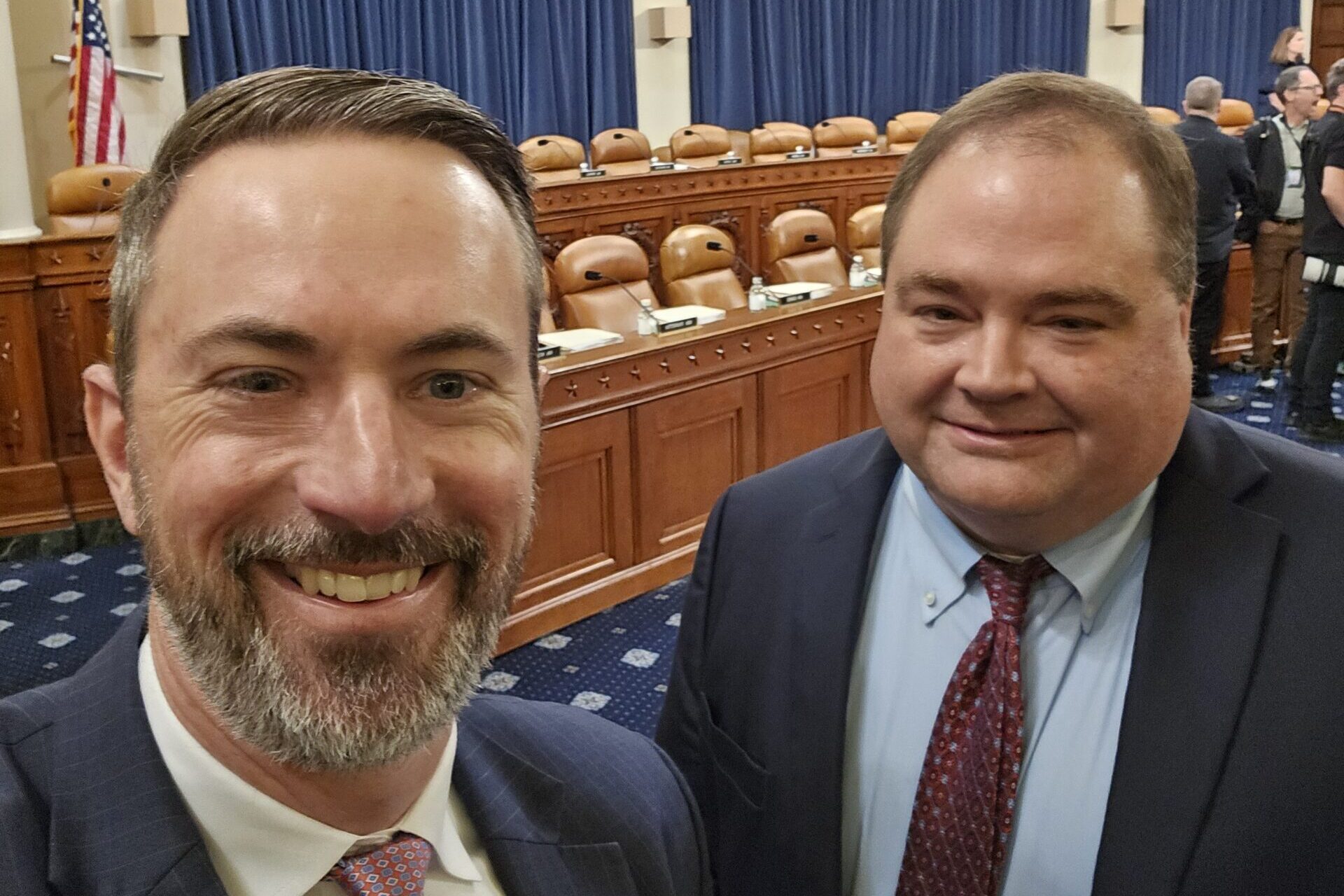
America’s Credit Unions (ACU) and the Defense Credit Union Council (DCUC) commended the House Ways and Means Committee for its markup of the tax reconciliation bill, which preserves the federal income credit union tax exemption. The legislation now moves to the House Budget Committee to be combined into the full reconciliation package for floor consideration.
“Thank you to Chairman Jason Smith and the House Ways and Means Committee for recognizing the immense value credit unions have on communities and securing the credit union tax status,” ACU President/CEO Jim Nussle said. This is a major victory for 142 million hardworking American families and small businesses who rely on credit unions, as it allows these community-first institutions to continue to serve Main Street America without limitation. America’s Credit Unions remains committed to protecting its members from tax hikes that will hurt them and the U.S. economy.”
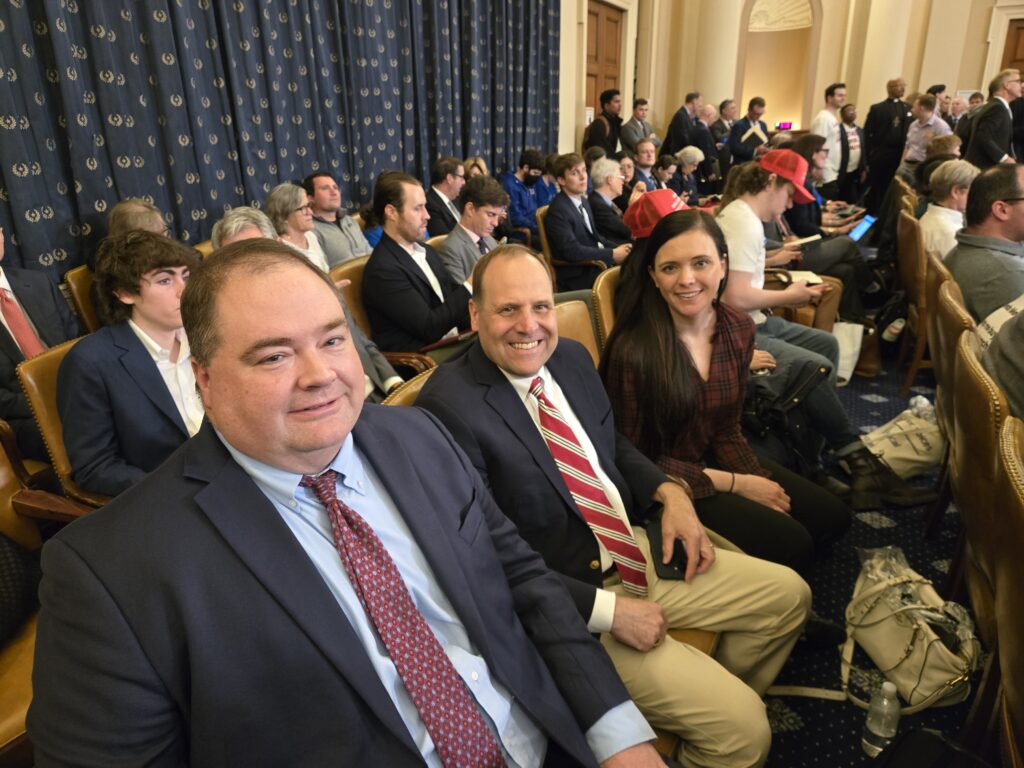
Thaler and Phil Drager and Stephanie Belk, America’s Credit Unions Legislative Advocacy Directors.
DCUC President/CEO Anthony Hernandez also praised the committee for its markup that did not change credit unions’ tax-exempt status. “On behalf of America’s defense credit unions and the 40 million members they serve, we thank Chairman Smith, Ranking Member Neal and the entire committee for rejecting any changes to the historic credit union tax status. This outcome reflects a clear understanding by lawmakers that credit unions are unique, member-owned cooperatives whose tax exemption empowers these institutions to reinvest in America’s communities—delivering lower costs, better rates, and critical financial services to military families. We look forward to working with the Budget Committee and the full House to keep this vital protection in place.”
For its part, ACU, through the Don’t Tax My Credit Union campaign, which began laying the groundwork with lawmakers during swearing-in events in January, America’s Credit Unions, regional and state associations and credit unions have:
- Met with every Republican member of the House Ways & Means Committee, including Chairman Jason Smith several times
- Met with the White House National Economic Council, Office of Management and Budget, and Treasury Department (5x)
- Met with Senate Majority Leader John Thune, Speaker of the House Mike Johnson, House Majority Leader Steve Scalise, Senate Finance Committee Chairman Mike Crapo, House Financial Services Committee Chairman French Hill
- Generated more than 771,000 grassroots letters directly to lawmakers
- Contacted all 535 Congressional offices with key data on the credit union difference
- Placed several op-eds and LTEs, at the national and local level, to raise awareness of credit unions’ impact on their members and communities
- Commissioned an independent economic study on the national and consumer benefits of the credit union tax status
- Launched digital ad campaign targeting key tax writers and congressional leaders that has generated over 73 million ad impressions and engaged over 100,000 activists
Since September 2024, DCUC has led an multi-channel advocacy effort to defend the credit union tax exemption. These efforts include over 25 letters including a joint trade coalition letter to congressional committees, targeted advertising, geofencing, and video campaigns funded by its Defending Credit Unions National Advocacy Fund, advocacy handouts and panel discussions at DCUC conferences, industry-wide strategic meetings, and coordinated grassroots mobilization with updates and sample letters provided to DCUC’s Military Advocacy Committee.
“By upholding the credit union tax exemption, the House Ways and Means Committee has protected constituents’ wallets and communities. This bipartisan decision safeguards a young family’s chance to afford their first home, a veteran’s ability to start a small business, a retiree’s access to a trusted local financial partner, and a neighborhood’s access to fair, affordable services,” said DCUC Chief Advocacy Officer Jason Stverak. “It reinforces our commitment to institutions that put people over profit and preserves a financial services sector that remains diverse, competitive, and consumer-focused.”