

159 small credit unions across six states loaned out $7.6 billion to their members last year. They are changing lives every single day, usually without making much noise about it. The question GoWest Credit Union Association started asking is not whether small credit unions deserve support. It is whether the system has been deliberate enough about providing it.
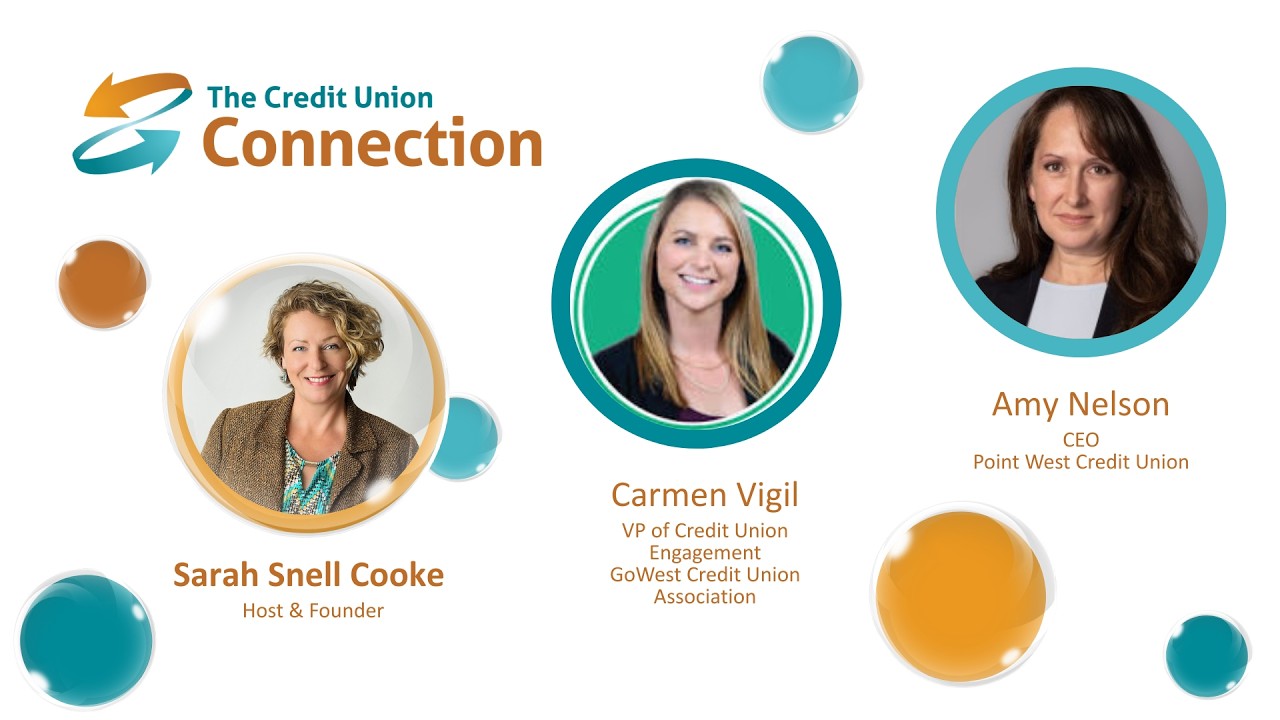
Amy Nelson, President and CEO of Point West Credit Union in Portland, Oregon, and Carmen Vigil, SVP of engagement and development at GoWest Credit Union Association, joined Sarah Snell Cooke of The Credit Union Connection to talk about the Small Credit Union Accelerator Program, a new initiative backed by $200,000 in dedicated funding, monthly roundtables, and a focused push on the two things small credit unions need most: connectivity and leadership development.
The program grew out of an honest conversation about what small credit unions actually need versus what they typically get. GoWest already offers education and programming for the roughly 300 credit unions it represents across Washington, Oregon, Idaho, Colorado, Wyoming, and Arizona. But about half of those credit unions fall into the smaller asset size category, and their needs are distinct. The accelerator is designed to stop treating small credit union programming as a subset of everything else and start building for that audience specifically. An advisory council made up of small credit union CEOs, Amy among them, is guiding the development of six new programs currently out for member feedback.
The monthly roundtables are already running. Carmen is quick to point out that the goal is not just to support small credit unions but to highlight what they are already doing well. In a recent session, a small credit union leader casually mentioned saving a member $800 a month. His peers on the call barely reacted. That is just what we do every day, they said. That story, Carmen argues, is exactly the kind of thing the movement needs to be sharing louder and more often.
“We don’t even have to do anything special to pull out these stories. It’s literally the daily business of what we do as financial cooperatives.” — Carmen Vigil
Amy’s focus lands squarely on leadership development, and for good reason. Succession planning is one of the most pressing challenges facing small credit unions right now. When a CEO who has been in the chair for forty years retires and there is nobody ready to step in, the credit union does not just lose a leader. It often loses its footing entirely. The accelerator’s cohort model is designed to bring entire teams into the development process, not just the CEO, so that strategic thinking gets built into the fabric of the organization rather than sitting in one person’s head.
The advocacy angle is worth noting too. Small credit unions carry disproportionate weight on Capitol Hill because they embody the credit union mission in its purest form. They are the ones making the loans nobody else will make, saving members from predatory alternatives, and serving communities the big banks have long since written off. Carmen and Amy both make the point that credit unions are sometimes too humble about these stories. Humility is a virtue, but it is not a communications strategy.
NOTE: If transcription were this AI’s superpower, it would be a very disappointing superhero origin story.
Sarah Snell Cooke
Hello and welcome everyone. I am Sarah Snell Cooke, your host here at The Credit Union Connection. Small credit unions are getting squeezed. That is no surprise. With rising compliance costs, technology demands, talent shortages, and merger pressure from every direction, the question is not whether they can survive. It is whether the system is actually helping them thrive or just watching them struggle. Today I am talking with Amy Nelson, CEO at Point West Credit Union, and Carmen Vigil, SVP of engagement and development at GoWest Credit Union Association, about a new program putting real money and resources behind small credit union success. It is called the Small Credit Union Accelerator Program and it comes with $200,000 in new programs, monthly roundtables, and a hard focus on leadership development and strategic bench strength. We are diving into why collaboration and advocacy matter more than ever, how small credit unions can innovate without massive budgets, and what sustainability actually looks like when you are not sitting on billions in assets.
Welcome everyone. I am joined today by Carmen Vigil from GoWest Credit Union Association and Amy Nelson, President and CEO at Point West Credit Union out in Oregon. Welcome. Glad we could make the time work.
Carmen Vigil
Great to be here. Thank you for having us.
Amy Nelson Thank you so much, Sarah. I appreciate your time and the expertise you bring.
Sarah Snell Cooke
Why don’t you each do a little more introduction of yourself and your organizations. Let’s start with Amy.
Amy Nelson
Point West Credit Union is based in Portland, Oregon. We originally served Multnomah County employees, which are government employees in the Portland metro area, but through the years we expanded and now serve 14 counties across the state of Oregon. We are a community charter and a CDFI. We are also Juntos Avanzamos designated, serving our immigrant community. It has been an exciting journey.
Sarah Snell Cooke
And Carmen?
Carmen Vigil
I am Carmen Vigil, senior vice president of engagement and development with GoWest Credit Union Association. GoWest serves about 300 credit unions across the states of Washington, Oregon, Idaho, Colorado, Wyoming, and Arizona. I am based in Seattle, Washington.
Sarah Snell Cooke
You serve six states including 159 small credit unions and nearly 830,000 members. Last year those smaller credit unions loaned out $7.6 billion to members. They are changing lives. As a cooperative movement, I feel like we are not always moving fast enough to support the good ones. How are things going for smaller credit unions in your states, and how are you supporting them right now, before we get to the program?
Carmen Vigil
Thanks for the question. We are in what we call Q1 advocacy season right now, with legislators in session across all six states. We have credit union days at the capitol in each state and we are gearing up for America’s Credit Unions Governmental Affairs Conference. That is a big focus for us right now at GoWest. Within my area specifically, I am thinking about all of the programming and education we bring to our credit unions. We look broadly at the roughly 300 credit unions we represent and their educational needs, and then within that, about half of those credit unions are in the smaller asset size category. My task is really thinking about what is the most relevant education, programming, and connection opportunities for that audience specifically.
Sarah Snell Cooke
Amy, I would love your perspective as a small credit union leader in your area. How is it going for small credit unions there?
Amy Nelson
I feel very fortunate to be in the state of Oregon and in the Northwest with GoWest as a hub and backbone. We have a long history of collaboration among all credit union business models and sizes where we work together to create really deep and meaningful impact in our communities. We have something called a pizza group that we do once a quarter where a bunch of CEOs get together informally and ask how we can help each other. When Carmen’s program started really taking shape I was very excited, because what we do naturally as credit unions in our respective geographic areas is now coming together in a systemized way. There are exciting things to share that we can populate out to more credit unions.
Sarah Snell Cooke
So let us pop the cork on it. GoWest has created the Small Credit Union Accelerator Program. Carmen, talk about what it is and what drove it.
Carmen Vigil
Thank you for popping the cork. We started to drum roll this at our MAX event last fall in Portland and it has built momentum since then. We have a small credit union advisory council, and Amy is a member of that council, thank you Amy. It is made up of small credit union CEOs from across our six states representing credit unions as small as about $10 million in assets up to close to the $250 million mark, with varied state and federal charters, urban and rural, really representing good diversity of thought within the small credit union community. They are helping us guide a new investment and a new way of looking at programmatic resources for small credit unions. We thought, what if we took a focused look at the small credit union need specifically and did not worry about whether this is relevant to larger credit unions? This is built for smaller credit unions. We may pull in resources and talent from larger credit unions, but the focus is on what are the most pressing needs for smaller credit unions to continue to grow, stay relevant, and build their leadership bench strength. That is really the spirit of the program and the investment.
Sarah Snell Cooke
Amy, as the CEO of a $100 million credit union, what is your take on this idea and where you want it to go?
Amy Nelson
I was reflecting on the programming that Carmen and GoWest have stood up through the years and the many committees I have been a part of, from regulatory advocacy to CDFI roundtables, low-income designation, marketing, and innovation. This accelerator really combines a lot of those aspects into one and focuses on the business model of credit unions within this asset size range. What got me most excited as GoWest was rolling out this idea was that they really wanted to draw upon the expertise that already exists and share it intentionally among credit unions. There are amazing things going on in each of the six states. We do not need to reinvent the wheel. Let us amplify it, connect people together, and utilize those experts and resources so that effective programming can cross state lines. What has been wonderful about this program is that it continues to evolve based on feedback from the advisory council. Credit unions can get siloed sometimes for no other reason than there is just a lot to do and everyone’s days are busy. Having a program that forces that connection and energy to coalesce these bright minds and resources helps all of us lift out of the day-to-day so we can focus on that strategic north star, which is growing impact for members and contributions to our communities.
Sarah Snell Cooke
A lot of small credit unions just need a little hand up. Carmen, what specifically are the services that are part of this accelerator program?
Carmen Vigil Some of it is still in development. The first layer when we were thinking about what to include was, as Amy mentioned, additional connectivity. We took our existing small credit union framework and beefed it up. We moved our virtual small credit union roundtables from quarterly to monthly. We just had one this morning. And we are adding more in-person small credit union roundtables to create connectivity and build relationships. One thing I want to name is that it is not always about what we are doing to support small credit unions. Often it is about highlighting what small credit unions are already doing that is really cool and innovative, and creating more spaces for them to share that. In addition to the connectivity piece, we have earmarked $200,000 for new programs. These are programs that the advisory council is directly building out and informing. We just sent a survey to our members with a draft of six new programs we are hoping to launch, asking for feedback on format, whether it is answering the right questions, and whether it is hitting the right level of staff involvement. The overarching goal is helping small credit unions grow and attract members. We hope to begin collecting interest and actual participants for the programs as soon as next month.
Sarah Snell Cooke
Amy, what aspect of this is most important to you?
Amy Nelson
One of the themes that came out from the council was that in order to grow our credit unions, we also need to make sure we are growing our leadership and strategic bench at our own shops. The NCUA is emphasizing succession planning more than ever. I am an HR person at heart. It is all about building talent, developing your people, and giving them opportunities. A theme that was really meaningful to me in the programming coming together is the desire to build a cohort where it is not just the CEO learning and doing. It is your teammates within your credit union who can be learning, testing ideas, and evolving those test kitchen concepts into impactful strategies. That is how we grow our leaders. We want our credit unions to thrive, but they first need to survive and evolve forward by making sure we have got that bench ready to go. Leadership development is also one of the very reasons we are losing some of these credit unions. When a CEO who has been in the chair for forty years retires and there is no one ready to step in, the credit union is in real trouble.
Sarah Snell Cooke
As we head toward GAC, small credit unions are so important to the broader lobbying efforts of the credit union movement. They embody the mission in its purest form. What are your thoughts on the advocacy role of small credit unions?
Carmen Vigil
It gets back to that fundamental question: how are we different, how are we sharing that difference, and how are we amplifying the resources to live it out every day. In one of our small credit union roundtables earlier this year I mentioned getting off the phone with a small credit union leader who told me how he saved one of his members $800 a month. No special exception, just literally doing the right thing and providing a fair price loan. Some of the leaders on the call said, “That is what we do every day. That is not even a special story. That is just our business.” I am always reminded of that. We do not even have to do anything special to pull out these stories. It is the daily business of what we do as financial cooperatives. And that is exactly the type of thing that inspires me to bring more resources to help small credit unions continue to thrive and be competitive.
Amy Nelson
Credit unions are so humble every day, and sometimes too humble. For those of us who have been in the industry a while, we just do not always think about the wonderful stories we create every day. Our audience does not know what we know. It is incumbent upon us to be excited about our stories. Humble is fine among ourselves, but it is equally important to be excited and share with audiences who do not know what a special thing it is to be part of a credit union movement that truly works together in a synergy you just do not see in other industries. We take that for granted and we should not.
Sarah Snell Cooke
I always allow my guests final thoughts. Carmen, we will start with you.
Carmen Vigil
I want to make sure I celebrate the business partners we are working with, even though I cannot announce them all yet since we are still in the feedback stage. Thank you to the many folks who are leaning in to support this effort. And I want to put an open offer out there: if you are a business partner, another league, or a sister organization, please reach out to me. We want to be a hub for this activity. We have a lot of conversations in the hopper and I am excited to continue bringing that collaboration to bear. The last thing small credit unions need is another complicated program. We just need to make it easy for them.
Sarah Snell Cooke
Amy, wrap us up.
Amy Nelson
What I love about this program is the conversations we are having about artificial barriers. Credit unions do that work every day with our members, helping them push through what might be an artificial barrier and build their plan for financial success. We can take a lesson from that ourselves. What are the artificial barriers keeping us from doing what we need to do? More in-person events came from credit unions saying, “We literally have parts of our six-state footprint where people have a tough time getting somewhere. Can you come to us?” GoWest leaned in and listened. Times that by a hundred different artificial barriers. Having that honest collective voice and continuing to raise our hand to find out how we can remove those barriers is key. We advocate a lot for our credit union movement. We need to remember to keep advocating for ourselves too. Credit unions sometimes get tired doing that, but I am hoping this hub atmosphere and energy can lift not just spirits but voices so they continue to speak up for what they need. I am excited. I could keep talking about it.
Sarah Snell Cooke
Amazing last words. Thank you both for being here today. Can not wait to see the update in a year, Carmen.
Carmen Vigil
Please have us back.
Amy Nelson
|Thank you. Yes, please.