

Acquiring a new member costs four times more than keeping an existing one. Most credit unions already know this. What they do not always have is the tools to act on it before it is too late.
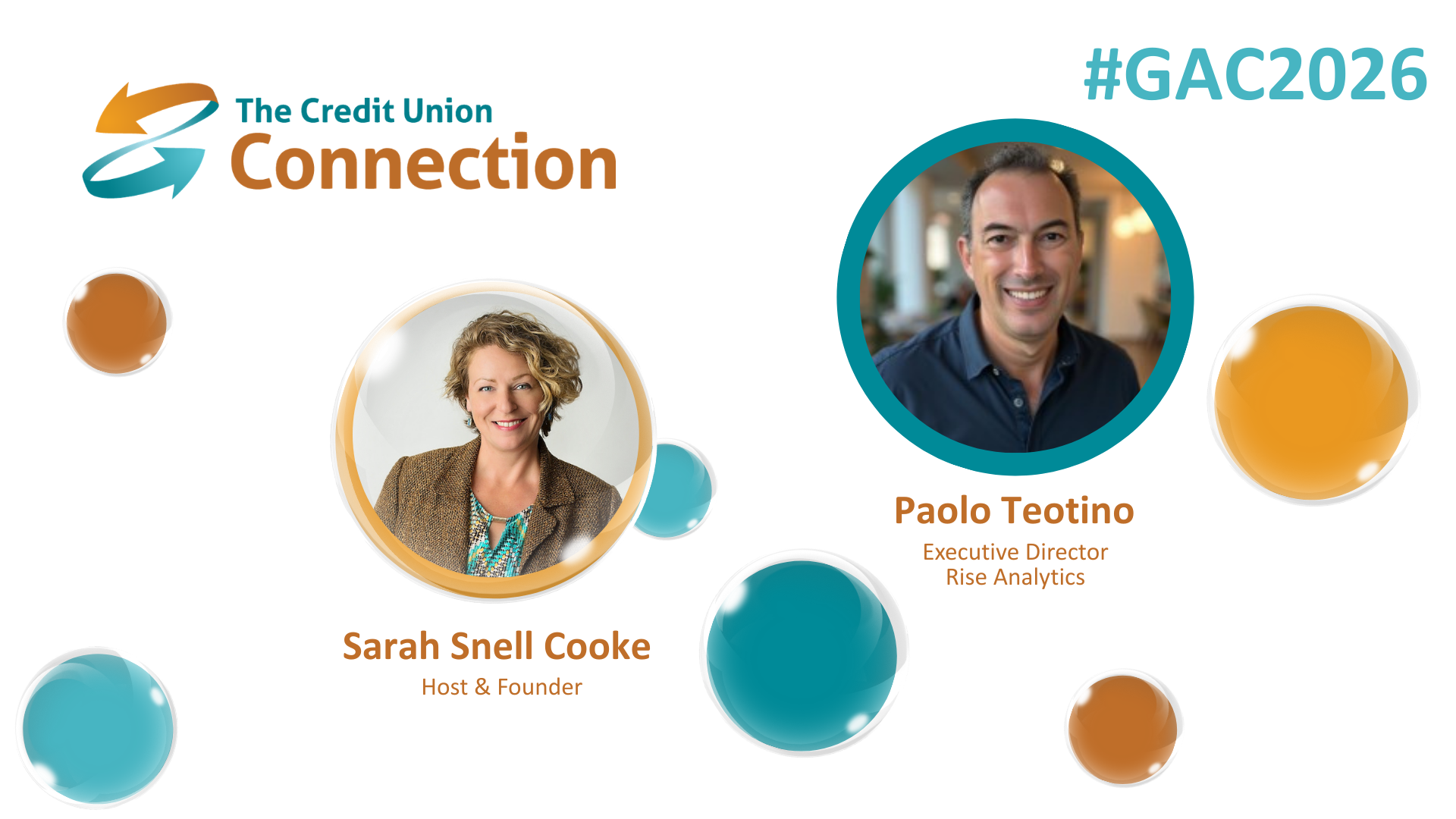
Paolo Teotino, executive director at Rise Analytics, a Trellance company, joined Sarah Snell Cooke of The Credit Union Connection live at GAC 2026 for a conversation about what it actually looks like when a credit union starts using its data well. Not in the abstract, but in the practical, day-to-day sense of knowing which members are drifting before they are gone and which ones are ready for a product that could genuinely help them.
The core problem credit unions need to solve is that this data exists, but it is scattered across multiple systems. A marketing team that wants to run a retention campaign has to put in a request, wait days for someone from the business intelligence team to pull the numbers and by the time they can act on it, the moment has passed. Rise aggregates all of that into a single data lake platform and gives leadership and marketing teams direct access to the insights, along with predictive analytics that forecast member behavior before it happens. Who is likely to leave? Who is showing signs of financial distress? Who is ready for an auto loan?
That kind of intelligence does not just make campaigns more effective. For a credit union that genuinely cares about its members, it makes the relationship more human.
The financial distress use case is one worth sitting with. Delinquencies are rising, and members who are struggling financially are often the last ones to ask for help. Your data can surface those signals early, giving the credit union a chance to reach out before the situation becomes a crisis. That is the credit union mission in action, powered by data.
Then there is Finn, Rise’s AI agent, which Paolo introduces mid-conversation in what might be the most charming product demo of GAC 2026. The idea is simple: instead of navigating dashboards and applying filters, you just ask your data a question in plain language. Give me the list of members who joined in the last seven days. Show me members with a balance under five dollars who have not transacted in six months. The answer comes back instantly, ready to use in a marketing campaign. No data science degree required.
Paolo’s closing message is one that smaller credit unions especially need to hear. This kind of technology used to be reserved for the institutions with the biggest budgets. That is no longer the case. Whether you are a $100 million credit union or a $10 billion one, the tools are accessible, and the opportunity to make a real impact on your membership is, too.
NOTE: If transcription were this AI’s superpower, it would be a very disappointing superhero origin story.
Sarah Snell Cooke
Hello, welcome everyone. I am joined today by Paolo Teotino. Welcome.
Paolo Teotino
Thank you.
Sarah Snell Cooke
Paolo is with Rise Analytics, which is a Trellance company. Tell us a little bit more about yourself and your company.
Paolo Teotino
Absolutely. So I’m Paulo, I’m Italian, as you can hear from the accent. I’ve been working for Trellis and Rise Analytics for about six years now. My previous background was in software development for large corporations, and since about 2019 I’ve been in the credit union industry. I’m very excited to be part of the credit union movement and to help it move forward using data. That’s essentially my focus.
Sarah Snell Cooke
So Rise Analytics, can you give me a use case of what credit unions would use you for?
Paolo Teotino
Absolutely. Credit unions have a lot of data. The problem is that the data is spread across multiple systems. It’s very difficult for the management team or even a branch manager to understand how a specific part of the business is performing. What we do is take all the different data sets from different systems and aggregate them into our data lake house platform, then provide management reporting solutions that allow the CEO, CMO, branch managers, and multiple departments within the credit union to have a better sense of how the business is doing. Where are the areas that need attention? Where are they doing great? So they can focus their energy on improving performance.
One thing we see a lot, especially in smaller credit unions, is that the marketing team struggles to access data. It might take multiple days to get what they need because they have to rely on the business intelligence team, which most of the time reports to the CFO. They have to explain what they need, someone else has to pull it, and by the time they get it they need to be able to act on it quickly. We help them with easy access to data and with predictive analytics, which means we forecast future member behavior in advance so they can take action. Think about retention. It is much more beneficial to retain a member than acquire a new one. Acquiring a new member is four times more expensive than retaining an existing one. If you know in advance which members are most likely to leave your credit union, you can run a campaign, engage with them, even call them and find out why they are not transacting or interacting with you. You can retain them and make sure they stay active members.
Sarah Snell Cooke
A lot of times I feel like the data and the analysis just gets lost in the marketing process. But being able to pull it out and personalize campaigns sounds like something credit unions really need, especially if they want to attract and retain younger members.
Paolo Teotino
That’s true. It also depends on the type and size of the credit union. We serve credit unions from $100 million in assets to $10 billion. The larger ones, say $3 billion and above, have a fairly decent marketing team of 10 to 15 people with the time and capability to analyze data and act on it. Smaller and mid-size credit unions usually have much smaller marketing teams that are just trying to keep up with day-to-day activities. Taking the time to analyze opportunities is very difficult for them. That’s where we step in. We provide a platform that simplifies a lot of the manual work. But we also realized in 2025 that just providing a powerful tool is not enough. You need to provide expertise on top of it. So we set up a team of strategic consultants who are former credit union executives, chief member officers, chief lending officers. They know the business by domain and they work with our customers to make sure they understand how to use the platform in the most powerful way and see a real return on their investment. Dealing with data can be daunting, especially for smaller credit unions. You do not always know where to start. We help them take small steps so they can see the gains, understand that data is a journey, and increase their speed as they get more comfortable.
Sarah Snell Cooke
If a credit union is just getting started with their data, where would you suggest they begin?
Paolo Teotino
Marketing related use cases are probably where you can drive the most immediate visibility of return on investment. Things like retention, upselling and cross-selling to the existing membership base, not just pushing a product for the sake of it but making sure the right product or service is offered to the right member at the right time. Personalization is extremely important there. Another use case I think is going to be really important is identifying members who are in financial distress. Credit unions genuinely want to help their members have a better financial life. Understanding when someone is in distress or is about to get into distress, and helping them before it becomes a crisis, creates a strong connection between the member and the credit union.
Sarah Snell Cooke
And you are going to see those signs before they come to you and ask for help. Delinquencies are up a bit right now, and recognizing when somebody is heading into trouble is so important. Credit unions are about engaging their members and helping them, even when the member might be a little shy about saying they need help.
Paolo Teotino
Absolutely. And that is actually the perfect segue into Finn, which is our AI agent. We try to humanize data. We try to humanize AI. In our view, AI is a very powerful tool that is going to be an additional asset for credit unions. What we have done for our credit union clients is help them get access not just to raw data but to insights. What is the action you need to take once you analyze the data? Now you can do that through a single question. You can ask your data anything in natural language, whereas in the past you had to navigate dashboards, apply filters, and try to interpret what the data was telling you.
Sarah Snell Cooke
Let’s see Finn in the camera. There he is.
Paolo Teotino
He says hi too. So it’s an agent, and that’s why we designed it this way. You can ask any type of question in natural language. Give me the list of members who joined my credit union over the last seven days. Give me the list of members with a balance under five dollars who have not been in the credit union over the last six months. Those are likely not very active members. You get that information instantly, you can convert the list to a CSV file, upload it into a marketing automation campaign, and run a retention program. Anybody who is an expert on the business, not necessarily an expert on the technology, can get immediate access to insights and act on them. That is our answer to the most common problem: what do I do with data and how do I start? Just ask questions.
Sarah Snell Cooke
I love it. I love Finn. I always allow my guests a final thought. What would you like to leave our credit union audience with today?
Paolo Teotino
I am generally a very positive person, and I think the future ahead of the credit union movement is extremely positive. The amount of technology available to credit unions today, and the price point of that technology, is pretty low compared to where it used to be. That means any credit union, even a small one, now has the opportunity to leverage AI, data mining, and data analytics to improve performance. In the past this kind of capability was only available to the large players. Now, even if you are a $100 million credit union or smaller, you can act on your data and make a huge impact on your membership. Especially if you are a small credit union serving a segment of the population that is underserved, one that the big banks probably are not serving, that is where you can really make an impact. Rise Analytics is here to support those credit unions that are the backbone of our financial system.
Sarah Snell Cooke
Absolutely. I totally agree. Helping them have a leg up. A lot of business partners do not want to serve the smaller credit unions, so it’s great to hear you all are committed to that. Thank you so much for your time, Paulo. I appreciate it.
Paolo Teotino
Thank you for having me. It’s a pleasure.