

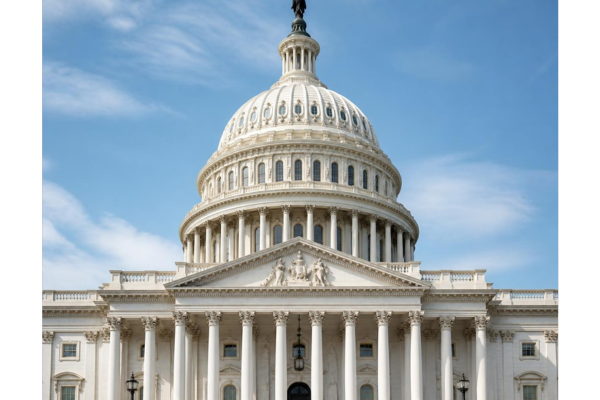
The House of Representatives just gave a thumbs-up to three financial services bills that might not sound exciting at first glance, but could genuinely streamline operations for credit unions—especially those serving military communities.
In a world where legislative wins can feel few and far between, we’ll take it.
On July 14, the House passed H.R. 3074 (the Common Cents Act), H.R. 6556 (the Failing Bank Acquisition Fairness Act), and H.R. 1181 (the Protecting Privacy in Purchases Act). The Defense Credit Union Council (DCUC) is pretty pleased about it, and for good reason. These aren’t just bureaucratic box-ticking exercises—they’re practical measures that address real operational headaches.
“These bills address distinct parts of the financial system, but they advance the same practical objectives: greater efficiency, fair competition, clear operating rules, and respect for consumers’ financial privacy,” said Jason Stverak, DCUC’s Chief Advocacy Officer. “Those principles benefit all credit unions and are particularly important to defense credit unions serving servicemembers, veterans, and military families across installations, states, and time zones.”
Goodbye Pennies, Hello Efficiency
Let’s start with the Common Cents Act, sponsored by House Republican Conference Chairwoman Lisa McClain. This bill would stop the Treasury Department from minting new pennies for general circulation. Before you panic, all existing pennies would remain legal tender—they’re just not making new ones anymore.
The legislation would also authorize a cheaper composition for nickels and create a clearer federal framework for how financial institutions handle cash. Think of it as Marie Kondo-ing America’s coin production: if it costs more to make than it’s worth, maybe it’s time to let it go.
For credit unions, this could mean real operational savings. Managing cash isn’t free—there’s ordering, transporting, storing, counting, and reconciling to consider. Low-value coins are particularly time-consuming and expensive relative to their actual worth. An orderly transition away from penny production could trim those costs while ensuring members aren’t left confused at the checkout counter.
“Credit unions manage cash operations at branches serving communities throughout the country and on military installations around the world,” Stverak explained. “An orderly transition away from penny production can reduce unnecessary taxpayer and operational costs while ensuring that members receive fair and consistent treatment. Clear implementation guidance will be essential so credit unions can update their systems and procedures without disrupting member service.”
Keeping Failed Bank Resolutions Fair and Competitive
Next up is the Failing Bank Acquisition Fairness Act from Rep. Stephen Lynch. This one tackles a problem you might not have known existed: when banks fail, regulators can sometimes waive concentration limits that would normally prevent mega-banks from getting even bigger.
The bill would pump the brakes on that practice. Under this legislation, regulators would generally need to prove that waiving concentration limits is necessary to prevent serious economic disruption, and that no qualified bidder could complete the acquisition without exceeding those limits. There would also be public reporting requirements explaining why a waiver was granted and what alternative bids were considered.
Translation? Failed banks shouldn’t automatically become acquisition opportunities for institutions that are already dominating the market—especially when smaller, qualified buyers are ready and willing to step up.
DCUC has been vocal about this issue because it matters for competition and consumer choice. The organization emphasizes that this competition-first approach should extend beyond failed-bank scenarios. Community banks that want to sell voluntarily should be able to consider qualified credit unions as buyers, not just other banks.
“Failed-bank resolution should not become an express lane to greater concentration,” Stverak said. “Regulators should fairly evaluate qualified bids that protect competition, and policymakers should preserve a willing community bank’s ability to sell to a qualified credit union. These are voluntary, market-driven transactions—not hostile takeovers—and they can provide value to bank shareholders while keeping branches, jobs, and trusted financial relationships in the community.”
He continued: “Credit unions frequently step forward where larger institutions are pulling back. That is especially important in rural areas, underserved communities, and locations near military installations, where the loss of a branch can create a lasting financial-access problem. A credit union buyer can carry forward a community bank’s local legacy through a member-owned model that reinvests earnings in better rates, lower fees, expanded services, and community support.”
One Federal Standard for Payment Privacy
Finally, there’s the Protecting Privacy in Purchases Act, sponsored by Rep. Riley Moore. This bill addresses something that’s become a regulatory minefield: merchant category codes for firearms retailers.
Here’s the situation: some states and localities have started requiring that firearms retailers be assigned specific merchant category codes that distinguish them from general merchandise or sporting goods stores. Other jurisdictions prohibit it. The result? A compliance nightmare for payment networks and financial institutions operating across state lines.
The Protecting Privacy in Purchases Act would establish a single federal standard prohibiting payment-card networks from requiring or assigning retailer-specific codes that single out firearms dealers. It would preempt conflicting state and local laws while preserving financial institutions’ existing fraud prevention, anti-money laundering, and cybersecurity tools.
DCUC backs this approach because it creates operational certainty and protects member privacy for lawful purchases. Credit unions would still have all their existing tools to identify actual fraud, money laundering, or genuinely suspicious activity—they just wouldn’t be forced into a patchwork of state-by-state requirements around categorizing legal consumer transactions.
“Credit unions should be able to protect members from fraud and comply with the law without being compelled to categorize lawful consumer activity through a retailer-specific payment code,” Stverak noted. “A uniform federal standard will provide needed operational certainty, protect the financial privacy of credit union members, and allow fraud-prevention resources to remain focused on suspicious conduct and actual risk.”
What Happens Next
The bills now head to the Senate, where DCUC is urging timely consideration. The organization has pledged to work with lawmakers and regulators on implementation to ensure the operational needs of credit unions—particularly those serving military installations and geographically dispersed memberships—are fully recognized.
It’s worth noting that H.R. 3074 and H.R. 6556 passed by voice vote, while H.R. 1181 squeaked through with a 221–201 vote, reflecting the more contentious nature of payment privacy debates.
Whether all three bills ultimately become law remains to be seen. But for credit unions navigating an increasingly complex regulatory landscape, legislative clarity on cash operations, competitive acquisitions, and payment standards would be genuinely welcome. Sometimes the most helpful policy changes aren’t the flashiest ones—they’re the ones that remove unnecessary friction and let financial institutions focus on serving their members.
Related:
DCUC Tell Congress: Military Families Need Better Fraud Protection and Smarter Financial Rules America at 250: The Beauty of an Unfinished Nation