

Chapter 13 bankruptcies jumped 5.6% last year. The Southeast and Pacific regions are seeing explosive growth. And nearly all of it is hitting credit unions’ most vulnerable member base: people with regular paychecks who are drowning.
If you haven’t updated your bankruptcy risk management strategy yet, let’s get on top of it.
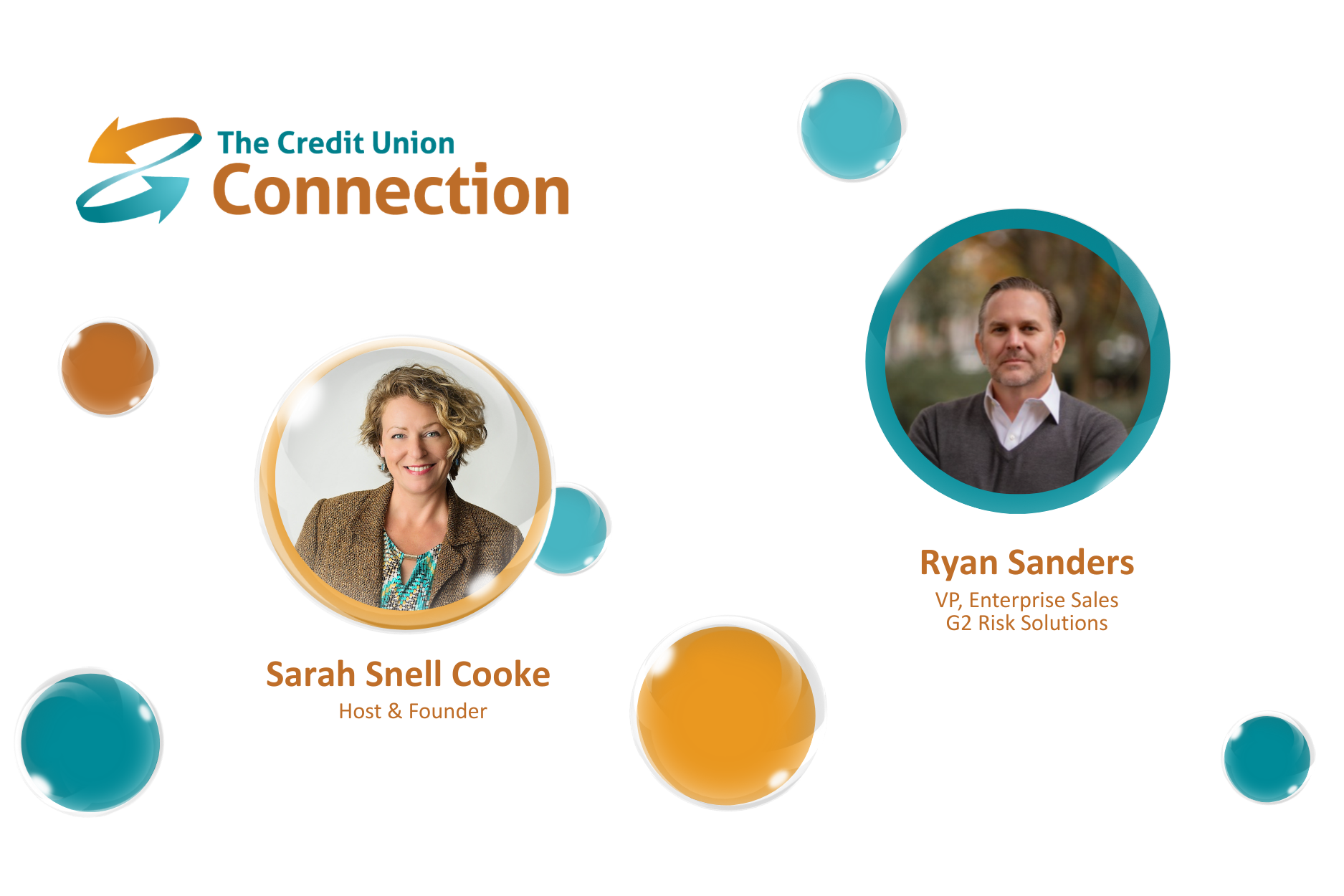
Ryan Sanders, Vice President of Enterprise Sales at G2 Risk Solutions, spent 30 years deep in bankruptcy data. He recently analyzed what the latest filings mean for credit unions heading into 2026. The headline is troubling: consumers are increasingly unable to tread water, and credit unions are directly exposed to that pain.
The good news first. Consumer bankruptcy filings remain 25% below pre-pandemic levels. That’s the baseline everyone likes to cite. But Ryan points out that pre-pandemic, filings were already trending upward. They’ve never returned to the crazy years of 2011-2013. What we’re seeing now is the climb back toward normal—except normal turns out to be worse than most credit union leaders realize.
Why Chapter 13 Filings Matter
With Chapter 13 bankruptcies, people are desperate enough to file but determined to keep their homes. They’re working people whose incomes can’t keep pace with the cost of living. They have jobs. They have paychecks. Yet, they’re still struggling financially with the rising cost of everything from their health insurance to gas to eggs.
For credit unions in the Southeast and Pacific regions, where nearly half the bankruptcy growth is concentrated, the impact is direct. If a credit union serves hospitality, retail or tech workers, members’ financial and other stress will spike. When 80,000 tech jobs disappear in a region, those employees stop spending at local businesses. Credit union loan defaults accelerate.
What Credit Union Leaders Need to Do Now
Ryan advises against waiting for the bankruptcy filing. Map your member concentration risk by region and industry. Which regions are seeing the highest bankruptcy growth? Which industries are vulnerable to the cascading impact of job losses?
Then ask whether you have the right people, processes and tools in place to:
- Manage the increasing bankruptcies
- Stay on top of Chapter 13 filings before they become problems
- File proofs of claim and maximize recovery
“You don’t want to go from five bankruptcies a month to 50 without systems in place to manage it,” states.
With wise stewardship and planning, credit unions can mitigate the risks of member bankruptcies. Watch the full podcast for more.
If this AI-generator were a chef, we’d all be eating cereal for dinner.
Sarah Snell Cooke: [00:00:00] Hello and welcome everyone. I am Sarah Snell Cooke, your host here at The Credit Union Connection. Consumer Chapter 13 bankruptcies are up 5.6%. The Southwest, East, and Pacific regions are particularly experiencing explosive growth. If you haven’t updated your risk management strategy yet, you’re playing catch-up. So today, we’re gonna dive into what the latest bankruptcy data actually mean for your credit union’s bottom line.
My guest, Ryan Sanders, is the Vice President of Enterprise Sales at G2 Risk Solutions, and he’s spent 30 years deep down in the bankruptcy trends. We’re covering regional hotspots, what’s driving the surge, and the one move every credit union CEO needs to make right now. Let’s connect with Ryan
Sarah Snell Cooke: Hello, and welcome everyone. I am Sarah Snell Cooke, your host here at The Credit Union Connection. I’m joined today by Ryan Sanders. Welcome.
Ryan Sanders: Thank you. Appreciate you having me.
Sarah Snell Cooke: Yeah, great to have you. GT Risk Solutions, where he works i- is a, bankruptcy risk [00:01:00] kinda company that credit unions and banks work with.
Will allow the banks to work with him. And, he is the vice president of enterprise sales. And why don’t you tell us a little bit more about yourself and the company?
Ryan Sanders: Well, so you caught me off surprise here. so I… The company itself has been around about 30-plus years. you know, really deep and rich in the history of bankruptcy, you know, helped build out a lot of these electronic bankruptcy notification-type things that have come around, and, you know, through that have built a, you know, obviously 30 years’ dep- de- depth worth of, historical bankruptcy data.
you know, I think they’ve mentioned, you know, work with a lot of large enterprise organizations, so really good flavor what’s kinda happening out there in that bankruptcy world, so
Sarah Snell Cooke: yeah. Yeah. Yeah. And unfortunately, it’s very important, for everybody to know about in credit union land. and I figured also this is, this is probably prime time for credit unions to re-educate or even learn more about [00:02:00] the newer trends that are coming up.
You guys did a report recently, and found that last year bankruptcy- the bankruptcy increase was overwhelmingly consumers. Mm-hmm Which of course, credit unions are completely entrenched in. obv- they’re starting to build on the business side as well, as a whole, as an industry. But, yeah, credit unions are cons- very consumer heavy, and so what does that mean?
What is the headline for the rest of 2026 then?
Ryan Sanders: Well, I think, you know, it’s, it’s pretty unique with credit unions, right? ‘Cause they’re so diverse, and they can be impacted by the different types of industries that they represent. Um, you know, but as like nationally, if you kinda look at a national level, you can see, like what, there’s just a ton of headlines, you know, all this consumer debt, a bunch of stuff came out today, about, you know, $628, you know, billion worth of revolving credit and, and stuff like that.
So from how we’re [00:03:00] looking at things and how things are trending, right, we’re still below pre-pandemic numbers. but we are inching our way back year over year towards that. I think there’s enough in the news to show that that’s not slowing down. So as, you know, a lot of that, pressure, economic pressure, or the macroeconomics things that we’re seeing occur out there kind of driving people towards bankruptcy, that really hasn’t slowed down.
So- You know, we, the way we’re forecasting it, you know, if things continue at the pace that they are, you know, very strong chance of, you know, the numbers just continuously increasing and hitting those pre-pandemic numbers. So
Sarah Snell Cooke: Yeah, for sure. And well, the one thing too that I remember, we were talking earlier about the bankruptcy bill way back in the, I, I think it passed in the 2008 or so I wanna say now that I’m thinking about it, but, was that c- members can actually reaffirm their l- loans, af- [00:04:00]after filing bankruptcy, reaffirm their loans with credit unions.
And, so that’s a special thing that credit unions are allowed to do. I don’t know how much it helps really, but-
Ryan Sanders: Yeah. Yeah. You know, I, I, you kind of see, you know, once you’re, you’re kind of in trouble, you know, in that way, it’s, it’s, maybe it’s buying you a little bit more time, you know, depending on what that situation.
Hopefully you’re able to get through that rough patch, you know, and then come out the other end in a, in a better, better spot, right, to handle, you know, all the, you know, financial responsibilities that you might have. But yeah, so.
Sarah Snell Cooke: Yeah. Um, and that’s kind of good because chapter 13 filings, it rose, you guys found 5.6%.
And that is the stress, the financial stress reaching households with regular paychecks, not just-
Ryan Sanders: Yeah …
Sarah Snell Cooke: you know, people who are already kind of economically, insecure, unsecure, I think the word is there. But, for credit unions whose [00:05:00] members are largely working people- Mm-hmm … sometimes often very low income areas, is that number, is that the number that should worry the executives the most is those regular check pay, check receivers?
Ryan Sanders: So, you know, that is usually where, you know, the, the, I think it’s a greater downstream impact. people are at a point where they want to try to hold on to stuff, but they’re, you know, well underwater. you know, who t- traditionally you think most impacted is, is the mortgage industry. You know, when 13s increase, it usually means that people are filing for bankruptcy to kind of slow things down, hopefully in an effort to keep that house.
I think in the past few years you’ve seen people with equity in their homes, so when they have the opportunity to refinance or sell their home, they can get out from underneath that and avoid, you know, their home being foreclosed on. So I think in ’25, [00:06:00] you start to see a larger percentage of foreclosure starts actually go to foreclosure because, you know, a lot of those escape avenues a- aren’t as readily available as they were, like, in ’24.
So if, you know- Mm-hmm … someone ran into trouble, you have a ton of equity in your home, you can refinance, you can pull stuff out, you can sell and get yourself out from underneath, at least kind of what you read and hear. Mm-hmm. Um, whereas now in ’26, you know, there’s- A lot of those, I think, escape routes are diminishing.
Mm. Um, and you, you see all these different headlines within the news and, and for me and for our group, we kinda see how that all ties together, right? ‘Cause it’s, it has a meaningful impact on our business, so we want to s- understand. So you’ll, you’ll see things as, hey, credit card delinquencies, auto, you know, severe auto delinquencies, the, diminished savings.
you know, [00:07:00] people are really pulling out money out of their savings. You’re also seeing people do hardship withdrawals, for their 401s, right? They’re looking for ways to get themselves out of trouble with that. That number has risen, right? These are headlines- Mm … that you see, and it’s all kinda tying together, and, you know, lo and, lo and behold, you see bankruptcy filings are now also- Mm
rising in parallel, and I think there’s a, still a lot out there within the news that are indicators that it’s not gonna get, get better for right now. I mean, I mean, for, from our perspective, you know, the numbers are still gonna be holding strong. Mm. there’s still a lot of unknowns happening out there, especially the, I’m gonna say this wrong, but, stuff outside in the world, right?
So all this, the impact, from all these things happening outside the US that, you know, do impact us. So- Mm-hmm … a lot of that is still re- I mean, for the most part, unresolved and, you know, still, you know, impacting the cost of- Mm-hmm … you know, [00:08:00] products and consumer goods and stuff like that. So until, I think, some of that gets right-sized along with, you know, what people make, you’re still gonna see, you know, kind of what we’re seeing right now, so.
Sarah Snell Cooke: Mm.
Ryan Sanders: But yeah.
Sarah Snell Cooke: And, and nearly half the growth came from the southeast, where I’m located- Mm … and the Pacific area. if I’m running a credit union in these areas, how should they be thinking differently about that risk right now?
Ryan Sanders: Well, yeah, that’s tough because, you know, like, like I think I mentioned it, you know, dependent on what that credit union supports, like if they’re supporting the hospitality industry in the southeast, right?
Mm-hmm. and, you know, you saw this large, not large, but you, you saw an announcement, like 80-something thousand high tech end jobs were replaced or eliminated. Mm-hmm … and so you, again, looking at the downstream impact, so how many of those people are now gonna be able to afford to take vacations and spend all that money in this, you know, [00:09:00] entertainment industry that maybe this credit union supports, right?
How, you know, how’s that gonna affect? So h- you know, are they gonna have to make any adjustments, you know, there to deal with the reduced, you know, revenue and, you know, if that means layoffs, and then that’s less members who can now afford to pay, you know, whatever loans that they have, then yeah, it’s, it’s, it’s kinda scary a little bit maybe.
Mm-hmm. you know, you try not to think all the doom and gloom kinda thing of what’s kinda happening out there. I think there’s still a lot of positive things. You look at 401Ks, a lot of those markets are still doing really strong, but- Mm-hmm … you know, but there’s other, there’s these other things happening too in parallel.
So, it’s, it’s hard to say. but yeah. You know, I, I would just, you know, you see, like, you know, I’m, again, I’m not an economist. You know, I don’t study economy. I don’t, you know, anything, so I can only tell you from what I, what I see and I think here. Um, um, but, you know, you [00:10:00] see a lot of these credit unions try to diversify themselves, maybe expand a little bit their footprint, to get more of a national exposure, for membership, but that also comes with other challenges as well, right?
So you’re now managing members outside of your core region or, you know, what, you know, where you’re located and what not, especially if you’re central to a state or a tri-state area, and maybe not as versed in national, you know, managing national accounts. Mm-hmm. But, but yeah. So.
Sarah Snell Cooke: the, the, the report also points out that consumer filings are still, and you know, we’re talk- talking about positive points, still 25% below pre-pandemic levels.
And so is that the good news it sounds like, or like, what’s going on there?
Ryan Sanders: Yeah, it’s kinda one of those baselines that people always compare to. you know, pre-pandemic, filings were actually starting to trend back up as well. you know, slightly, you know, obviously nowhere near 2011, 2000-whatever, ’13, [00:11:00] ’12 numbers, which were crazy times for any industry, trying to navigate defaulted loans and, you know, consumer, who are defaulting.
but- With everything else going on that you see, right? It’s, and again, this is gonna be a little bit repetitious, but all the negative news in terms of consumer finance- Mm-hmm … and consumer health, y- I don’t feel like it paints a good picture for the future of the economy. you know, but again, you know, I’m only looking at one side of it, and I’m really, for us, we’re looking to see what c- understands our, understands our business, what drives our business.
Mm-hmm. So, I’m sure there’s other things happening out there, that I, you know, may not have a perspective on that, “Hey, these are all, all these great things are happening.” You know, I just don’t see it. I, I just unfortunately only see, you know, the, the more negative side of things. So,
Sarah Snell Cooke: yeah. That’s important to know too.
Yeah. Balance it with the rose-colored [00:12:00] glasses, right?
Ryan Sanders: Yeah. You know, you heard me say it’s like, you know, you, you see all these negative things happening, but I’m trying to understand why, you know, investment accounts seem to be doing well, and, you know, I, I have that answer somewhere, but I can’t tell you what it is.
But, you know, I wanted to understand that part of it. Um, you know, I think usually you see both kind of going down- Mm-hmm … in parallel, right? Right. So if, uh, the economy’s tanking and for, um, bankruptcy filings are going through the roof and, you know, there’s all these other things that are going down, but we’re not, I think, seeing that happen.
Um, so, you know, maybe it’s a false sense of security. It’s like, “Oh, okay, well, these things are happening. I still got a job. my 401’s still doing really well.” You know, I think this is, you know, for any person out there, um, you know, you hear of all these other things, and until you’re directly impacted, it’s, it’s- Mm-hmm
you know, it’s kind of, you live in your little bubble, right? Yeah. Until, okay, uh, you know something now, my job has now been eliminated, you know, AI has impacted [00:13:00] me, you know, whatever you see again- Mm-hmm … in the news. So, um, until that realization kind of hits, you know, it’s, it’s, you know, it’s kind of tough to understand, I guess so.
Sarah Snell Cooke: Mm-hmm. Yeah. And actually, you were, you, you talk about bubbles. I was watching a TV show the other day, a rerun, and they said… This, this character said, “I can code. I’ll always have a job.” Yeah. Wow, that didn’t age well, did it?
Ryan Sanders: Yeah. Yeah. I, you know- … w- the… Sorry, not to go off. No. Is that with the whole AI thing, it’s, to me, it’s pretty insane, right?
You know, I’m older. I’ve, you know, been around- I’m with you … and so we’ve had a chance to experience different, you know, waves and things. And one of the things I looked at was the, the insecurity that is created by outsourcing, right? When outsourcing was a big thing, big com- companies were taking stuff and moving it to an offshore organization, and there was that sense of insecurity that came with it, like, “Oh, what’s gonna happen?”
Mm-hmm. You know, “Now [00:14:00] you’re taking my job,” and then now you have this other new thing. If like, so- To me, AI is like that new outsourcing thing and, like, you know, it does have a psychological impact, you know, on, on things too. And, you know, I’m always kinda curious as like, “Well, hey, let’s just ride this to the end, and let me charge up my credit cards and do what I gotta do until the, you know, ride this wave as long as I can,” kinda thing, so.
Sarah Snell Cooke: Yeah. Yeah, for sure. Unfortunately, that is the situation for many. but, so a lot of the executives we have now running credit unions tend to be younger. Like, I used to be younger than all these guys, now not so much anymore. Yeah. and so they haven’t seen necessarily all these swings, not as an adult who actually understands what’s going on.
so how do you embed bankruptcy risk into a longterm strategy, and how’s that look in the cr- inside the credit union?
Ryan Sanders: So, so you, you probably understand is that, you know, there’s a couple things that we advocate for [00:15:00] a- as a business, right? And so when we’re, we’re going in and we’re talking to people, you know, kind of saying you’re, you’re really trying to mitigate two things, right?
You’re mitigating the risk of not-
reacting to a member filing bankruptcy, right? So if you fail to recognize that they have filed for bankruptcy and you violate the release this day, there’s re- recourse that can occur, right? Mm-hmm. so that, that’s one aspect. So you wanna make sure that you’re, you’re protecting, you know, the organization, ensuring that you’re not, you know, breaching those rights.
Sarah Snell Cooke: Mm-hmm.
Ryan Sanders: The other part, too, is like when they do file for bankruptcy, you want to ensure that you have an opportunity to maximize your recoveries by filing a proof of claim.
Sarah Snell Cooke: Mm-hmm.
Ryan Sanders: So, so one, “Hey, I need to know about this person who filed bankruptcy so I can stop trying any collection, you know, tasks.” And then two, I need to make sure I’m [00:16:00] moving to file a proof of claim to ensure I’m able to recapture what I can.
So if they file for Chapter 13, they’re making, you know, they have an opportunity to, to recover some of the money they give to the trustees. If there’s money left over, you know, depending if it’s like unsecured, you know, type of loan. and then if it’s a seven with assets, right? Um, you know, if it’s a Chapter 7 with assets, it means they’re trying to retain some of that stuff and they’re paying back for that.
Mm-hmm. So, you know, you… If you fail to file your proof of claim, you, you miss out on that chance to get in line, say, “Hey, I wanna be paid too,” if there’s an opportunity to get paid. so, you know, as a, as a leader, you know, for those groups, says, “Hey, do I have the right solutions in place to ensure that we’re protected?”
Um, and that, you know, protected from making a mistake potentially. And then, you know, number two, let’s, “Hey, if we have a chance to recover some of those losses,” you know, they wanna make sure they’re doing that, so.
Sarah Snell Cooke: Mm-hmm. And, we’re also seeing an increase structurally elevated, [00:17:00] y- you know, your report called it, increase in business bankruptcies, but it’s not actually, like, exploding.
Ryan Sanders: No. No. It’s all tied together, right? So it’s like- You’re gonna s- you know, s- small businesses are gonna be im- you know, are impacted, and it, and it’s like, I don’t know how, what the best way to describe this, but, you know, if it’s once this, say, this, you know, Ryan Sanders coder gets laid off, you know, no longer is he going to the small, you know, mom-and-pop coffee shop to get, you know, my daily coffee.
You know, I’m not, you know, a lot of these extras that I were doing, that I, I’m not gonna be doing anymore, and incrementally that’s gonna impact these small businesses. So now, you know, that small coffee shop is not getting as much customers, you know, that they’re depending on from this tech company that had laid off a whole bunch of people.
you know, and so he- they’re gonna maybe having to take actions to protect themselves and, and, you know, [00:18:00] file for bankruptcy, so yeah. Mm-hmm. I, you know, it’s nowhere… If, if the number of businesses filed is equal to the number of consumers, I think we, we’d be in huge trouble. Right. But um, you know, I, you know, the, the, the portions of that we see of, like, 13s and 7s, you know, I, I think, you know, obviously that’s relatively normal, but the percentage year-over-year growth of business filings, that’s, say, even if it’s 100 now to 200, that’s 100% growth.
Mm-hmm … it’s not that, but it’s still, you know, it’s something to take notice of. but yeah.
Sarah Snell Cooke: Yeah, for sure. because credit unions are certainly expanding in that area, even buying banks to be able to, just buy the talent basically, what they need- Yeah … to expand there. But, so if I’m a credit union CEO and I read this report and I have one takeaway f- before next quarter hits, what is the one move you would [00:19:00] advise them to take?
Ryan Sanders: well, so I’m gonna s- not subtle here. Most of the time I feel they have an appreciation of what their makeup, their, their cons- their people are. I would, you know, as these volumes are increasing, I would m- making sure that I’m taking a hard look of regions- Mm-hmm … of my members and to see if there’s any correla- you know, direct impact to those areas.
So like, hey, we’re seeing more filings in, you know, the state of Illinois, you know, and I have a large member concentration in Illinois. You know, what do we need to do? Do we need to keep a better eye on them? Do we need to, you know, make sure we have the tools in place, ensure that we’re monitoring, and then staying on top of that so we can be more proactive, you know, than, than versus reactive.
I mean, obviously part of it’s gonna be reactive the minute they file, but, you know, the sooner that you can get a jump on that, the better, you know, downstream- Mm-hmm … for the entire organization. So right. [00:20:00]
Sarah Snell Cooke: All righty. Cool. So I always allow my guests to have the final thoughts. What would you like to leave our credit union audience with today?
Ryan Sanders: Holy schmoly, you’re putting me on the spot with a lot of tough questions. Did I do that tonight? no, no, no. It’s, it’s a Monday. We’re coming off a long weekend. Uh-
Sarah Snell Cooke: I hear you …
Ryan Sanders: half of it’s been at the baseball field, so, um, you know, with little leagues and whatnot. But, Shoot. you know All right, you’re gonna have to ask that question again.
I, I think I… What’s the one thought I was- No worries,
Sarah Snell Cooke: no worries. We can start over. Yeah. that was the other thing I meant to tell you. We don’t do a lot of editing, but if you need to start over, you can start. So- Okay So, always allow the m- I always like to allow my guest to have the final thoughts.
What would you like to leave our credit union audience with today?
Ryan Sanders: Wow. you know, you know, from a, you know, business perspective, I mean, what we can offer, you know, you know, I would take a hard look to ensure that you have the solutions in place to make [00:21:00] sure that as these volumes are increasing, you have the stuff in, in place so that becomes manageable.
Um, you know, you don’t wanna find yourself in a spot where you go from five bankruptcies a month to 50 and, you know, even though that’s a small number compared to some of these groups who are seeing, like, 10,000 a month or 20,000 a month, it still can be pretty impactful on operations. so yeah, you know, make sure you have the right solutions in place to ensure that you’re able to manage those volumes as they do.
They are increasing, so.
Sarah Snell Cooke: Yeah. Yeah. Well, thank you so much for your time and expertise today. Sure. Appreciate it. Thank you. No problem.
Ryan Sanders: Thanks for inviting me.
Podcast: Play in new window | Download