

Here’s a number that should get your attention: Guatemala receives roughly $25.53 billion in remittances every year.
That’s not just impressive—it’s nearly 20% of the entire country’s GDP. For millions of families, that money flowing across borders isn’t extra. It’s groceries, school fees, medical bills, and everything in between.
The problem? Sending money internationally has traditionally been expensive, slow, and often operates outside the traditional banking system. But a new pilot program between the World Council of Credit Unions (WOCCU) and Visa is showing there’s a better way.
What Happened Here
WOCCU and Visa just completed what they’re calling one of the first known digital remittance pilots directly connecting credit union members across borders. In practical terms, that means someone at Unitus Credit Union in the United States can now send money straight to a member’s debit card at participating credit unions in Guatemala—instantly, digitally, and through trusted financial institutions on both ends.
The pilot links Unitus members with three Micoope-affiliated Guatemalan credit unions: Acredicom, Copecom, and Tonantel. The technical backbone? Visa Direct, which handles the heavy lifting of moving money across international borders quickly and securely.
Why This Matters More Than You’d Think
“Cross-border payments are essential to families and communities around the world, but they are often difficult, costly or disconnected from the formal financial system,” explains Paul Treinen, President and CEO of WOCCU. The pilot demonstrates how credit unions—working with the right partners—can deliver digital solutions that actually expand financial access rather than gatekeep it.
Consider Micoope’s reach in Guatemala: 2.7 million members across the country, with 91% brand recognition in rural areas. About half of those members are women. That’s not just a customer base—it’s a distribution network that reaches communities traditional banks often ignore.
The Bigger Picture
Steven Stapp, President and CEO of Unitus Community Credit Union, puts it plainly: “In this pilot, we have proven that the process, technology, and security are in place to connect credit union members from Guatemala through international remittances to the rest of the world. This opens the door for financial inclusion goals to be realized worldwide.”
Translation: if it works between the U.S. and Guatemala, there’s no reason it can’t work everywhere else.
Celeste Schwitters, Senior Vice President at Visa, emphasizes how the partnership combines Visa’s global infrastructure with the cooperative model’s inherent strengths. “By combining Visa’s global network and Visa Direct capabilities with the strength of the cooperative system, this pilot helps improve how money moves, making it more accessible, more reliable and more connected to the financial tools people depend on.”
Who This Helps
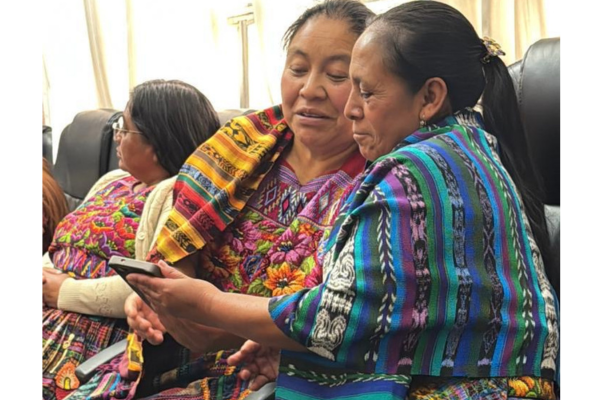
Antonio Aldana, CEO of Micoope, highlights the human impact: “This initiative has a profound social impact: it places rural indigenous women, historically excluded from financial services, at the center of cooperative finance, starting with the digital remittance and financial education to improve their lives, families and communities.”
That’s the kind of outcome that matters. Not just faster transactions or lower fees (though those help), but actually bringing people into the formal financial system who’ve been left out for generations.
The pilot proves something important: the infrastructure exists to make cross-border payments work better for everyone. Now it’s about scaling it up and connecting more cooperative networks worldwide. If credit unions can crack this puzzle, remittances could become less about navigating obstacles and more about simply taking care of family—no matter which side of the border they’re on.