

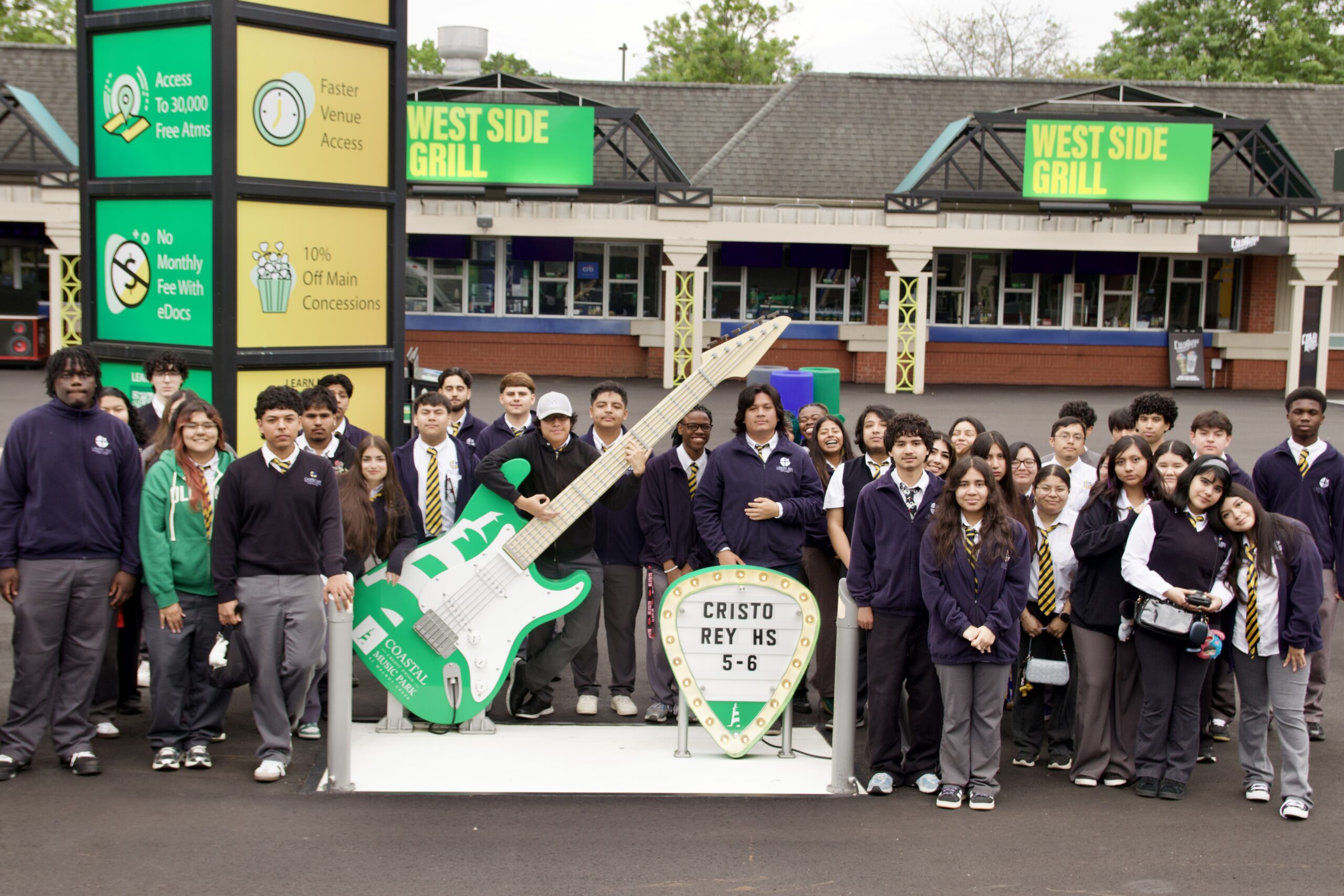
Here’s something you don’t see every day: 60+ high school students voluntarily showing up to learn about budgeting.
Plot twist? They’re doing it at a concert venue, not a classroom.
On Wednesday, May 6, Coastal Credit Union threw open the doors of the Coastal Credit Union Music Park for a financial education field trip that ditched the textbooks in favor of something a little more… experiential. The students, all from Title I schools, got to tackle real-world money decisions in a setting that’s decidedly cooler than your average school cafeteria.
Financial Ed Meets Real Life (Without the Boring Parts)
The centerpiece of the day was an interactive financial simulation—think of it as The Sims, but with actual consequences for your credit score. Students had to navigate budgeting, saving, and spending decisions that mirror what they’ll face in the real world. Because let’s be honest, nobody teaches you how to balance “I need groceries” against “but these concert tickets though” in a traditional econ class.
The goal? Show students how the financial choices they make today ripple into their future. It’s the kind of lesson that sticks way better when you’re making the decisions yourself rather than memorizing them for a test.
Behind the Curtain: Careers You Didn’t Know Existed
But wait, there’s more. Students also got an exclusive backstage tour of the Music Park, exploring the behind-the-scenes world of live entertainment. We’re talking career paths that probably never showed up on a guidance counselor’s radar—production managers, venue operations, event logistics, the whole nine yards.
“For example, our whole senior class is here today. They’re learning about food security and doing a budget exercise and getting a look backstage, which are fun activities but are also enlightening and exposes them to things they might not get otherwise,” explained Casey LoFrese, VP of Corporate Work Study from Cristo Rey Research Triangle High School in Durham.
LoFrese emphasized just how valuable this partnership is: “Coastal is an invaluable partner, for a lot of reasons. We have a team of four students in a work study—all in different departments—that gets really great experience and exposure. In addition, Coastal is always looking for additional avenues to help all our students.”
Healthy Eating on a Budget (Yes, It’s Possible)
The day also featured a session with Ripe for Revival, a nonprofit that shared practical tips for eating healthy without emptying your wallet. Because knowing how to afford actual vegetables is just as important as knowing how compound interest works.
To round out the experience, students participated in a service project supporting the nonprofit—a hands-on reminder that financial responsibility and community involvement go hand in hand.
Making Financial Education Stick
“Our goal is to help students see how financial education connects to real life—from everyday choices to future careers,” said Emily Nail, Coastal’s VP of Cooperative Strategies. “Hosting this experience at the Music Park allows us to deliver those lessons in a way that’s engaging, memorable, and meaningful.”
And that’s really the secret sauce here. Financial literacy doesn’t have to mean death by PowerPoint. When you combine practical skills with real-world settings and career exploration, you create experiences that students actually remember—and use—long after they leave.
Now that’s an education worth showing up for.
Related:
Coastal CU’s Blackwell inducted into African American CU Hall of Fame
Coastal Credit Union Surpasses $6 Billion in Assets