

*Allegedly
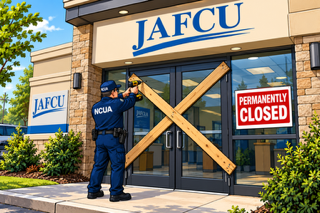
As you all have heard by now, Jackson Area Federal Credit Union’s own CEO allegedly stole somewhere between $69 million and $95 million over more than a decade, and nobody caught it until the credit union was already insolvent. The NCUA liquidated it tonight.
If you’re into true crime and fraud stories, check out the Overdrawn podcast! (But read this first.)
NCUA announced Sept. 30, 2026, that Jackson Area Federal Credit Union in Jackson, Mississippi, has been liquidated, with Five Star Credit Union in Dothan, Alabama, immediately stepping in to assume share accounts and purchase assets. But the sanitized press release language obscures one of the most shocking embezzlement cases in credit union history.
And one every board member and internal auditor in this industry should be paying attention to.
The CEO Who Allegedly Robbed Her Credit Union Blind
Leigh Bridges joined Jackson Area Federal Credit Union in 1992. She worked her way up through comptroller, senior account manager and chief financial officer before becoming CEO in 2021. According to federal prosecutors, her alleged theft began roughly a decade before she took the top job, likely while she was CFO, the person responsible for financial oversight.
Bridges was placed on administrative leave in April 2026 after an investigation into suspicious wire transfers. NCUA placed the credit union into conservatorship on May 6, citing insolvency. What examiners found once they got into the books was staggering: prosecutors say Bridges embezzled more than $69 million, with some allegations putting the missing funds closer to $95 million against a credit union that reported roughly that amount in total assets. She allegedly used the money to fund luxury vehicles, jewelry, vacations and homes both in Mississippi and abroad, according to WLBT’s reporting.
Federal prosecutor Deidre Colson said Bridges concealed the fraud by falsifying invoices, entering false debits into the credit union’s general ledger and altering financial statements going back to the late 1990s or early 2000s, according to the same report. NCUA also filed a civil suit against Bridges, her husband Chad and a former branch manager over the summer.
This week, Bridges pleaded guilty to three federal counts: theft of funds from a federal credit union, making false statements to a federal credit union and filing a false tax return. She faces up to 70 years in prison. Her sentencing is scheduled for February.
What Every Board, Supervisory Committee and Auditor Must Consider
A scheme running for more than a decade, through multiple roles including CFO, is a governance failure. Someone with financial oversight responsibility allegedly falsified the very records that should have exposed the fraud, and it appears no external audit, supervisory committee review or examiner caught it until wire transfer activity was investigated by the credit union’s corporate credit union, Corporate America Credit Union.
Every credit union volunteer, executive and employee must be ready to handle uncomfortable questions at their credit union. Does our supervisory committee have the independence and expertise to catch manipulated financial statements? Are your external auditors testing for management override of controls, or just checking that the numbers? Who has the authority to move money without a second set of eyes, and has that authority ever been tested?
Jackson Area served 15,704 members and 38 distinct employer groups across city and county government for 73 years. It had a functioning board, a supervisory committee and presumably annual audits. None of that stopped a decade-plus fraud from draining the institution to insolvency.
What hasn’t been determined yet is the ultimate cost to the National Credit Union Share Insurance Fund. Could it mean an industry-wide price tag for a single bad actor with unchecked access?
This is about when internal controls exist on paper only. Every credit union must ask whether their own institution could have caught this any sooner. And what happens to trust in the institution – or the entire credit union community?
2 thoughts on “The $69 Million Question: How One CEO* Brought Down a 73-Year-Old Credit Union”
Holy bananas
Very sad, but a great lesson that hopefully people can learn from, so it does not happen again.