

Less than one-third of Americans can tell you what a credit union does. After a century of “People Helping People,” that’s downright scary, especially when you consider how quickly fintechs like Sofi and Chime spin up a well-known and liked brand (sometimes before they have a product!).
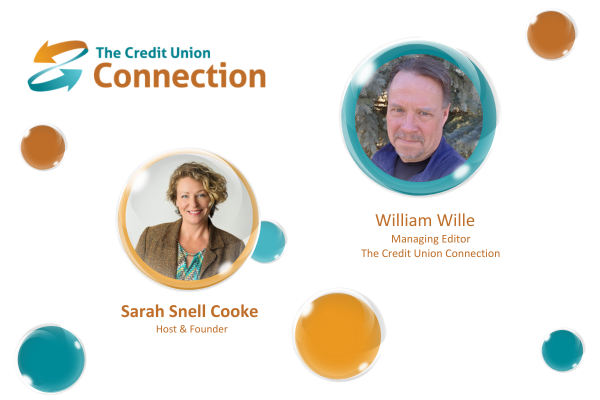
Sarah Snell Cooke sat down with The Credit Union Connection Managing Editor William Wille to talk about why credit unions are still the best kept secret in financial services and how public relations (comprehensive PR, not just sending press releases into the void) can fix it.
Marketing Is Not Enough
Most credit unions have someone doing marketing. Rates, promotions, maybe some social media posts about new checking accounts. What don’t they have? Someone who actually understands public relations.
Both are valuable. The difference is that marketing says “we have great rates,” while PR is about getting other organizations and people to say great things about you. One is transactional. the other builds trust and brand recognition.
Credit unions keep trying to win rate wars (we don’t have the scale of Chase, sorry) while missing the one thing that actually differentiates them: mission and community impact.
Credit Unions’ Inadvertent Self Centricity
The conversation covered a crucial point that most credit unions get wrong: Your story is not about your credit union. It’s about your members. (As storyteller supreme Andy Janning said in an earlier episode, make your members the heroes – not your credit union.)
“Really where PR comes into play is with telling their story,” Wille said. “Philosophy’s great, but how do they show that? How do they live it?”
Member testimonials. Peer-to-peer experiences. Community impact that goes beyond a check presentation photo, like high-quality action shots, not staged handshakes or people with golden shovels at a branch opening.
What Actually Works IRL
The discussion shifted into tactics: How to structure a press release so editors don’t immediately delete it. Why photos matter more than you think. How to follow up with journalists without being annoying (hint: don’t wait a week—that story is already dead).
Sarah and William also cover how to position your credit union as the go-to resource for local reporters covering financial topics. Because when a reporter needs a quote about mortgage rates or financial stress, they should be calling you, not the mega-bank down the street.
PRioritization
PR must be treated as a strategic priority, not something the marketing person does when they have time. That means aligning communications with your mission, building media relationships and thinking beyond the next rate promotion.
After 100 years of serving members, most people still don’t understand what credit unions can do for them. That’s a PR problem with a PR solution.
Watch the full conversation for specific tactics, real examples from the Illinois League’s 100 million membership campaign and what actually grabs an editor’s attention.
NOTE: This transcript may contain minor imperfections courtesy of our AI overlords-in-training. We’re not complaining. We’re definitely not complaining.
Sarah Snell Cooke: Hey, everyone. Welcome to The Credit Union Connection. I am Sarah Snell Cooke, your host. This episode of the podcast is a little different. I’m joined by our very own managing editor, William Wille, to talk about something people love, hate, love to hate, or completely misunderstand, and that’s public relations.
Here’s the thing, most credit unions think PR is about sending out press releases or, paying for awards that mean nothing. However, done right, PR builds brand recognition, establishes credibility, and positions your credit union as the expert voice in the market before a crisis forces you to figure it out. We’re covering what good PR actually looks like versus the fluff that can waste your budget, why media relationships matter more than you think, and the biggest PR mistakes.
Plus, William’s going to share what actually gets our attention as editors and what lands straight to the spam filter. Let’s connect with William.
Sarah Snell Cooke: Hello, and welcome everyone. I am Sarah Snell Cooke, your host here at the Credit Union Connection. And with me today is William Wille. Welcome.
William Wille: Thanks, Sarah. Glad to be here.
Sarah Snell Cooke: And did you wanna go by William or Will?
William Wille: We’ll go by Will, that’s fine.
Sarah Snell Cooke: Okay. Yeah too many syllables. Anyway. Will, apparently I need to get him a background, is our new new-ish managing editor at the Credit Union Connection. Why don’t you give a little bit of your background, ’cause you have a little bit of credit union experience, as well as PR.
But, tell us about yourself.
William Wille: Sure thing. as you mentioned, I’ve been, managing editor for Credit Union Connection here for a little while. And, before that, I guess I could say I took about a 10-year detour from credit unions into medical associations, and, working for dermatology and dental. And, prior to that, my big credit union experience, where you and I had met, was when I was with the Illinois League for 17 years. And, when you were the, publisher and editor-in-chief for Credit Union Times.
Sarah Snell Cooke: Yep.
William Wille: Really, my whole career has been about, public relations, strategic communications, working for mission-driven organizations. Early in my career I worked for the Northern Illinois Food Bank here in the suburbs of Chicagoland. And as I got to thinking about it, credit unions have been part of my career, part of my life for quite a long time. And actually, my first job, just occurred to me yesterday that my first auto loan was with a credit union. For the life of me, I cannot remember what the name was or if they’re still around. But that was my first exposure to them. Ironically then I came back around and worked for the league, and now, I guess I’ll say 30 years later, I’m here with the Credit Union Connection.
Sarah Snell Cooke: Yes, you are. So one of the things that often comes up, came up at GAC, three different sessions at least this year, as well as been an issue for credit unions for 100 years, is, telling their story, sharing their story, and obviously PR is a huge part of that. talk to me about how you define, PR and what some of the tactics that comprise PR efforts.
William Wille: Sure. to me, PR is, part of your brand, the personality of your organization, and really how you’re building trust with your community. And you can do that in a number of different ways, through media relations, press releases, thought leadership, and executive visibility, and hopefully not, too often, but crisis communications, and really what you’re doing out in the community.
Sarah Snell Cooke: Yeah, for sure. And so what do you see as the value of PR in the credit union movement?
William Wille: I know as far as long as I’ve been involved, it’s always been the philosophy of people helping people. And really, credit unions have a lot going for them. they still do, and, I’m getting re-acclimated after having this little hiatus. But, just telling their story and, building trust with their community.
Sarah Snell Cooke: Yeah, for sure. Now, the thing is, and you mentioned PR, obviously a very important part of brand, very few people know about credit unions. Credit unions have been around 100 years, and for 100 years building that brand, sharing their story has been an issue. less than a third of people know what a credit union truly is and what it can do for them, especially the younger generations. And how can credit unions maybe leverage PR as part of their brand to better share those stories?
William Wille: So I know when I was involved with the credit unions, and with the league, that credit unions were often said to be the best-kept secret, and I hope that now, they’re not so much of a secret. But really where PR comes into play is with telling their story, and we’ve always had that people helping people philosophy, but, really, what does that mean? Philosophy is great, but how do they show that? How do they live it? A great way to do that is through member testimonials and just peer-to-peer, this is how my credit union has helped me. I know there’s a time and a place for the CEO or another officer of the credit union to get out in front, on PR and the camera if that’s the situation. But, really that’s where credit unions can really see a lot of mileage is what they’re doing in their communities, and they’re doing a great job of that, and how they’re really helping their members.
Sarah Snell Cooke: You mentioned before, or a little bit earlier, that, credit unions tend to focus on marketing. They wanna get the rates out there, which, of course, brand is more your differentiator than your marketing. Anybody can win or lose the rate war, and it’s probably won’t be credit unions, because they just don’t have the scale. but also, credit unions tend to only have a marketing person who does PR. It’s not somebody who’s actually, typically trained so much in PR. So what are some key pieces of advice that you might give to, a young marketing person who now is tasked also with PR to be successful?
William Wille: Just one, make it more of a priority and think about, okay, how can we leverage PR, knowing that what it is, in addition to getting, their name out there, in, with marketing, promotions. And not just, announcing, “Hey, we hired a new staff person,” not to downplay that. But, again, really just getting into what their difference is. Even when I was still with the league, whatever that was, 10 years ago, the bankers have really gotten hip to that too, because now you see them focusing on member service, getting out there a lot in the community, where that was always a real big differentiator, for credit unions. Just find those different ways to really highlight what they’re doing. and they’re doing a lot of great stuff. And not only just being, I guess we’ll say, self-promotional, but really finding ways to get into the local conversation about financial needs, finances, and be a resource to local reporters.
I guess I’ll use that kind of loosely because I know at least where I am here in the Chicago suburbs, the local news landscape has changed tremendously. And, so you might not always have a reporter, but, just look for those opportunities to be a resource where financial services are concerned. Then that helps to build a relationship with the media that you do have, so then when a story comes around, a bigger story, that they’ll think to call you to help them out.
Sarah Snell Cooke: Absolutely. ‘Cause, one of the things I always preach in my practice is that your story is not your story. It’s a collection of your members, users, clients, whatever story. And so making sure, that the member is the focus in the press releases versus the credit union, just being a hero, because that’s more focused on you versus them, the audience, and it’s more relatable for them. Along those lines, do you have examples of work you’ve done in the past or ones that you’ve felt, you’ve seen that you feel have been, really good? And it doesn’t have, doesn’t have to be credit unions, but then if it’s not, how can credit unions adapt that?
William Wille: A couple of real, good examples I can give, and starting with credit unions, when I was with the league, we were celebrating, 100 million memberships in the United States, if, people think back and think about that. What I did was put together a task force of staff and credit unions throughout the state of Illinois, and just looked for those opportunities to tell the credit union’s story, not just: “Hey, we reached 100 million memberships.” What does that mean? And so we developed, templates for social media posts, the core messaging that, really came out of it.
And, really, providing avenues for people to really tell their story about how their credit union helped them. one of the cool things that came out of that too was that, I don’t want to say we invented it, but we put on a campaign that fall for shred days. During about a three-month period, there was, I think about 100 different shred day events that happened, and that really got the community involved, and it just really showed again how credit unions are a resource that, beyond the financial services, “Hey, we’re helping to protect your identity,” and getting into those kind of storylines too.
The other types of stories that I can think of, I mentioned that I was with the Northern Illinois Food Bank, and where that organization was based, and actually still based to that day, is in relatively affluent areas in the Chicago suburbs. And, it was always an interesting and fun, I guess I’ll say, challenge to really tell the story about the hidden need, of hunger. And I know that now homelessness has been more, prevalent. People are more in tune with that. But at the time, and we’re going back, a little ways, oh, yeah, a little ways. Yeah, we’ll just leave it at that. And, just, people are driving around in nice cars, they’re like, “What do you mean there’s hungry people? Or, my neighbors don’t have enough to eat?” And so just really, again, bringing out those stories, going to the front lines of the food pantries, and finding people who would be willing to talk about it. Coming back around to credit unions, it’s just the way that you think to tell your story, and how you wanna be known in your local community.
Sarah Snell Cooke: For sure. Yeah, it’s what people say when you’re not around, basically, just like a personal brand. and you really gotta think about and intentionally craft what you want people to think of you when they’re, when you’re not around. And so as we talked earlier, PR goes beyond the press release and crossing your fingers. But, along the lines of press release, ’cause that is, pretty common among credit unions, is we get, oh, hundreds at least a week.
William Wille: Yep.
Sarah Snell Cooke: What do you find is the best way to structure a press release?
William Wille: With the way the media landscape is right now, you wanna make it as easy as possible for the person, receiving the information, and really catch their attention, even quicker. We’ve gotten, with smartphones and everything, all of us have such a short time span and attention span. And, just really start it with why should their readership care, why should the reporter care to wanna print this? And some of them are so limited in resources that if it sounds halfway decent, that they’ll just do a copy/paste. But you wanna make sure that, going back to PR school, you get the who, the what, and the why, and get that all right up front, the most important piece. and carry it beyond just a basic announcement. Get quickly to the, the depth of the meaning of that.
Sarah Snell Cooke: Yeah.
William Wille: And then, also too, and I know that f- this from working, for the Credit Union Connection, photos really help. Yeah, that if you have a nice, high-quality action photo that go along with it, you’re just making that person’s job that much easier, and the likelihood of getting in a photo.
Sarah Snell Cooke: And a picture paints 1,000 words. It really can. I was just gonna ask about the importance of photos. So yeah, that’s one thing I find, too, a lot of PR practitioners are not including these days. but, and obviously there’s member privacy and things like that you wanna maintain. But getting a model release, simple as when they sign up to attend whatever your event is, if they’re willing to do it, or, you can always do it without names or blurring a face or whatever. But really getting those faces now happy, say kids are at a toy drive, or the results of a toy drive when they’re giving them out, that, that’s the, that tells the story, far better than any of us ever would.
William Wille: Yep.
Sarah Snell Cooke: But yeah, J-school, same thing. Journalism school, the who, what, when, where, why, how. And, the who is not you, is my thing. Yep. The who is not your credit union. It’s the people that benefit from whatever it is that you are doing, opening a new branch, what have you. And so one of the things, though, I find, even having been a journalist and having, now being a PR practitioner, what do you find is the best method for follow-up without annoying the journalists?
William Wille: That brings up a good point and, part of PR too is the relationship building and not just going to somebody, “Hey, we got this, can you print this?” That you wanna find ways to, be in contact with them, even if it doesn’t have to do with you, the credit union. That, again, positioning yourself, as the resource for them. But, part of that comes with the relationship, and part of that is with the opportunity or the medium that you’re using. if it’s a pretty, very newsworthy story, you would just wanna make sure that, I hate to give generalities, but sooner rather than later. It’s a judgment. It used to be, like, you’d wait a couple of days, almost a week, but now, by then, that’s way old news. Maybe within, if it’s an average article, story idea, maybe, maybe a couple of days. And, just follow up with them. And, probably, nowadays, I don’t know if a lot of people like talking on the phone, that, you know maybe drop them an email, or if you have their cellphone, drop them a text. People are on the go a lot, and just, it makes it just easier for them- to respond back to you. And, just again, make it as easy as possible for them.
Sarah Snell Cooke: Absolutely. And to your point about who, what, when, and where, all at the beginning, the easier sell, making it easier for them is the easier sell too. When you say you’ve done a survey and 60% of Chicagoans blah, blah, blah, that’s why that local paper cares because you’re addressing their, I wanna say, members because I’m so used to credit unions. Yeah their local residents. that’s who the news media are, trying to get. That is their audience, and that’s who they’re trying to get it out to. I know I talked a lot. I feel like I talked a lot. I’m gonna let you leave us with your final thoughts. What would you like to leave our credit union audience with?
William Wille: I would just say, make PR a priority for you and your credit union, and not just marketing. And, maybe that starts back with the credit union strategic plan. Hopefully, there’s one that’s in place or not collecting too much dust, and look at it in terms of, what are the communications priorities or pillars that came out of it. And, with mission-driven organizations, and credit unions included, everybody gets so involved in the day-to-day, and the deadlines, and the promotion that they have to get out. But really take a step back and give it a more high-level view of, okay, this is who we are, this is our brand, if we have a tagline, and how are the messages that we’re putting out meeting our mission? And just look, giving it more of a global look, and not just being tactical all the time. So I would just say, priority and r- really giving it meaning.
Sarah Snell Cooke: Yeah, absolutely. thank you again, Will, yeah for your insights today. Appreciate it.
William Wille: Thanks for having me.
Podcast: Play in new window | Download