

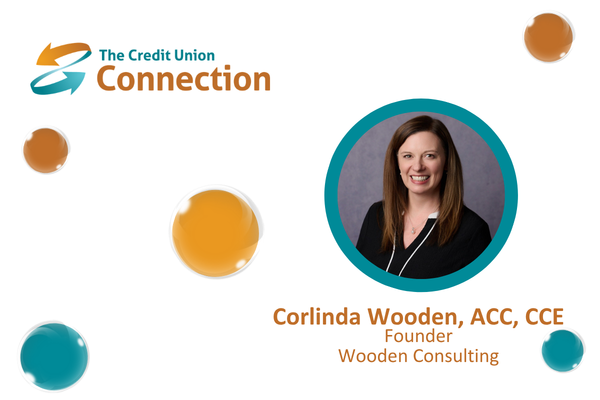
Corlinda Wooden, President & Co-Founder, Wooden Consulting
“What really separates great from good?” Recently, I came across a Korn Ferry newsletter that shared the story of a world-class athlete being asked that question. His answer was surprisingly simple: “Belief.”
Reading that, my immediate thought was that I expected something more complex. Perhaps discipline, resilience, sacrifice, or years of relentless practice. Those qualities certainly contribute to success, especially at the highest levels of performance. Yet the more I reflected on the athlete’s response, the more it resonated. Belief is often the catalyst that makes all the other ingredients possible.
Throughout my coaching work with leaders across the credit union movement, I have observed that technical skills and experience are rarely the biggest obstacles preventing growth. More often, the challenge is confidence. Talented professionals frequently underestimate their readiness for the next opportunity. They focus on the skills they have yet to develop rather than the strengths they already possess. They convince themselves they need more time, more experience, or more certainty before stepping forward.
The challenge is that leadership rarely offers certainty. Many of the most significant career opportunities arrive before we feel fully prepared for them. A promotion becomes available. A stretch assignment is offered. A chance to lead a strategic initiative emerges. In those moments, success is often determined less by what we know and more by what we believe about our ability to step forward and learn, adapt, and grow.
Research has long highlighted the role confidence plays in career advancement. One of the most frequently cited examples comes from Hewlett-Packard’s internal research, which found that men were more likely to apply for positions when they met only some of the qualifications, while women often waited until they felt they met nearly all of them. While the exact numbers have been debated over the years, the underlying lesson remains relevant. Many capable professionals wait for confidence before taking action, when confidence is often built through action itself.
For leaders, this presents an important opportunity. One of the most powerful things a leader can do is help someone see potential they may not yet recognize in themselves. Leadership is often associated with setting direction, making decisions, and driving results. Those responsibilities matter, but the best leaders also serve as confidence builders. They create environments where people feel trusted, challenged, and supported enough to stretch beyond what feels comfortable.
Gallup’s research (I know…I quote this stat a lot, because it is such a powerful one!) has consistently shown that managers account for approximately 70 percent of the variance in employee engagement. While many factors influence engagement, leadership remains one of the most significant influences on whether employees feel motivated, connected, and committed to their work. Employees who believe their contributions matter and feel supported by their leaders are more likely to be engaged, productive, and invested to organizational success.
This is one of the reasons coaching can be so transformative. Effective coaches do more than help individuals identify goals and action plans. They help people recognize strengths they may overlook, challenge limiting assumptions, and build confidence through intentional reflection and growth. Coaching creates space for leaders to examine what may be holding them back and develop the mindset necessary to move forward. In many cases, coaching provides the support leaders need to move from questioning their capabilities to embracing them.
Belief is rarely communicated through grand speeches or motivational slogans. More often, it appears through small but meaningful actions that demonstrate trust and confidence. It is the manager who asks an emerging leader to facilitate an important meeting. It is the executive who invites a team member to present to the board. It is the mentor who encourages someone to pursue a role they might otherwise dismiss as out of reach. These moments communicate a powerful message that can have a lasting impact on a person’s confidence and development.
In many ways, belief acts as a force multiplier within organizations. When people believe their contributions matter, they become more willing to take initiative. When they believe they are capable of learning and growing, they are more likely to embrace challenges. When they believe their leaders trust them, they are more willing to step outside their comfort zones and pursue new opportunities. Over time, those actions compound, creating stronger teams, more engaged employees, and a deeper leadership bench.
This is particularly important as credit unions continue to navigate leadership transitions and succession planning efforts. Across the industry, organizations are investing significant time and energy into identifying future leaders. Development plans, leadership programs, mentoring opportunities, and assessments all play important roles. However, successful succession planning requires more than identifying talent. Future leaders must also develop the confidence to see themselves in larger roles and believe they are capable of succeeding when those opportunities arise.
Too often, succession planning focuses exclusively on readiness assessments, competencies, and development plans. While those tools are important, they only tell part of the story. The most successful organizations intentionally create opportunities for emerging leaders to gain exposure, build relationships, and take on challenges that stretch their capabilities. Those experiences help transform potential into confidence and confidence into leadership.
Many leaders can trace pivotal moments in their careers back to someone who saw potential before it was fully visible. A supervisor took a chance on them. A mentor encouraged them to think bigger. A sponsor advocated for them behind closed doors. These experiences often become turning points, not because they instantly create new capabilities, but because they strengthen a person’s belief in what is possible. That confidence often becomes the foundation upon which future leadership is built.
Of course, leadership also requires belief in ourselves. Every leader experiences moments of uncertainty. New responsibilities, difficult decisions, organizational change, and increased expectations can create doubt. The leaders who continue growing are not necessarily those who possess unwavering confidence. They are the ones who choose to move forward despite uncertainty, trusting their ability to learn and adapt along the way.
When reflecting on the athlete’s response, it becomes clear that belief does not replace talent, hard work, discipline, or experience. Rather, belief is what allows those qualities to be fully realized. It gives people the courage to pursue opportunities, navigate challenges, and continue growing when uncertainty is present.
As leaders, one of the greatest gifts we can offer is helping others recognize what is already possible within them. Somewhere in every organization are individuals with untapped potential who may simply need someone to believe in them before they fully believe in themselves. The question is not whether those individuals exist. The question is whether we are helping them see what is possible.
If this article resonates, consider where you have the opportunity to help someone recognize their potential. The next generation of leaders is already within your organization, and often the difference between potential and performance is a leader who is willing to invest, encourage, and believe in them.
Through Wooden Consulting, I partner with organizations to develop leaders at every level through executive coaching, leadership development, and succession planning. If you’re looking to strengthen your leadership pipeline and create more confident, capable leaders, I’d welcome the opportunity to connect.
Corlinda Wooden is the President and Co-Founder of Wooden Consulting, LLC, and a passionate leader within the credit union movement. She specializes in leadership development, executive coaching, strengthening sales and service cultures, and driving innovative approaches to achieve bottom-line results. Recently named one of American Banker’s Most Powerful Women in Credit Unions, Corlinda’s passion for helping people succeed, combined with her creativity and over 25 years of experience in the financial industry, has propelled the teams she has worked with to new heights.
In addition to her consulting work, Corlinda actively supports industry innovation and inclusion through her roles with Coopera, CUWLA, and the Backbone Coalition. When not working, she enjoys spending time with her husband, two daughters, their dog, and two fluffy cats. “Work hard, play hard, and rest hard” is a guiding principle in her household.