

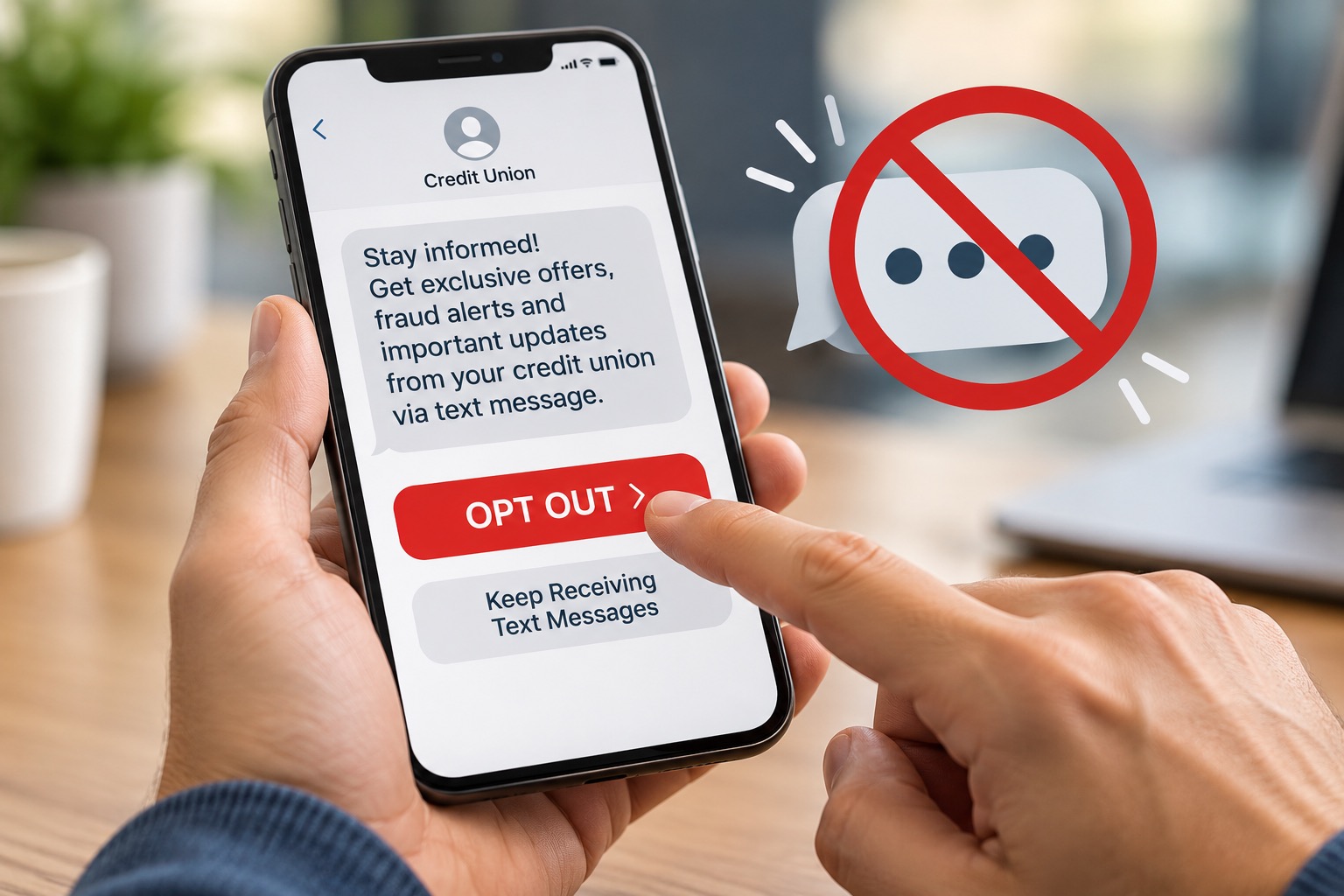
The Federal Communications Commission is about to vote on some much-needed updates to its “revoke all” rule, and the Defense Credit Union Council isn’t staying quiet about it. DCUC just teamed up with a heavyweight coalition of financial industry groups to tell the FCC: “Yes, please fix this, but let’s tweak a few things first.”
Here’s the deal. The FCC has a draft order on the table that would revise how the “revoke all” rule works—you know, that regulation about how consumers can opt out of text messages from businesses. DCUC joined forces with the American Bankers Association, ACA International, American Financial Services Association, America’s Credit Unions, Consumer Bankers Association, Electronic Transactions Association, and Student Loan Servicing Alliance to submit an official comment letter ahead of the FCC’s September 30 vote.
The good news? The coalition loves most of what they’re seeing. The comment letter gives the draft order a big thumbs up and urges the commission to adopt it. But like any good feedback, there are a few “one more thing” requests thrown in.
The Text Message Word Salad Problem
First up: the opt-out keyword situation. Under the current 2024 Order, if a financial institution wants to use text messaging as the exclusive way for customers to revoke consent, they’re technically supposed to acknowledge all seven official opt-out words: “stop,” “quit,” “end,” “revoke,” “opt out,” “cancel,” and “unsubscribe.” That’s a lot of words to cram into a text message.
The associations are asking for a simple fix—let businesses use one standardized word instead. Think “Press ‘STOP’ to opt out” rather than listing all seven options like you’re reading the menu at a very bureaucratic restaurant.
Give Us a Bit More Time
The coalition also wants the FCC to expand the window for sending follow-up clarification texts. When someone revokes consent, businesses sometimes need to send a quick follow-up to clarify what exactly the customer is opting out of (all messages? just marketing? just from this one department?). The associations are requesting “a reasonable time not to exceed the end of the next business day” to send that clarification. It’s about being thorough without being annoying.
Defining “Reliable Source” for Phone Numbers
Finally, the comment letter applauds the FCC’s draft revisions around something called the “provided number condition.” This is the rule that lets callers make exempted calls to numbers obtained through a “reliable source.” The FCC’s updated definition now includes numbers supplied by an authorized spouse or family member on the account, numbers obtained when customers call the institution directly, or numbers included in records from another financial institution. Translation: if you got the number legitimately, you’re good to go.
The bottom line? DCUC and friends are on board with the FCC’s direction—they just want to make sure the final rule is as practical and workable as possible when it hits the real world.