

I’ve been part of the Underground since the beginning. Underground creator Sue Mitchell of Mitchell Stankovic & Associates is a community creator. She also founded the Global Women’s Leadership Network, in which I started the Capital Region Sister Society. I’m also a founding member of CU Pride, which spun out of the Underground. Mitchell Stankovic & Associates pioneered the Underground, and it has been fascinating to watch it and the groups around it evolve.
The Underground’s format is what keeps it interesting. It doesn’t feel like a typical industry session where everyone nods politely at slides. The topics marry modern business practices with the roots of the credit union movement, and they ask difficult questions like what ownership and cooperation mean when your members live in an app. And then they act. Expanding into The CU Journey at Money20/20 was a natural next step. It brings credit union people toward the future of money, which is where the conversation was already headed.
This year’s UNDERGROUND: Reckoning took place in Las Vegas in late October, and here are a few details worth passing along.
Relevance, not attendance
According to Money20/20 leadership, “credit unions” was the third most searched term in the conference app. Credit unions were on a lot of participants’ minds as this massive fintech event. What they found were conversations on AI, trust, cybersecurity, fraud, digital identity, governance, embedded finance and consumer expectations. None of those are uniquely credit union issues, and that was the point.
The gap is execution
Dr. Brandi Stankovic opened with three themes: boundaries, relationships and responsibility. Her challenge was to examine what limits innovation, what creates lasting value and what leaders owe when they lead through disruption.
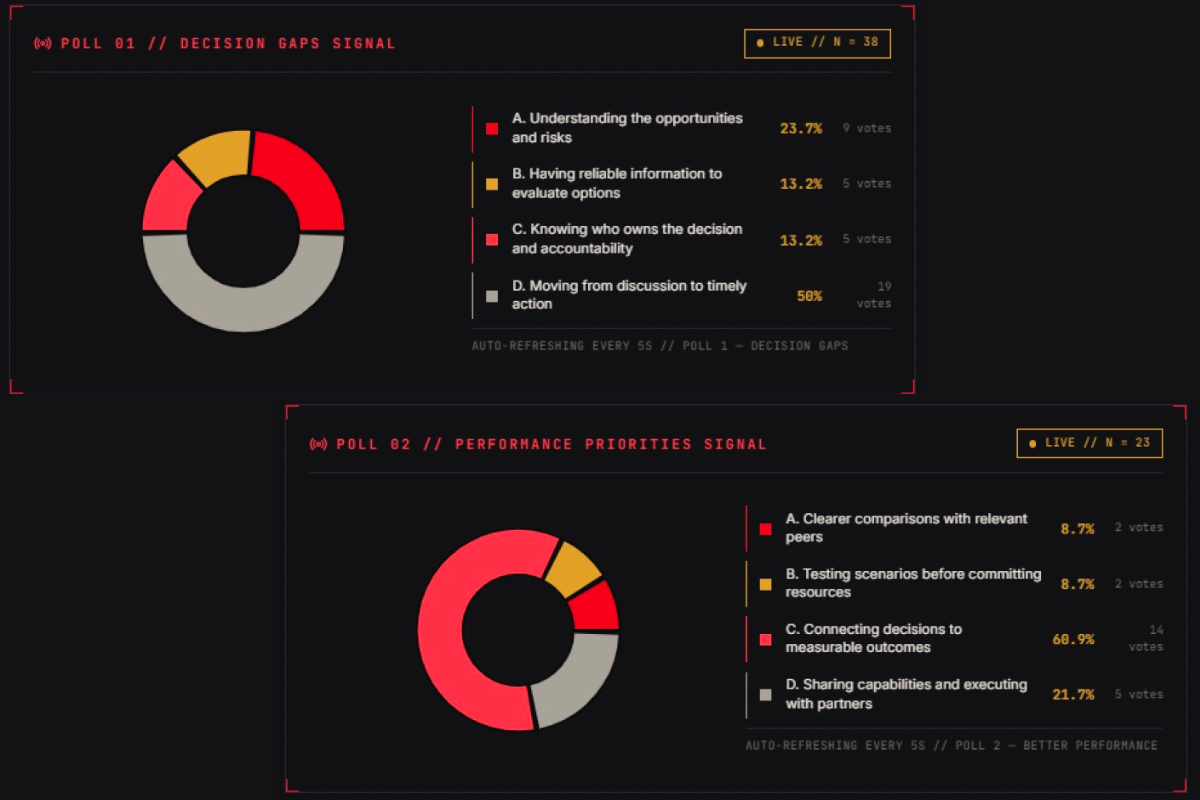
The polling made it concrete. Half of participants said moving from discussion to timely action was their biggest gap in handling AI, fraud and stablecoins. More than 60% said connecting decisions to measurable outcomes was the single most important factor in improving performance. Most of us already know what we should be talking about. What’s more difficult is getting it done.
Nobody won the debate
The Presidential Debate put credit union, community banking and fintech leaders on stage and later moved to the Money20/20 Main Stage. Kathryn Davis of Valley First Credit Union argued that “our future is not acting more like everyone else; it’s leaning in and modernizing what makes us different.” Alkami’s Stephen Bohanon countered that consumers didn’t wait for institutions to tell them digital mattered and stated what became the week’s mantra: “The app is not just a channel. To many people, the app is the bank.” Retired LGFCU CEO Maurice Smith reminded the room that despite modern technology, community is personal and that people care who they have a real relationship with.
All three are right, which is why the debate worked. The institutions that win will combine technology, trust and human relevance.
Trust is the thing we risk
In the Fly on the Wall session, SchoolsFirst FCU’s Bill Cheney said, “We’re all under attack all the time,” and added that there’s also risk in not going digital. Origence CEO Tony Boutelle admitted he’s excited and terrified about AI at once. Louis Hernandez Jr. of Black Dragon Capital gave the most sobering take: “Trust is the biggest thing we lose in being digital. We don’t know which image to trust, which video to trust, if my voice is real.”
Boutelle also made the case for cooperation as a strategic advantage. Origence can work with Amazon and Tesla, he said, because 1,200 credit unions stand behind it. That’s the cooperative CUSO model doing what it was designed to do.
Technology speeds up whatever you already have
The Judgement Gap panel on AI, stablecoins and fraud had the line I’d put on a poster. Jason Tilley, CIO of 1st Advantage Credit Union, said he abhors applying technology on top of “busted processes that were created in 1934. If a process is broken, you are just making it marginally faster.” Asha Connors of ProBridge asked a simpler question about AI: “How confident are you in your data?”
A closing workshop led by Chad Heese of Community Resource CU and Michai Morin of Coeus Institute had participants make real decisions on growth, capital, pricing and risk, then look at the tradeoffs. The lesson was that a decision only creates value if you measure what happens next.
Tilley’s 1934 line is worth taking back to your shop. Pick one process that’s older than anyone currently managing it and ask whether anyone remembers why it works the way it does. If the answer is “because we’ve always done it that way,” you’ve found your first project. improving performance. Most of us already know what we should be talking about. The harder part is getting it done.