

Your credit union months researching the best mobile app. It’s fast. It’s responsive. It’s beautiful. Members can do everything on it.
But can it know your member personally? Can it anticipate what they need before they ask? Can it have a conversation with them?
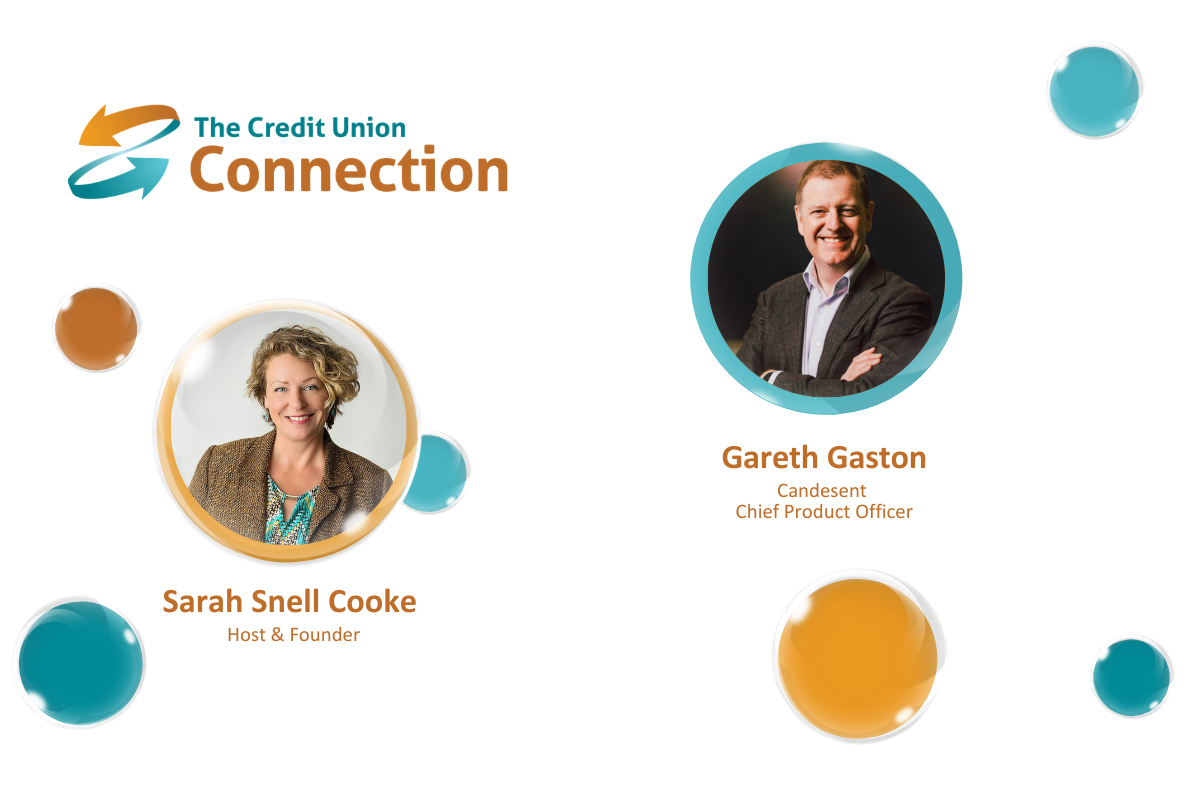
That’s intelligent banking: digital banking that uses data, context and conversation to help members before they ask. And Gareth Gaston, chief product officer at Candescent, asserts that this is now, not some day.
Digital banking has gone through a pretty clear evolution.
- Functions and features: What can you do?
- Experience: What does it feel like?
- Now, intelligence: What does it know about you?
Intelligent banking flags actionable insights, like “Your spending is down this month. Would you like to use the extra to pay down your credit card?” It offers a conversational assistant that understands members’ context and life. It feels less like talking to a machine and more like talking to someone who actually knows you.
For smaller credit unions worried about cost, there’s good news. This isn’t reserved for the big players. The key is choosing the right vendor, one that creates a seamless experience rather than bolting things on.
The conversation also covers serving businesses and entrepreneurs in this time of intelligent banking. Gig workers. Small business owners. Growing companies. Each needs something different, and intelligent banking solutions can serve all of them by tailoring guidance to what that business needs right now.
Gareth’s closing message to credit unions? This is your moment to be bolder than the big guys. You can test and learn your way into intelligent banking. And, you don’t have to go all in on day one.
Listen to Gareth’s full conversation with Sarah Snell Cooke, founder and CEO of The Credit Union Connection, to hear why the time for intelligent banking is now.
NOTE: This transcript may contain minor imperfections courtesy of our AI overlords-in-training. We’re not complaining. We’re definitely not complaining.
[00:00:00]
Sarah Snell Cooke: Hello, and welcome everyone. I am Sarah Snell Cooke, of course, your host here today at The Credit Union Connection. I am joined today by Gareth Gaston. Welcome.
Gareth Gaston: Hi, Sarah. nice to see you again.
Sarah Snell Cooke: Great to have you again. Gareth is the chief product officer at Candescent. Why don’t you tell us a little bit more about yourself and the company?
Gareth Gaston: Yeah, certainly. I’ve been with Candescent for 18 months now, and, as you said, I’m the chief product officer. Candescent offers a full suite of, sort of banking channel products and solutions. So we do digital banking, we do account opening, and we do branch solutions. Candescent is a fully independent standalone company, having, become separate, separate from NCR.
So some people might recognize, NCR Voyix Digital Banking. And, so we’re now a fully independent standalone company and doing all the things that I said. And, we’ve been reinventing ourselves over the last 18 months, and, delighted to be here to talk about some of those things today.
Sarah Snell Cooke: yeah.
Awesome. I actually did not realize that you had been [00:01:00] part of NCR. That’s interesting. but, yeah, we’ll move along here and get to all that good stuff. right now it seems the financial services industry is f- for the most part done with com- with getting digital, getting digital- Yes
with the banking. what does the next evolution look like, and how is that different from the current digital banking that we’re doing now, and- Yeah … that you’ve been building over the past decade?
Gareth Gaston: yeah. So I think, I think about this as kind of three things, and it used to be two things, so I’ll start with what the two things used to be.
It used to be, and the real emphasis was on kind of what are your functions and features and capabilities, right? So what are all the things that you can do? And in a digital world, that tends to be about enabling the end member, to self-service in some way, shape, or form. And so it’s more of a kind of a, point and click, either with your finger or with a mouse.
that’s been where it is. And then the second thing I think that’s been something, is just the experience of that. And, before, Wi-Fi and 5G and, and iPhones, [00:02:00] that was something that, we always had to worry about bandwidth, and so there was always this compromise between how good can the experience be versus the functions and features.
And, any, any good designer from any point in time will tell you that form follows function generally. but the good news is that with, with these beautiful devices that we all spend a lot of money on, like iPhones, and then with things like 5G, the experience of banking can now be something that is much more delightful than ever.
And certainly as we think about, credit union members, they aren’t really judging and assessing the experience of a credit union app versus other credit union apps or versus other bank apps. they might do that a little bit, but really what they’re benchmarking it to is, “What’s the best experience that I have on my phone?”
And- Is this credit union app better or worse than that experience? And so that’s the, the second thing which, you know, thanks to all of these things like, 5G and iPhones, we can now really focus on having an amazing experience. But the third thing, which is where, the evolution is really happening right now is, ever since ChatGPT came [00:03:00] along, everyone’s expectations were reset about, how, a modern interaction should be.
And, we very rapidly went from, an advent of search engines, helping you find answers to things and giving you, a, a page of answers to an answer engine. Which basically, you go into ChatGPT and you say, “I want to know about this,” and you get a very beautifully eloquent written response back.
And, if you then fast-forward to today, if anybody watched the, Apple Worldwide Developer conference and, as Tim Cooke did his keynote, the two things that really came out of that keynote for me were, one, as always with Apple, a really inten-intentional focus on design.
and then secondly, I would say Apple’s been a little slow on the AI side. And like a lot of things Apple do, it’s because they wanna get it right. And so what they’ve now done, and what’s coming out from Apple, is intelligence really infused throughout the entire experience. So if you think about, today, it’s a little frustrating searching your emails, trying to find that email that you know you got at some point.
Or maybe you’re searching your photographs to say, “I wanna [00:04:00] find that photograph of that time we did,” whatever, right? And it d- the search experience in Apple c- currently and in the past didn’t really, it’s got incrementally better, but it didn’t allow you to do that. Now with Apple Intelligence infused throughout all of these things, you’re gonna get more of a, a sort of a, a ChatGPT, GenAI-type experience, to help you find that.
So those are the sorts of things when you look at these experiences, say, that’s where banking has to go,” because that’s gonna be the expectation of members. And so as I think about the next iteration of, of banking and banking and digital, it really moves beyond, A, you’ve got the foundation of the functions and features.
B, you can now make this beautiful, elegant app or website that, that really can… There’s no reason why it can’t be one of the most elegant apps on their phone. But thirdly, really to have intelligence infused. And what does intelligence mean? Intelligence means that the, there’s a kind of a digitally human feeling about it, right?
it, the app knows you. it recommends things to you. You can converse with it. So it really takes the experience to a, a whole new level.
Sarah Snell Cooke: And [00:05:00] so tell me a little bit about intelligent banking then specifically. Yeah. Credit, for credit union leaders who aren’t familiar with that term, what actually makes banking intelligent?
Gareth Gaston: Yes.
Sarah Snell Cooke: And why should credit, credit unions care about that term?
Gareth Gaston: yeah. So I think, f- first of all, let’s start with why they should care. So one of the things that I think is incredible about the credit union industry is their deep connection to their members and their deep comm- connection to the community.
But then if somebody walks out of the, the branch, and then picks up their phone, you have a very impersonal experience, right? So you’ve had this wonderfully personal experience where the person, the, the, the, the, the person in the branch knows who you are. they, yeah, they know where you are in your life.
they, they know you personally perhaps and are able to have conversations, and then you’ve got this app or website that are, the complete opposite of that. They’re very impersonal. And what this next evolution of digital banking does is it brings that sort of digitally human feeling into the digital channel, where, intelligent banking, looks at all of your information and knows more about you and can then start to do things, for example.
So [00:06:00] rather than when you log into your app, you’re simply faced with a bunch of numbers and a list, it can actually summarize for you and say, “Hey, Sarah, you got paid today. Your mortgage is due tomorrow, but you’ve got enough money to cover it. Your spending’s in line with your usual pattern,” right?
So you get somebody, who’s on your side, giving you that information, and then maybe as you go through the experience, there are, actionable insights that tell you, like for example, you are spending a little less. Do you want to pay down your credit card, or do you want to, put that into your money market account and earn 4%?
And that you can take action from that and do those things. and then thirdly, if you need help, that there’s, there’s a thing there that you can, an assistant there that you can go and talk to, and it will understand, A, the context of everything I’ve just mentioned, but also it will understand you.
And so if you ask or if you want to interact in that way, you can have a more hu- human style conversation where you’re saying, “Hey, I’d like to, Zelle Susan $20.” “Oh, great. Okay. um, is Su- the last four digits of Susan’s phone number this?” “Yes, it is.” “Great. Susan’s, we’ve sent the money to Susan.”
that’s the sort [00:07:00] of, the sort of experience that one, would expect to see in an intelligent banking solution.
Sarah Snell Cooke: Yeah, that’s just crazy that w- we can do that now. I remember when ATMs came out,
Gareth Gaston: Exactly.
Sarah Snell Cooke: It’s crazy that your mobile app can tell you what to do.
Ugh, or at least suggest things. Yeah. They haven’t quite taken over yet. Yes,
Gareth Gaston: exactly.
Sarah Snell Cooke: They haven’t taken over quite yet. Exactly. But anyway, just shifting a little bit toward business banking too, that’s been- traditionally very complicated- Yeah … especially for smaller credit unions to be able to afford.
and how are technology solutions changing the way credit unions can serve smaller businesses? I certainly have a personal interest in this as well.
Gareth Gaston: yeah.
Sarah Snell Cooke: real-time workflows, integrated money movement, all that kind of stuff.
Gareth Gaston: yeah. So I think, the, the thing about business banking which is interesting is that it hides actually a number of different types of business customers.
So I think first of all you have to think about what are the different segments and types of customers. So on, on one end of the spectrum, you’ve got what we describe as a gig customer or in the past might’ve been called a Soho worker, so somebody who is a small business, maybe just [00:08:00] themselves, right?
and- so to them, it’s all their money, right? So they want to see everything in an integrated experience, but, they need a little bit more than traditional retail banking would offer. So they might need to send an invoice or take a payment even, and, today, again, thank you to Apple, the phone itself can be a payment device that you can tap a credit card to.
so enabling some of these basic, things is that’s at, at the foundational, and our answer to that was to launch a product called Gig Banking, which helps with all of the things that I said there. And then as you go upmarket a little bit, you get small business then, and a small business might be somebody that owns a coffee shop, for example, right?
But it’s one coffee shop, and they’re, they’ve got a great, thriving, successful business. they need to manage their finances. They might still want that integrated into the retail experience ’cause it’s still theirs. It’s still their stuff. um, so but they have more advanced features.
Maybe they need to send payments. They probably need to pay invoices, pay bills, maybe send wires or ACH, transactions. So the payments become a little more complicated. And then maybe this person becomes a, a lot more successful, and they open a chain of coffee shops, so maybe they’ve got 10 coffee shops, and maybe [00:09:00] now they have a finance manager, right?
And that finance manager needs to be able to access the digital banking capabilities, but of course, you’re not gonna show them your personal account, so they need to then have their own dedicated instance. And again, the payments become more complicated. there’s more things that they need to do. maybe they’re sourcing coffee from a, from abroad, and they have to do international payments or something.
so they become … And then you go to the other end of the spectrum, which is, you’ve got larger entities, you’ve got really big companies that, have finance departments and maybe have teams that need to access things. Maybe you’ve got multiple approvals that you need to do.
And so I think, what I think, now is there’s a, there’s this range of business customers, and what’s important is to be able to serve all the different types of customers in a really easy way. and, those customers are definitely, banking in some way, shape, or form with credit unions today, which is why I think it matters.
And so if you take the, the, the s- smaller end of the spectrum, there are so many gig workers out there today. There are so many people that are small business, very, micro businesses, small businesses, and what they’re likely doing today is using third-party solutions. so they may [00:10:00] have their checking account with a credit union, but they’re connecting that to third-party apps and services.
And the opportunity for the credit union to maintain that customer as a, a primary customer to the credit union is to get, offer them the ability to do some of those things in a much more integrated way. and then, of course, the opportunity to deepen the relationship with, with customers as they identify that a member is, in fact, does in fact have a, um, have a, a business as well, being able to deepen that relationship with them and say, we have these business capabilities.
We have these payment capabilities that we can offer to you.”
Sarah Snell Cooke: yeah, absolutely. And so you talked about, fintechs- Yes … and credit unions are increasingly partnering with those. w- when you’re evaluating a fintech marketplace or some kind of partnership, Yeah … ecosystem What should credit unions l- leaders look for beyond who has what available?
Gareth Gaston: Yeah. So I think what’s really important is, first, I think first is, are these, solutions integrated into your digital banking [00:11:00] provider? ‘Cause, I think, one, the digital banking provider has to have a great set of developer tools. A, credit union may have a few developers that want to build, you know, solutions that they can bolt into their digital banking experience, but, e- even if they don’t have that, you need to make sure that the, the digital banking solution has the ability for a fintech to integrate into
Our, our answer to that is something called Forge. we’ve, we’ve done a lot of work in that area to make that super easy to onboard with. and then I think what you want to look for is are the solutions integrated? as you think about … And it’s a very confusing landscape because there are hundreds of fintechs, and y- first of all, you have to think about, what’s the type of fintech I’m looking for.
It could be a payment fintech, it could be a fraud fintech. There’s so many. So we actually categorize them to help them understand and, to help everyone understand into seven different categories. so things like, for example, lending, growing and lending, or, uh, fraud and identity, or money movement and business banking.
So those are examples. And then as you look at those things, A, are they integrated, but are they also not just integrated technically, do they also fit nicely into the [00:12:00] overall product? ‘Cause you really want the experience to be a seamless experience. You don’t want it to be a jarringly different experience.
You don’t want to click on it and for it to fly off into some totally different experience. So I think you’re looking for, how easy is it to integrate, are they integrated, and then are they, do they appear as part of that experience? And then the final thought I’ll say is, choice is important as well, and that’s certainly something that we’re, feel is really important to offer, our clients, is that, you don’t just have, for every category, you don’t just have one fintech that offers that need.
It’s good to have a selection, so you can look at and say, what’s the difference in price? What’s the difference in service? What’s the difference in experience?” And then make your own decision about what is the right fit for your brand as a credit union.
Sarah Snell Cooke: Yeah. Yeah. For sure. And, all these things are so great.
personalization, of course, one of the biggest-
Gareth Gaston: Yeah …
Sarah Snell Cooke: things that, all consumers, but particularly Gen Z and millennials are looking for. how feasible is this for smaller credit unions, say, like sub 500 million or something like that?
Gareth Gaston: [00:13:00] Yeah. Yeah. No, I think it’s very possible. listen, we have many clients in that category, and, I think the, the opportunity is to pick a provider who has what I just described there.
fintechs aren’t one size fits all from a cost perspective either, if you’re a smaller, credit union, that’s definitely considered in terms of the price that, that fintechs would charge. they are definitely still accessible, depending on the size you are.
and then I think again, what you want is a provider that’s actually integrated these experiences so you’re not spending, your, your own money in, in doing those integrations. You really want to be at a point where you’re saying, I like that one, and that one. Let’s turn them on and get them working.”
And then, you’re just paying as you go thing, rather than, uh, rather than, paying sort of heavy integration costs and things like that. So you … I think that’s the sort of just pick the provider that can do, that has that available.
Sarah Snell Cooke: Yeah, and so when you’re picking all these different fintechs and you’re taking, your apples from here and your oranges from there, what are, what is one of the biggest mistakes financial institutions make when they’re evaluating these types of integrations and partnerships, [00:14:00] and how can they avoid it?
Gareth Gaston: Yeah. listen, it, it’s a, it’s an overwhelming space. There are so many fintechs out there, and there are solutions for problems that you didn’t even know you had, right? so that- Yeah … I would say is the first bit of advice I always give is, I think, time spent thinking about what are the real problems that we’re actually trying to solve, and then what solutions help solve those problems, ’cause it’s very, forgivably easy to get distracted by lots and lots of shiny things that, that do really cool things, and there’s many, many of them.
So I think really, having a good strategy and really thinking through what are the member problems that we’re actually trying to address, and then how can, what kinds of fintech solutions. And that’s where, having a partner that can consult. when we can sit down with a credit union and hear “Here’s the sorts of problems we’re trying to solve,” then we can then talk about the seven categories we have and say, “Great, those problems sound like they’re fraud and risk problems,” for example.
“So let’s talk about the different types of fintechs that you’ll find in the fraud and risk category,” and then narrow it down again once we understand more and say, “Ah, okay, great. I think [00:15:00] it sounds like you need this one, and this one. so let’s get them in front of you and you can evaluate them and see what you think.”
so I think, the time spent upfront really thinking about the problems you’re trying to solve is, is the best starting point.
Sarah Snell Cooke: And I think you also made a good point too that being consultative, that is a partnership. Yes. That’s right. That’s not buying a widget from somebody. That’s actually partnering with that member.
That’s
Gareth Gaston: right.
Sarah Snell Cooke: and maybe even changing things about your tech because of those conversations, which is great to hear. That’s
Gareth Gaston: right. That’s right.
Sarah Snell Cooke: so I always allow my guests to have final thoughts. What would you like to leave our credit union audience with today?
Gareth Gaston: listen, this is a really exciting time.
I actually am really excited about the credit union in gen- the credit union space in general because my experience of, getting to know many, dozens, hundreds of credit unions over the last year and a half, which has been an enormous pleasure to do, is that, your strength is your, innovation and your ability to maybe take a, a bolder step than some of the bigger guys, right?
And I think this is a point in time where, if you’re willing to be a bit [00:16:00] bolder, I think the bigger guys are gonna take a little longer to bring some of this intelligent banking stuff to the market in, in, in terms of the financial institutions. Because it’s, there’s a lot of compliance and risk and all that kind of stuff around it.
and I think that you don’t have to- Go big on day one, right? You can, again, if you think about, what are the key experiences that we want to give our members, there might be one or two insights that will bring the whole experience to life, that just go a little bit beyond. So you can test and learn your way into this bold new world.
but I think that this is a really interesting time where, unlike the arms race of digital, intelligent banking is basically available now. and so the opportunity is, start testing and learning and bringing it to market and seeing what your members say and think, and I think it can really position credit unions as the incredibly innovative sector that they are.
So I’m excited for, what’s to come, and look forward to partnering with our credit union clients.
Sarah Snell Cooke: Hell yeah. Love… they, credit unions really have become more innovative. I appreciate your time today.
Gareth Gaston: Thank you so much.
Sarah Snell Cooke: [00:17:00] thank you so much.
Gareth Gaston: Thanks, Sarah.