

Going from hands-on “doer” to strategic leader can feel a bit like trying to navigate a foreign country without Google Maps.
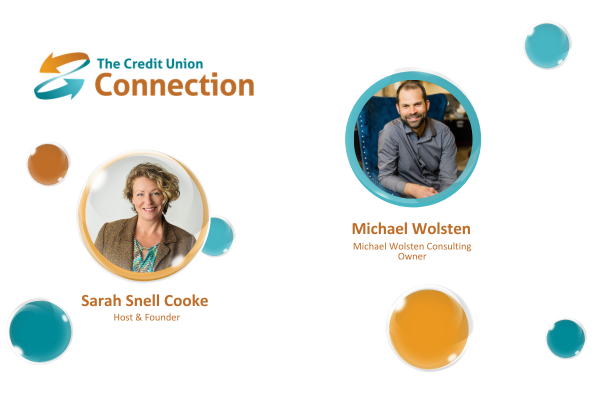
In the latest episode of The Credit Union Connection podcast, host Sarah Snell Cooke sits down with Michael Wolsten, founder of Michael Wolsten Consulting, to discuss why leadership development isn’t just a nice-to-have perk—it’s an operational powerhouse.
Wolsten breaks down practical frameworks to help leaders step back from putting out daily fires and focus on true growth. He highlights how leveraging CliftonStrengths (Executing, Influencing, Relationship Building, and Strategic Thinking) and conducting a simple time inventory can unlock higher engagement across your team. Plus, he shares his “3 Cs” framework (Committed, Capable, Coachable) and the “CPR” method (Connect, Position, Reset) to navigate those uncomfortable, “sweaty palm” feedback sessions with empathy and clarity.
Ready to level up your leadership toolkit? Catch the full interview to start building a stronger, more intentional leadership system!
NOTE: This transcript may contain minor imperfections courtesy of our AI overlords-in-training. We’re not complaining. We’re definitely not complaining.
Sarah Snell Cooke: Hello and welcome everyone. I’m Sarah Snell Cooke, your host here at the Credit Union Connection. Hopefully, I’m pointing to the right side. Am I, Michael?
Michael Wolsten: You got it.
Sarah Snell Cooke: I am joined today by Michael Wolsten. Welcome.
Michael Wolsten: Hey, thank you so much for having me today.
Sarah Snell Cooke: Absolutely, of Michael Wolsten Consulting. I’ll let you do a little bit more introduction of yourself and the company.
Michael Wolsten: Yeah, absolutely. We love supporting credit unions all across the country. We do a lot of strategic planning, we do a lot of executive coaching, but really, our goal is to help make sure that credit unions are growing and thriving.
And so we start at the top. We do a lot of work with the C-suite, specifically in those areas, to make sure that they’re not only having everything that they need, the tools and resources, but that they’re getting equipped and they’re getting invested in, which sometimes can be some of the hardest parts, is to really invest in the top so that they can provide even better service to their teams.
Sarah Snell Cooke: And I’m assuming that leadership development or corporate, organizational kind of development is seen sometimes as a nice to have, as opposed to right now especially—has become much more of a need to have.
And yeah, that’s kind of the topic we’re going to be talking about today, is finding young people, identifying their strengths, weaknesses, how you deal with them and others as a new leader or existing leader, all kinds of stuff about leaders.
So without further ado, you’ve said that many leaders struggle with the shift from being a doer to becoming a leader of a division or an entire organization. Talk about some of the steps and tips that would help ensure them to perform at the right level in their new role, and what does that actually look like in real life?
Michael Wolsten: Yeah, great question. It’s true. It was definitely part of my journey. You get to a place where you’ve done the work, and then you move into a leadership role, which is pretty common. And so it’s really easy to maybe hold onto certain tasks, or to say, “Yeah, I’ll hand that off when X happens,” but then X never happens because it’s really hard ’cause you’re busy, right?
And so transitioning from a doer to a developer is one of the big things that we focus on. And one of the first things we do is we ask leaders to take an inventory, whether they’ve been doing it for a few months or for a few years or decades. Typically, what we find is there’s that sweet spot, that 80/20 that we try to get to, where 80% of their time is really focused on being strategic and coaching their teams and really being able to look ahead.
But sometimes what we see is that the 80% is actually a lot of the tasks. It could be things that they really shouldn’t be owning. Maybe it’s things that they’ve inherited. Maybe it’s things that transitioned over time. And a lot of credit union leaders wear a lot of hats, which is not a bad thing, but there’s a difference between wearing a hat because you have to and wearing a hat because you are getting to know a position so that you can train other people for that.
So we go through that inventory. That’s really the first step. And then we work through a delegation map, and we say, “Okay, what do we need to do? Who are the team members you have on tap? Who are the people who are really strong in certain areas? Who can we develop over the course of a defined timeframe, normally 90 days, to help hand off some of these things?”
‘Cause that’s one of the biggest struggles, right? Is, number one, identifying it; number two, saying who’s gonna have it; and then how do we know that they’re really mastering it so that the leader can do more of what they’re really great at, which they wanna focus on, which is coaching and developing and focusing on growth overall.
Sarah Snell Cooke: Yeah. No, I know when I went from being a DC reporter covering the news to then being the editor-in-chief, it was a big step. And there was no training beyond how not to get the company sued.
Michael Wolsten: That’s pretty common, yeah.
Sarah Snell Cooke: Yeah, very common, I’m sure.
And so one of the things that’s really important for a leader is to have their team engaged. Because if they’re not fully engaged, then not only are they not happy with their job typically, which causes disengagement, but also it’s not doing the business a great service either because the data show that only 34% of team members are actually truly engaged, and there’s gotta be so much opportunity loss in not having people engaged.
And so how directly does focusing on people’s strengths rather than their weaknesses impact and hopefully improve engagement? And is this something that leaders can see a change in right away?
Michael Wolsten: Yeah, great question. So one of the things that we do on the onset—actually two different pieces that we do that are really helpful—is to help track that. Now, lots of different organizations will have different surveys that they’ll do. We do a pulse survey, which is 20 questions, and it helps us track engagement. Many times there’s areas that are strong; there’s some areas that are a little bit weaker. But we take that same snapshot, those same 20 questions, and then over the work and over the course of time, take another snapshot in six months and say, “Based off of your leader’s growth, based off of what you guys are doing and based off of that focus, this is the growth that we’re seeing.”
So that’s one tool that we use. Another one is the leadership snapshot, and that kind of just gives a really good snapshot specifically for the leader and for the team to say, “Hey, here’s exactly where we’re at. Here’s what I see from the leadership seat. Here’s some areas that we are focused on development.”
And some of the biggest levers that we focus on specifically are: Do leaders have a really good framework for one-on-ones? Are those really effective and purposeful one-on-ones? Does each team member, including especially the leaders, have a really great roadmap for development?
So that can be their internal goals. What are they doing and driving and pushing for internally? What are they doing, obviously, for the organization? But making sure that those things are really well set and that leaders have the time and take the time. I hear that come up quite a bit, where it’s like, “Michael, we’re doing all these things. I’m running around. I feel like there’s all of these fires. I’m trying to put them out. But my team knows that I care,” and the team knows that, too. They’re just wanting some more structure in that purposeful time with their leader, right?
And I’ve never met a team or a leader who said, “Oh my gosh, we’ve got this 100% dialed in, 100% figured out.” There’s always some tweaks that need to happen to make sure that it’s even more effective. And then as that happens, team members not only feel that engagement, but then they can display their strengths even more. They can put themselves more into positions. They take on more ownership typically. There’s more accountability that can happen because now the leader has a better structure to support that and help make that happen.
Sarah Snell Cooke: Yeah. Structure is always good, ’cause I’m one of those people with ADHD brain, and just not having structure around it is—
Michael Wolsten: Right.
Sarah Snell Cooke: Yeah. It’s like this.
Michael Wolsten: And that’s what I find, too. Like me right now. It’s interesting. What we do is a system, right? And so credit unions have systems for everything. You have a system for compliance, you have a system for member outreach or new accounts and all those different things.
But many times, credit unions, small or large, don’t always have a great leadership system, or something that’s really sustainable that helps them, whether they’ve got five people or whether they’ve got 500 or 5,000, it doesn’t really matter. It’s, “Hey, do we have a system that really helps us stay on track?”
And I think that’s what’s really important—having a system that can kinda grow with you, right?
Sarah Snell Cooke: Yeah, for sure. So when you’re looking at leaders, you describe four strength domains: Executing, influencing, relationship building, and strategic thinking. Explain each and talk about the pros and cons.
Michael Wolsten: Yeah, absolutely. So those four domains come from CliftonStrengths, and that’s what I love using. A lot of organizations use that. It’s really science-based. They’ve been around for 90-plus years. I think they’ve done millions of different assessments, and so it’s very scientific, and it’s really fun to work through that for leaders.
And what’s interesting is I’ll work with leaders who have been doing it for 10, 15, 20 years, and they’re like, “Gosh, I’ve always focused more on what I’m not great at, what I really struggle with, what are my blind spots,” all those things. And that’s okay to touch on. I’ve just found that it’s a lot more beneficial to tap into the things that people are really naturally strong in and help that be something that carries them forward, to help them overcome any areas that might be a bit of a gap area, or for them to be able to leverage that even more with their teams.
And so for those four areas specifically, executing is a great one. That one is just those folks who are getting stuff done. People will have typically different strengths and different domains, different intensities around all four of these. But the hallmarks of them are people who are stronger in the executing—they’re doers.
They get stuff done. They love hard work. What’s the term that I use? It’s like a work-a-like-it. They just—it’s hard to turn it off sometimes, right? And they’re typically higher achievers. So that’s a piece that’s really helpful. And the other side of that is just being aware of, hey, we also gotta turn this off, too. There’s times to take breaks. That’s okay, too. So that’s kind of the executing theme.
For the next one, influencing is typically people who are a little bit more gregarious, outgoing. Salespeople typically fall into this. Sometimes folks who are doing more community work or outreach work, or just have some of those different elements. Not every leader is really strong in influencing, and that’s okay. Actually, a lot of the credit unions I work with, that may not be the main, dominant theme. But it may be something that they touch on, so we can use some of their other strengths to help with that. But they’re people who are really good at helping people make decisions. They’re helping them have forward movement, right? And they use influence in a positive way.
Relationship is obviously exactly what it sounds like. They’re really great at building relationships short-term and long-term. They care about people. That’s probably one of their biggest drivers—the care that they have, not only for their team, but for their members.
And then the last one is strategic. These are the people who are a little bit more analytical. They can slow down and think through things. They’re typically better problem-solvers. They have a lot of great ideas. They’re looking ahead into the future. But they’re also the people who will probably push back on some things.
For those of us who are a little bit more excitable like I am sometimes, and I get an idea, and I just wanna go and run with it—I’m more ready, fire, aim. Somebody who’s more strategic is gonna be like, “Okay, that’s a great idea, Michael. Let’s slow down and think about all the impacts. Who do we need to involve? What is it gonna look like three months from now?” right? So they’re able to help with those pieces, and I have some of those elements, too. But I’m naturally bent a little bit more towards that forward movement. So knowing where I’m at, knowing where the team’s at, knowing what we collectively bring together as strengths is so critical for leadership teams because it gives you more of a common language for where everyone stands and what they bring to the table as well.
Sarah Snell Cooke: Yeah, for sure.
Michael Wolsten: Yeah.
Sarah Snell Cooke: So you also have—and I don’t know if this is yours or you stole it—a three Cs framework: Committed, capable, coachable. And I know, having been an athlete, I feel like coachable is highly valuable, but at the same time, it’s the one that sometimes falls off. Can you talk a little bit about that framework?
Michael Wolsten: Yeah, absolutely. Full disclosure, I did not steal it. Good. It is something I built over time ’cause I was building all these teams. I have a credit union background and was traveling all throughout the state and building out these teams, and then as I’ve been working with executive teams, I was like, what are the three things that, once people have it, you just know that they have it, right?
They’re like the rock stars. And so if they’re really committed, they’re committed to the organization, they’re committed to themselves, they’re committed to growth. If they’re capable, they have—I think in sports they call it the upside, right?—where it’s like, somebody may have good raw talent, but can they kinda grow into that next level position?
And sometimes that’s the technical skills, but a lot of times it’s just the adaptability, being able to grow, right? There’s a lot of people that I’ve met who are really strong in those first two, but the coachable one sometimes is the one that’s a little bit more of a challenge. Now part of that can be just being coachable and receiving coaching, but also going through a framework that really works, right?
And saying, “Hey, I do wanna be accountable to these results. Hey, I wanna be able to push the boundaries a little bit of my own growth in these areas because I know what’s coming up next,” right? So sometimes it’s folks who feel like they’ve got it figured out, or they’ve been doing something for a long time, or they just haven’t had something that really helps challenge them enough. I’ve seen that many times, too. So it’s not that they’re resistant to coaching. They just haven’t had a structure that really works for them to help them kind of grow and push forward.
And so when leaders have all three, and as they’re working down with that, I have a lot of frameworks to help us track that to see, where does a team member stand in the three Cs? Where are they really strong? Where do they have some weaker areas? That makes such a huge difference to know what you have as far as talent within the organization, but also what you need to focus the most on so that you can have the best results possible.
Sarah Snell Cooke: Yeah, for sure. You’re a big fan of frameworks, it seems like.
Michael Wolsten: I am. I like things simple. I don’t know about you, but I just feel like leading people is kinda sticky and complicated, and I like things that are just easy to remember, so yes, I am definitely a frameworks person.
Sarah Snell Cooke: Yeah, I’m definitely simple. You also wrote recently for us about CPR, another framework for having difficult conversations, and obviously when you’re talking about coaching and being coachable, that’s definitely gonna become a piece of it. Talk a little bit about CPR, which is Connect, Position, Reset, and how does that play out in the credit union?
Michael Wolsten: Yeah. We had a client recently who was struggling with this specifically. And I wanna be careful here because I think credit unions have a lot of heart. They have a lot of people who want to really serve and do a great job, but sometimes that empathy won’t really move the team forward. It’s like it helps keep people stuck, because the empathy isn’t partnered with accountability. And so we can say, “Oh my gosh, we just care about people,” or, “Here’s all their potential,” but we’re not really helping them.
And that can be on the other side, too. There’s many credit unions who maybe are focused too much on accountability and maybe are a little bit too harsh. And so the CPR method really helps, and specifically with that credit union, they needed to have some harder conversations, but they were really just avoiding it.
And so what that was causing is a lot of friction, a lot of issues behind the scenes, and just a lot more siloing, where teams really weren’t cooperating with each other and helping each other. And so we use this framework of Connect, Position, Reset.
The first part is, “Hey, I wanna ask some really good questions to really understand what’s actually going on. I don’t wanna make assumptions.” I don’t know about you, but I’ve done that many times in the past, where I jump into a conversation, make an assumption about something—”Oh yeah, I already have it figured out”—and then I don’t know all the info. So we try to make sure we ask some good questions in the Connect phase.
The Position is really helping frame that: Here’s how it’s impacting, either positively or negatively, the team, the membership, the overall credit union, all those different areas.
And then the Reset is, hey, what are the things that need to be committed to? And most of the time, that’s on both sides or multiple parties: “Hey, here’s something I need to commit to or recommit to. Here’s something I can change and move forward with.”
And what I find a lot of times with hard conversations is they either get avoided, there can be a lot of emotion around them, there can be some of that friction, or there’s no real set commitment of what’s gonna change to help move it forward. It can kinda just feel like either a broken record or just not have that forward movement.
So it’s been super helpful to help people overcome one of the things that I hear most often for leaders, which is, “I really struggle with giving feedback. I really struggle with these sweaty palm conversations. I avoid them,” or, “Gosh, I’m too harsh,” or whatever it might be for people. It’s just never always fun to do that. But having a framework that helps leaders think through it and helps them get to the resolution that they want and that the team member wants is—yeah, it helps a ton.
Sarah Snell Cooke: Yeah. I wanna dig a little deeper into the question-asking that you’re talking about rather than jumping to conclusions, and how does that change the tone of a conversation?
Michael Wolsten: Yeah, it’s amazing. It really is more of a place of curiosity, right? So I think for leaders—which is so true in my journey—we’ve got so much on our plate, and so we’re asked to make decisions all the time.
And so when there’s something a little more challenging, it’s almost like I need to jump ahead three steps and make a decision on something or decide that this is what it was, instead of: Okay, I need to slow down, and I need to ask some questions from a place of curiosity and discovery and just assuming that I don’t know everything, right?
And even though I may have a lot of information—let’s say it’s a team member issue, and something’s popped up and maybe it’s affecting members or the overall organization—I can jump to conclusions because I’ve maybe heard a certain thing. But I really wanna make sure that I hear from the team member. I wanna hear from everybody involved. I wanna ask some deeper questions and know specifically where things are at because, number one, it’s gonna help me remove a little bit of that emotion. Sometimes that can be a big one, for us to just be like, “I’m coming in guns a-blazing,” or, “I’m frustrated about something,” or, “I can’t believe this happened,” whatever the situation is. But it also gives me more opportunity to find the best solution possible, and so doing those two things is really helpful in that Connect phase.
And then making sure that I give myself time as a leader to even write some of those things down. That’s one of the big things that I typically talk to leaders about: Just because something pops up doesn’t mean that we have to address it in that moment. We obviously don’t want to avoid it, but taking a couple moments to ask some really good questions—”Hey, if I was looking at this a little bit more objectively, or if I slow down for just a minute, what are two or three questions that I wanna make sure that I ask to make sure that I’m 100% on board and know exactly what’s happening here to help me get to the best decision possible?”
Sarah Snell Cooke: Yeah. That’s a great point. And we all have strengths and weaknesses, even me. And some of these are what we grew up with, we live with. You could have had this habit for 20, 30, 40 years, so they aren’t necessarily a quick fix or a one-time fix. What are some systems that you can put in place to help not only bolster the strengths, but mitigate the weak areas as well?
Michael Wolsten: Yeah, great question. I touched on it a little bit earlier for me personally. I am very forward-moving, very action-oriented. I do love the strategy side, but I’m like, “Okay, I needed to do that yesterday,” right? So I need people in my life—I’ve got an amazing assistant who helps me, I’ve got some people on my team who help me with the structure piece. And that’s one of the things that I see, especially for the C-suite, is sometimes things are siloed.
And so let’s say there’s a leader who is just like me, that I just described—finding someone else on the executive team or someone within the organization who can have a second set of eyes on something and help me slow down a little bit and help ask me some questions.
And sometimes those are the people that I can get a little bit frustrated with ’cause I’m like, “Dude, you’re cramping my style. I wanna get this done. Why are you asking all these questions? Why are you poking holes in my stuff here?” right? But if I receive that and I know, “Oh, they’re really analytical. They’re really good at this kinda stuff,” they’re helping prevent me from making some big mistake or something embarrassing happening, and helping me—it could be something as small as proofreading all the way up to helping think through a bigger project. So having what I call fit partners is super helpful.
And then let me take the other side of the spectrum where you’re like, “Man, I’m not as much on that driving forward side. I think through things a lot. It’s a little bit harder to make decisions sometimes, or I’m really analytical.” Finding a fit partner who can help you with the action steps.
That’s just one example, right? But now we find that fit within the team, and we can leverage that, and then also look across the organization and say, “Gosh, we all tend to be go, and we don’t have anybody on our team who’s helping us kinda think through this and slow this down. The next person we hire probably needs to look like this to help balance this out a bit,” or vice versa, right? So you can take a makeup of your team, see what fit partners you have within peers, and that makes such a huge difference so then I’m not changing who I am, but I do have some good guardrails and support to help me along the way as well.
Sarah Snell Cooke: Yeah, I’m with you. I’m like a bull in a china shop with an idea. So if a leader is watching this and thinking, “Damn, I need to work on all of this,” how should they prioritize? What should be the first focus: Their own development, their team’s strengths and development, or mastering the difficult conversations?
Michael Wolsten: Yeah, great question. I always say, great leaders focus on themselves first, and that’s typically the hardest thing for leaders to do. I find that especially credit union leaders are so giving and love their teams and love their members, and they will sacrifice their own time, resources, and capacity. What that does, unfortunately, is put them in a deficit, right?
It puts them into burnout or puts them into a place where it’s like, “Oh my gosh, I’m giving, giving, but I’m not seeing everything I wanna see.” So I’m really intentional and I say that because I was in that place as a leader in part of my journey, and I think it’s so helpful to say, “I’m going to invest in myself and my approach and my strengths and do that as part of a process so that I can be an even better leader,” right?
Because if I have more capacity, if I’m better at how I coach, if I’m better at how I lead and I get to reinvest in myself—you can’t pour out of an empty cup, right? And I think sometimes that’s where leaders can stay stuck a little bit. So that’s one piece that we really focus on.
So I would say, as far as first steps or next steps, like I mentioned, if people go to my website, I’ve got that leadership snapshot. Takes five minutes, gives you a really good inventory of where you’re at, what’s strong, what you need to work on, and then working on it specifically for you as a leader.
Hey, let’s tackle some of these things that I’m seeing. Hey, I want to get deeper and build out my bench a little bit more with the three Cs. Those things can come, but I think really knowing who you are as a leader, knowing how to invest in yourself a little bit better, and just giving yourself that time—which feels like a luxury sometimes—I would say it’s required with everything that’s going on. It’s just so important to have a really great approach.
Sarah Snell Cooke: Yeah, for sure. And I think as we get older, at least I see it way more than I did in the past. I didn’t know what kind of leader I was because I didn’t take the time—I was just barreling through.
Michael Wolsten: Just going, yeah.
Sarah Snell Cooke: Just going.
Michael Wolsten: Absolutely. Absolutely.
Sarah Snell Cooke: Anyway, yeah, no, I appreciate all your insights today. I always allow my guest to have the final thought, the last word. What would you like to leave our credit union audience with today?
Michael Wolsten: Yeah, I really appreciate that. First off, I just wanna thank you, Sarah, for taking the time today to ask me these questions. I just love supporting leaders. I just wanna say thank you, really, more than anything else, to all of the leaders all across the country, whether you’re at a credit union that’s got three team members or you’ve got hundreds. The credit union movement to me is alive and strong because we have great leaders who are really committed to making sure that members all across the country are being taken care of.
These pieces are helpful for folks no matter where they’re at in their journey. But I just wanted to say thank you to everyone for the work that they’re doing.
Sarah Snell Cooke: Yeah, absolutely. Thanks so much for your time. Appreciate it.
Michael Wolsten: Absolutely. Thanks, Sarah.