

Want to know the secret to winning over the next generation of credit union members? Spoiler alert: It’s not just a bug-free app or a shiny new chatbot.
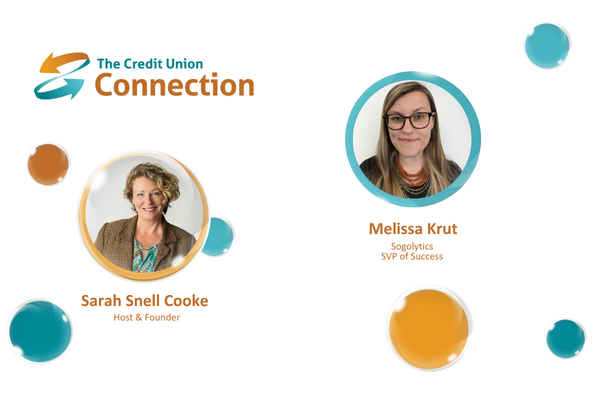
In a recent episode of The Credit Union Connection podcast, host Sarah Snell Cooke sat down with Sogolytics SVP of Success Melissa Krut to unpack the newly released 2026 Credit Union Member Experience Index. The report reveals a striking generational divide: trust and value score significantly lower for Gen Z—sitting a whopping 15.2 percentage points below boomers.
While digital convenience is an expectation, the real deficit lies in human connection and proactive guidance. Members aren’t looking for an AI handshake; they want a trusted advisor to help them navigate everything from everyday budgeting to major financial milestones without feeling intimidated.
Curious how your credit union can bridge the gap, turn neutral members into vocal advocates, and deliver on the promise members already want to believe in? Tune in to the full episode for all the insights!
NOTE: This transcript may contain minor imperfections courtesy of our AI overlords-in-training. We’re not complaining. We’re definitely not complaining.
Sarah Snell Cooke: Hello and welcome everyone. I am, of course, Sarah Snell Cooke, your host here at The Credit Union Connection. I’m joined today by Melissa Krut. Welcome.
Melissa Krut: Hello.
Sarah Snell Cooke: Hello. Melissa, why don’t you tell us who you are?
Melissa Krut: I am Melissa Krut. My title is SVP of success at Sogolytics, where I am in charge of employee success, customer success, and I work with lots and lots of clients to make sure that they are successful as well. So how’s that for a big intro?
Sarah Snell Cooke: Yes, big responsibility for sure.
Melissa Krut: True. It’s a lot of success, yeah.
Sarah Snell Cooke: So you guys recently released the Credit Union Member Experience Index, excuse me, for 2026, and I’m gonna go right to a spoiler alert. Trust and value are the lowest scoring dimensions in this report, and Gen Z’s are even lower, 15.2 percentage points below the boomers, and it’s the widest generational gap in all the different benchmarks that you were looking at. Why is this happening? Why don’t they trust or know to trust about credit unions?
Melissa Krut: What’s not to like about credit unions? Exactly. People like credit unions, and so that’s the point. I worked with a lot of credit unions for many years, member of two credit unions, and we are excited about this report. There’s a lot of cool stuff to find, and there’s a lot to celebrate, let’s put it that way. So I think one of the things that we thought was really interesting about this is that people do believe in credit unions, believe in the mission, believe in the positive experience and all of those things, but there are a couple of gaps, and trust, you mentioned, is one of them. I think, maybe even the last time that we spoke, I feel like technology sometimes comes up as, isn’t it technology? Isn’t there this perception that credit unions don’t have the latest and greatest cool stuff? And it’s interesting that Gen Z, who is arguably very tech-aware, let’s say at least, isn’t worried about that as much. They’re worried about the trust, the people. And the thing that’s happening is there is a gap in the guidance is what they’re looking for in many cases. So it’s not just “Oh, cool, there were no bugs in the app. I feel great about this.” The expectation is, of course, there shouldn’t be any bugs in the app. That doesn’t get you any brownie points. The expectation is, sure, everything works online and in person, and if there’s something that I need, I can reach out and get help from a human. We saw that over and over again, that people are like, “Sure, AI chat is great. That’s nice. That’s helpful, but I wanna get to a human, and I want that human to listen to me, to understand me, to provide guidance, financial literacy support, so that I can be capable.” And that’s not something that you can just plug in with technology, which is kind of a surprise, I think, from what we’ve been seeing, I don’t wanna say historically. It’s only been the past couple years that we’ve been doing these studies specifically about credit unions. But as a benchmark, it’s an exciting and interesting place to start.
Sarah Snell Cooke: You think maybe they’re thinking of, when they think of trust, it’s do I trust them to serve me the way I wanna be served? And maybe that’s a piece of that trust part for them, not necessarily that my money is gonna be safe there.
Melissa Krut: Yeah. I think the expectation, I think, that people have is, and we talked about this last night, too, I think people have astronomically high expectations of everything. This should work, people should understand me, and that strange combination of things where we want the people that we talk to know everything about us, but simultaneously protect our privacy. “Hello, Sarah.” And you’re like, “Yes?” It becomes a little bit creepy when it’s too invasive. But those sort of expectations is that it’s not things that are broken. We have this line in there where it’s not about fixing what’s broken, it’s about delivering on a promise members already believe in. Which is such a great… I did not write this line, so I’m not taking credit for it, but I think it’s such a great line. People believe in the thing, but it’s not necessarily comfortable.
Sarah Snell Cooke: Yeah, I can see that. And a follow-up on that too. This generational age gap is larger than anything else in the survey. So for example, the digital experience is only 11.6 points. It’s not as big as the gap in the trust. So is Gen Z’s… can you go in a little more about what Gen Z’s complaint really is actually about there?
Melissa Krut: Nobody’s helping them in the way that they want to, I think is… I think that’s a big one. I think we saw some gaps in that year one experience as well, so that onboarding. We have the trust, 66.9, so out of 100 certainly. Trust runs 66.9 for members under a year versus 80 and a half at 10 plus years. But Gen Z is disproportionately the newest members as well too. So the newest members and those who are in Gen Z, not too surprisingly, are the people who are having like, I want a little bit more to start with. I want a better ramp-up process. I want a better onboarding. I want more support along the way, and I want somebody to help me figure out what are the tools that I need? Like, how do I budget?” The idea that, okay, dating myself, but did I write checks and practice doing that sort of stuff in school? Yes, I did do that. And I’m not in school right now, so I can’t speak to exactly what’s happening in classrooms all the time. But there are a lot of people that are growing up who are like, “Wow, I’m not really sure where to go from here.” Should I not touch crypto at all? Is it okay to have my money on all of these different apps? Is… I’m not gonna say any brand names here, but, is such-and-such app safe here to be sending my money to someone else, either in this country or abroad? I want somebody increasingly, I want this person, but especially Gen Z we’re seeing wants this person to say, “Yes, that’s a good idea,” or, “No, that’s a terrible idea. And here’s what you need to do, human to human, to move forward successfully.”
Sarah Snell Cooke: Yeah. ‘Cause I do think, hopefully the AI and everything else that is getting built into the technology that credit unions have is gonna open up more people to help the members in these ways that you’re talking about. I hope that’s… Right now I think we’re at the, oh, I have a chatbot stage. And while that’s important, there’s a lot more on the back office that could create a lot of member value as well, I think, but it’s less sexy.
Melissa Krut: Yeah. It’s a really exciting point. The point used to be like, oh, we have an app for that. Yeah. The joke of, okay, yeah, now we’re a little apped out, some of us, right? I don’t need 27 apps to be able to do the thing that I need to do. I need guidance. And I think that we’re seeing a lot of people who are in that space of, I don’t know if they’re helping me. I need them to tell me more about how they’re helping me. That communication gap, I think we also talked about before, is another piece of that puzzle, is not only I need you to help me, I need you to make it very clear how membership is helping me, that visibility. I think transparency is huge in building trust as well, and a lot of that has to do with not just buzz, jargon. Yeah. And, everyone wants to see, everyone wants to do a Control + F and find AI in all of that content that was created. Oh yes, there is a lot of AI this credit union provides. At the end of the day, I’m not sitting down with AI, like, shaking hands and signing documents. I’m like, I need a person who’s like, “Yes, this is…” I need a little bit of that real-life stuff.
Sarah Snell Cooke: ‘Cause a lot about money is emotional, too, and tech can’t do that. At least not yet. We’ll see. This could end up being Hunger Games. I don’t know.
Melissa Krut: I don’t know if I’m knocking on wood or crossing my fingers or what, but yeah, I think you’re exactly right. The emotional element is very real, and we need somebody to resonate with us. And if you’re about to sign a loan, or you’re about to get into some sort of exciting financial adventure, you want a deep breath. You don’t want a curt or blinking at you: “Have you done it? How about now? How about now?”
Sarah Snell Cooke: That just gives you anxiety, and nobody wants that feeling. Interesting. That’s unfortunate. So I wanna get back to the financial guidance point you had made earlier. ‘Cause those who are satisfied with their financial guidance at their credit union had an NPS score, net promoter score, of 83. Whereas members who are dissatisfied went all the way to a negative 21. So that is a huge gap on one dimension. So how can a credit union go to a real realized value by the member in that category?
Melissa Krut: I don’t want to say more humans, because nobody has more humans to spare in any case. But I think what you said earlier too, the chatbot is very sexy and like cool and stuff like that. But, nobody needs to have it pointed out like, “We have a chatbot.” People will necessarily find it. But if there’s someone who is a trusted financial advisor who’s sitting, you know, not in the lobby, right? Who’s sitting there. And by the way, speaking of the lobby, how many people are going into branches now? The branch experience is so significantly different. And do we need to have more branches? Not necessarily, which is really good news for a lot of budgeting folk that are probably listening, I hope. But it’s the idea of putting that, putting those opportunities forward. How do we communicate to people that there is so-and-so over here who is just waiting to take your call, who has been training their whole life to help you out? And they’re just sitting and waiting because, for whatever reason, their value hasn’t been communicated to the member. So I think… boy, is communication the answer to every single thing?
Sarah Snell Cooke: Yes, it is.
Melissa Krut: Absolutely. 100%. I know, spoiler. Not too much of a surprise, but I think the fact that there’s so many neutrals as well, it’s a big one that we saw. There are a lot of people who are like, “I don’t know, it’s a plus or a minus, I’m not sure.” There’s just big gaps of people, and very few people are like extremely dissatisfied with things, but there are a lot of people who don’t really have enough opinion to weigh in. They don’t really know what they’re missing. And, I don’t want to say I’m guilty of this, but I think a lot of people are guilty of this, is “Oh, I know that there’s a person there. I’ll get there when I need to.” And by the time you need to, unfortunately, in some cases, you’re in a lot tougher spot than you were when you could have been proactive about it. So capturing people, I think especially in their early onboarding experiences, and saying… from a technology perspective, we often talk about implementation, right? It’s not just a sign-up process. If you use Sogolytics, you don’t just sign up for it, we wanna support you in the implementation. And I think the same sort of practice is true in lots of industries. But in a lot of cases, the member isn’t necessarily thinking about it as an implementation. They’re thinking about signing up. “I signed up, and now I’m using my account. Now I’m doing the thing. I don’t need somebody holding my hand.” But then those are the people who are missing out. So without being patronizing to people, ideally, but being able to say, is there a good chance that we could help you? I bet there is. Like making it engaging and proactive and not just a one-on-one consultation. That can be really intimidating for people, I think. But online workshops, seminars, that sort of stuff, I see a lot of those coming out, which I think are very positive because it’s not the same pressure of, “Melissa, what are you doing with your financial life?” That examination, it feels very personal and very intense for a relationship that, like you said, is emotional. We haven’t built that rapport with someone maybe. We don’t want to say “Yeah, I have some debt,” or “Yeah, I should not have spent on this,” or whatever. It needs a connection to build that, and I think that starting with some of those online opportunities or even in person, like town hall or sort of cafe kind of stuff, being able to come in and learn about those things I think is really valuable. A lot of organizations do that for their own employees, as internal things: learn about 401k, learn about HSA, stuff like that. And I think that model of seeing your members as the internal part of your community means you want to look out for them, not just “Yep, got another sign up. Ching.” Exciting, but like, how am I helping that person to be successful? ‘Cause if they’re not, they’re not gonna stay.
Sarah Snell Cooke: Exactly, yeah. And one of the things that really shocked me and definitely shocked me, was that Gen Z members, only 63% of them believe their credit union acts in their best interest. And which is what credit unions were founded to do and still are. Still part of the mission. What’s gonna have to change? What’s driving the perception, what’s gonna have to change for that to get fixed?
Melissa Krut: Yeah, it’s really a weird sort of disconnect it feels like. I really believe in this mission. I really have affection for this cause. I really want to… I want to believe, right? To go to the X-Files. I want to believe, and then people are finding that they don’t. So maybe they’re missing something. Like they’re missing, I think visibility and communication are the answer again here as well too. Prove it. Show me what I’m saving. Give me my document at the end of the month or the end of the year. “This is how much you saved this year. This is how much financially we helped you.” There’s the numbers side of things. And I think, like I said, there’s the people side of things, being able to teach people, to help them learn to see yourselves as the givers, right? Obviously we want to be the givers in any relationship or any conversation. I’m here for you. I support you emotionally and logistically as well too. So people are literally asking for, show me what to do. But then communicating that back to ’em, showing the value because if you’re saying, “I believe in your mission,” I don’t need to convince you that this is a good mission. You’re already here, so what’s gonna keep you here? I’m giving you a good emotional relationship support. Which is not ever gonna show up on a balance sheet. That’s not ever gonna be, “Oh, that person was really friendly.” But I think about the people who’ve helped me in my financial life, and I sometimes know their names, right? They’re either a financial advisor or a person who helped me open such and such account or something like that, and I can picture them. And that sort of resonance is something that we lose in a more digital world, right? The bot named some generic name is not my best friend. They’re not helping me. They’re not there to look out for me. They’re there to provide support during a transaction, not to make me feel better about myself and the decisions that I’ve made in my life. So I need a little bit of that. I need the money, I need the dollars and cents to add up, and I need the emotional support, and I need to feel like I’m learning and I’m growing in a way. I don’t want somebody to… I could just get a lockbox, right? I could just put my money in a lockbox and keep it there, and it would still be there, and I wouldn’t be getting too much out of it. But I want something more from a human-led institution.
Sarah Snell Cooke: Yeah. And one of the things, credit unions’ branding needs a lot of help overall, as a general statement, certainly some are great at it. If we get more that are great at it, then credit unions will eventually have a brand, and people will know what they are. But yeah, I think a lot of credit unions are just low self-esteem. I don’t know. But following on that, is what you looked at with the credit unions versus the banks. And so you talked about, or the research talked about how credit unions have spent decades showing off their rates, their lower fees, as a core differentiator against banks, which is one way to not build a brand. But why…
Melissa Krut: Some people wanna be shown the numbers. That’s true. That’s okay.
Sarah Snell Cooke: That’s true. Yeah, they do need to know that. But that’s not… anybody can outbid you on a deposit. Anybody. Chase has much more capacity to outbid you than any credit union on a CD or whatever. So what is the value proposition that credit unions need to be showing? Because it doesn’t seem they are.
Melissa Krut: Yeah, I think the sad but entertaining point that you make. I think that there are many credit unions with very clear and interesting missions, and there are some who are just winning it. It’s all I can say. There’s definitely, like you said, the rising tide lifts all the boats, this kind of a mentality. But there are some folks who I think are not really sure what they’re doing other than people helping people, which is a really good place to start. Cooperative principles, we love them, all of this whole thing. But I think that one of the biggest pieces, and no bias, but it’s definitely the work that we do here, we think about it and talk about it all the time, is how are you learning from the people you’re serving? And what are you doing with the feedback, if anything? Because learning, if I say to you, “I’m here for you,” and you say, “Oh, cool. How?” And I say, “I have great rates.” And you say, “I don’t really care,” then that didn’t get me very far, so I’m coming back and throwing something else, throwing some more spaghetti up against the wall, right? See what sticks. And that’s unfortunate. That’s not a good strategy.
Sarah Snell Cooke: I hate to say it. It’s a loss of a mission, I believe.
Melissa Krut: That’s right. I can’t remember the word, but that concept of let’s just see what happens… we have a new mascot. Okay.
Sarah Snell Cooke: Yeah.
Melissa Krut: But being able to say, what is it that you’re looking for in a financial institution? What is it that we can do for you from the very beginning? Not like those people who are at risk and potentially on their way out, but those people who are walking in the door, what brought you here today? Literally, how did you hear? What is the path? Are you into online ads? Are you into word of mouth? Whatever those things are, are we capitalizing on those things? And what do you want us to do for you? I mean, the number of organizations that ask that is not as large as I think it should be, right? And the number of organizations that ask that and read that feedback is even smaller. And then those who do anything about that feedback is continually smaller. And those organizations that ask, think about it, and make a plan, answer it, and close the loop, those are the ones who win. Those are the ones who are like, “I feel heard because I have been heard.” No substitute for that. If you tell me something, I’m gonna do my best to remember it, and I’m gonna do my best to do something about it in the future, and that’s how you build relationships, and I think that does vary across everybody.
Sarah Snell Cooke: It goes a long way. Yeah, it goes a long way toward trust. How about that? Full circle now. Trust.
Melissa Krut: Yeah. There, that’s the loop that we were closing all along. Who knew?
Sarah Snell Cooke: So I always allow my guests, as because you’re a repeat offender, final thoughts. What would you like to leave our credit union audience with today?
Melissa Krut: Oh, feel good. You’re doing cool stuff, but make sure people know it. I think there are so many people who are really happy, are really satisfied with the work that they’re doing in credit unions. People already trust the idea of credit unions. They’re excited about it. You just need to deliver on that mission, very proactively, upfront about it for every generation, and they’re gonna know that technology is not the substitute for people. It is people helping people, trusting, building guidance, and growing together into the future.
Sarah Snell Cooke: Preach. Oh, thank you so much, Mel, for your time and expertise today, Melissa. Appreciate it.
Melissa Krut: What a pleasure. Thanks for having me again.