

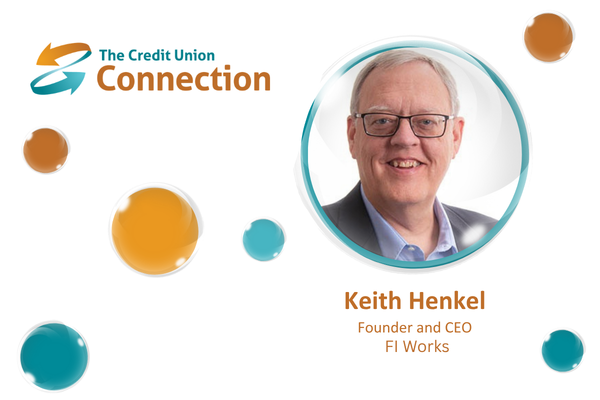
Keith Henkel, Founder and CEO, FI Works
Think back to a recent board meeting at your credit union. It’s likely the CFO, when reporting on profitability, was asked a question about a line item. They know the figure came from the analytics platform but cannot explain how the platform produced it. The conversation stops being about one item and becomes a conversation about the trustworthiness of the reporting.
It’s a common scenario that’s costly in terms of resources and returns, but more importantly, it’s avoidable. In Forrester’s Data Culture and Literacy Survey, more than a quarter of respondents who said poor data quality hinders data literacy at their organizations estimated annual losses above $5 million. However, most analytics vendors ask a credit union to accept the output and move on.
Finance teams resist that request for good reason, because reporting that’s not transparent or traceable won’t survive a board meeting. How a figure is derived matters as much as the figure itself, and derivation should be one of the first questions you ask when you evaluate any analytics platform.
The same pattern applies to every number you rely on.
Profitability is one example of a much wider pattern. Every number a credit union reports has a derivation behind it, and every department wants to know it can trust that number. Executives argue about total deposits because the core system, the general ledger, and a marketing report can each produce a different figure, depending on which account types they include and when they take the snapshot. They disagree about how many members the credit union has because the answer depends on how duplicate records are resolved and whether a joint account counts as one member or two. Retention invites the same debate. Does attrition mean a closed account, a closed relationship, or a member who stopped using the credit union’s services? Each definition produces a different rate.
Profitability shows the pattern at its most layered. Funds transfer pricing (FTP) credits each deposit and charges each loan for the funds involved, and cost allocation assigns shared expenses to products and relationships. Both methods rest on judgment calls, such as which rate curve applies and which driver should spread technology costs, and different answers can move a product from profitable to unprofitable. The figure is only as defensible as the assumptions underneath it, and the same is true of every other number in the board packet.
Trust starts with the data coming in.
A correct formula applied to flawed data yields an incorrect number. Before debating a definition, the data feeding the calculation has to be right, which takes regular audits and quality checks that catch problems as the data arrives. Catching those problems at the intake step costs a lot less than discovering them in a board meeting.
Determine the single version of truth.
Each business fact, such as profit, retention, or cross-sell, needs one audited formula that every department at the credit union uses. Each data element needs a written definition, so that terms like “active member” and “balance” mean the same thing in every report.
A semantic layer sits between the raw data and the analytics and translates technical fields into business terms, making it easy for all departments to understand. Finance, marketing, lending, and operations now can work from the same formulas and vocabulary, and the people asking questions don’t need to question the database. The same business logic drives report reconciliation, and it’s cross functionally accessible and useful.
A collective understanding makes interdepartmental projects flow faster and aligns decisions with this single truth. A Cornerstone Advisors study of financial institution executives, commissioned by Fintel Connect, found that nearly six in ten said their core or CRM system limits their ability to measure marketing ROI. When marketing can’t tie spend to results with the same numbers that finance uses, the board will struggle to trust the results. Consistency across departments is the backbone of a truly data-driven organization. And some hard questions can result in an easy decision.
Open calculation logic should be easy to describe and test.
When evaluating a vendor who’s demonstrating their dashboard, it’s important that they transparently answer the deeper-dive items that matter to credit unions.
- What audits and quality checks run on incoming data, and what happens when a record fails?
- Where is each business definition documented, and who approves a change?
- Can we follow one figure from the board report down to the relationship, the account, and the source-system record?
- How does the result reconcile to our general ledger, and does that happen during implementation or afterward?
- For profitability, how does the model assign funds transfer pricing rates, which costs does it allocate, and can our Finance team review and adjust the drivers?
A vendor who responds, “That’s proprietary,” to any of these questions should not be in your consideration set. Look for a partner platform in which every calculation is open and inspectable, including profitability with funds transfer pricing and allocated costs, and any number traces back to its source. Make sure validation and reconciliation are built into onboarding instead of left for a support ticket six months later.
When the logic is visible, the executive team stops debating whose report is right and starts deciding what to do. That’s the meeting any credit union wants: one about which members to reach, which products to price, and where to invest next.
Keith Henkel is the founder and CEO of FI Works, the Relationship Intelligence and Engagement Platform purpose-built for credit unions and community banks. He has more than three decades of experience building technology for financial institutions.